01
morluto/rea
+8890 ★/day↘cooling
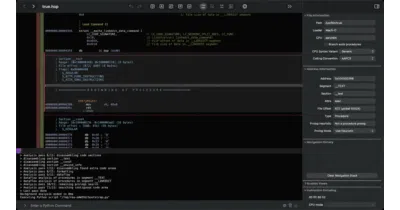
REA hands reverse-engineering tools — Hopper, Ghidra, process capture, JS reconstruction — to coding agents as one consistent MCP workflow.
REA hands reverse-engineering tools — Hopper, Ghidra, process capture, JS reconstruction — to coding agents as one consistent MCP workflow.
A 125-billion-parameter model that normally needs a server, packed onto one gaming PC — NVIDIA card plus RAM plus SSD — writing answers faster than you can read.
Composable prompt recipes that force coding agents to align, test, and architect instead of blindly generating code.
Because editing a dozen config files just to try a new model is a waste of keystrokes.
Moli is a standalone Rust headless browser that avoids continuous rendering by computing layout and paint only when an operation explicitly demands geometry or pixels.
A ruleset that treats every line of generated code as an admission of defeat.
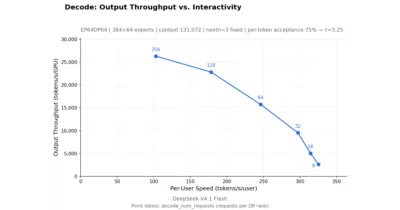
DeepInfer is the inference framework DeepSeek actually runs at scale, now released for offline use — kernels, parallelism tricks and all.
A Claude Code framework that automates job hunting with fit scoring, LaTeX document tailoring, and a two-agent review loop.
OmniVoice Studio bundles voice cloning, dubbing, dictation, and TTS into a desktop app that keeps all audio processing off the internet and away from API keys.
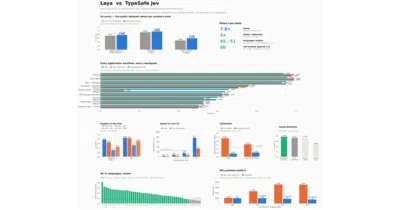
Laya exists to give multilingual documents a fast, deterministic decision layer without the latency and parsing drama of autoregressive models.
It is an open-source agent harness that treats every component as a plugin, built on an academic framework called Cordis.
A dsh plugin that wires OpenCode's Zen gateway — free, keyless frontier models like Muse Spark 1.3 and MiMo V2.6 — straight into the harness, then spends its engineering budget on the failure modes everyone else skips.
Orca gives every CLI coding agent its own git worktree so you can run Claude, Codex, and Grok in parallel without stashing or branch juggling.
Graphify builds a queryable knowledge graph from your whole project so AI assistants can answer architecture questions without grepping raw files.
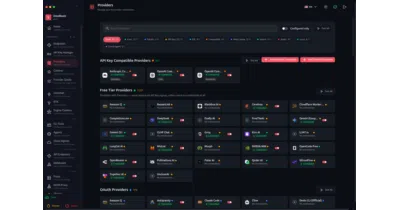
OmniRoute keeps your coding agents online by automatically failing over across 177 AI providers—including free tiers—when quotas run dry.
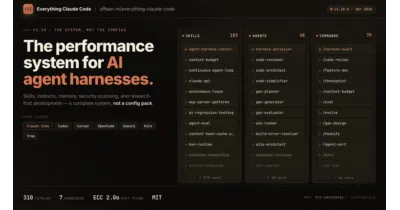
ECC exists because raw agent harnesses lack persistent memory, token discipline, and security guardrails, so it layers reusable skills, session hooks, and audit rules on top of them.
HyperFrames turns HTML, CSS, and seekable animations into deterministic MP4s, built for agents and developers who'd rather skip React and proprietary timelines.
Impeccable exists to stop AI coding assistants from defaulting to the same handful of SaaS-template tells—Inter everywhere, nested cards, purple gradients—by giving them a curated design vocabulary and 27 deterministic anti-pattern rules.
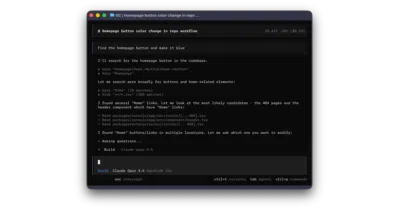
It gives your terminal an AI pair programmer that can either build freely or explore cautiously without touching your files.
iFixAi runs up to 32 inspections against any LLM or agent and returns a letter-grade scorecard in minutes, using a separate provider as judge so the model isn't grading its own homework.
heatdrop uses Google Analytics to see which pages get read — nothing else. Your call. How we handle data.