01
NandhaKishorM/laya
+1600 ★/day↗accelerating
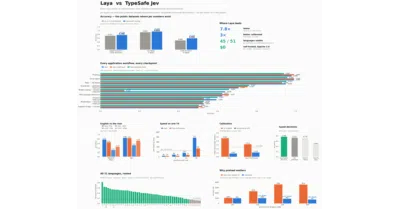
Laya exists to give multilingual documents a fast, deterministic decision layer without the latency and parsing drama of autoregressive models.
Laya exists to give multilingual documents a fast, deterministic decision layer without the latency and parsing drama of autoregressive models.
It teaches how LLMs work by implementing tokenization, attention, pretraining, and finetuning in pure PyTorch, one notebook at a time.
It centralizes model definitions so the same architecture works across PyTorch, JAX, vLLM, and llama.cpp without rewrites.
It wraps local inference and fine-tuning for open models in a web UI, using custom kernels to squeeze more performance out of desktop GPUs than standard tooling.
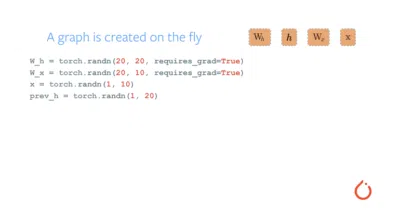
PyTorch exists to give researchers and engineers GPU-accelerated tensor math and automatic differentiation without forcing them to leave Python’s debugger and stack traces behind.
Ultralytics wants to stop you from stitching together separate repos for every computer vision task by bundling detection, segmentation, tracking, and pose estimation into one YOLO-backed package.
A PyTorch toolkit that treats robot learning like Hugging Face treats NLP: standardized datasets, pretrained policies, and one interface for many arms.
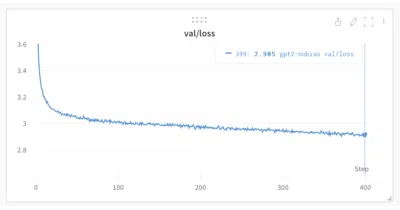
nanochat is a minimal, hackable harness that lets you train and chat with a GPT-2-class LLM on a single GPU node for under $100—no hyperparameter spreadsheets required.
It exists to train gradient-boosted trees faster and with less memory than rivals, scaling from one machine to distributed clusters.
TimesFM is a pretrained decoder-only transformer that turns historical sequences into point and quantile forecasts without training from scratch.
A rewrite of minGPT that prioritizes working, hackable training code over educational scaffolding.
A volunteer-maintained Python machine learning module built on SciPy since 2007.
It exists because keeping up with the training loops, quantization tricks, and inference stacks of 100+ models is a full-time job most developers would rather delegate.
Google's attempt to own the full machine-learning stack, from research lab to Raspberry Pi.
A readable reference for how classic machine learning actually works under the hood, from backprop to genetic algorithms.
It exists to handle the tedious wiring—annotations, dataset formats, tracking—that sits between a trained model and a useful application.
A pedagogical autograd engine so small you can read it on your coffee break, yet complete enough to train a real MLP.
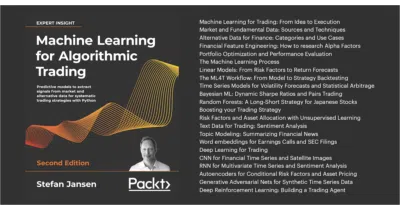
Companion notebooks for an 800-page quantitative finance textbook, from linear regression to deep reinforcement learning trading agents.
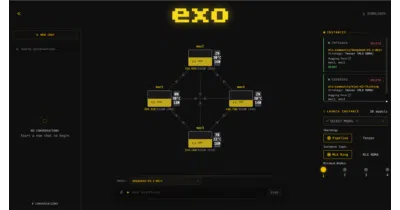
exo auto-discovers Apple devices on your network and shards frontier models across them, turning a pile of Macs into a single inference engine.
Jupyter notebooks that prove you can write a GPT with little more than high-school calculus and stubbornness.
heatdrop uses Google Analytics to see which pages get read — nothing else. Your call. How we handle data.