huggingface/transformers
The model-definition layer the entire ML ecosystem agrees on
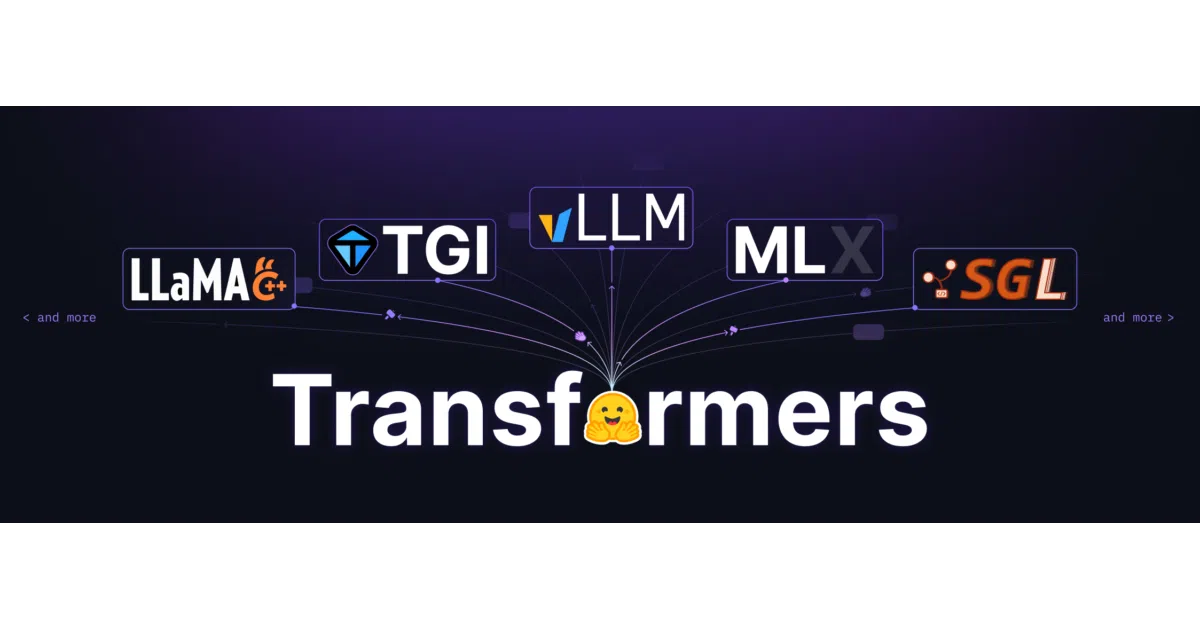
It centralizes model definitions so the same architecture works across PyTorch, JAX, vLLM, and llama.cpp without rewrites.
Velocity · 7d
+48
★ / day
Trend
↗accelerating
star history
What it does
Transformers is the reference implementation and model-definition framework for state-of-the-art machine learning across text, vision, audio, and multimodal tasks. It provides a unified Python API for loading pretrained checkpoints, running inference, and fine-tuning. More importantly, it acts as a compatibility layer: if a model is defined here, downstream tools like Axolotl, DeepSpeed, vLLM, and even llama.cpp can consume that definition directly instead of reimplementing it.
The interesting bit
The real product isn’t the 1M+ checkpoints on the Hugging Face Hub; it’s that Transformers has become the de facto standard for what a model architecture is. By centralizing the definition, it keeps the ecosystem from fragmenting into incompatible silos every time a new paper drops.
Key highlights
- Serves as the pivot between training frameworks (Unsloth, FSDP, PyTorch-Lightning), inference engines (SGLang, TGI), and adjacent libraries (mlx).
- Lets you move a single model between PyTorch, JAX, and TensorFlow 2.0 without rewriting the architecture.
- Exposes model internals consistently, so individual files can be pulled out for quick experiments.
- The
PipelineAPI handles preprocessing for text, audio, vision, and multimodal tasks behind a single high-level interface. - Claims you can train state-of-the-art models in three lines of code.
Caveats
- The library is PyTorch-first: installation defaults to
[torch]extras and PyTorch 2.4+ is required, while JAX and TensorFlow 2.0 feel like secondary citizens. - Source installs are explicitly warned as potentially unstable.
Verdict
If you are building or deploying modern ML models, you are probably already using this—or something that depends on it. Pure researchers working entirely outside the Hugging Face ecosystem might not need the overhead.
Frequently asked
- What is huggingface/transformers?
- It centralizes model definitions so the same architecture works across PyTorch, JAX, vLLM, and llama.cpp without rewrites.
- Is transformers open source?
- Yes — huggingface/transformers is open source, released under the Apache-2.0 license.
- What language is transformers written in?
- huggingface/transformers is primarily written in Python.
- How popular is transformers?
- huggingface/transformers has 168.2k stars on GitHub and is currently accelerating.
- Where can I find transformers?
- huggingface/transformers is on GitHub at https://github.com/huggingface/transformers.