pytorch/pytorch
NumPy with a GPU habit and a tape recorder for gradients
PyTorch exists to give researchers and engineers GPU-accelerated tensor math and automatic differentiation without forcing them to leave Python’s debugger and stack traces behind.
Velocity · 7d
+28
★ / day
Trend
↗accelerating
star history
What it does
PyTorch is a Python tensor library that mirrors NumPy’s API but can offload computation to GPUs. It also provides torch.autograd, a tape-based reverse-mode automatic differentiation engine, and torch.nn for building neural networks. The whole stack is designed to feel native to Python rather than a thin wrapper around a C++ monolith.
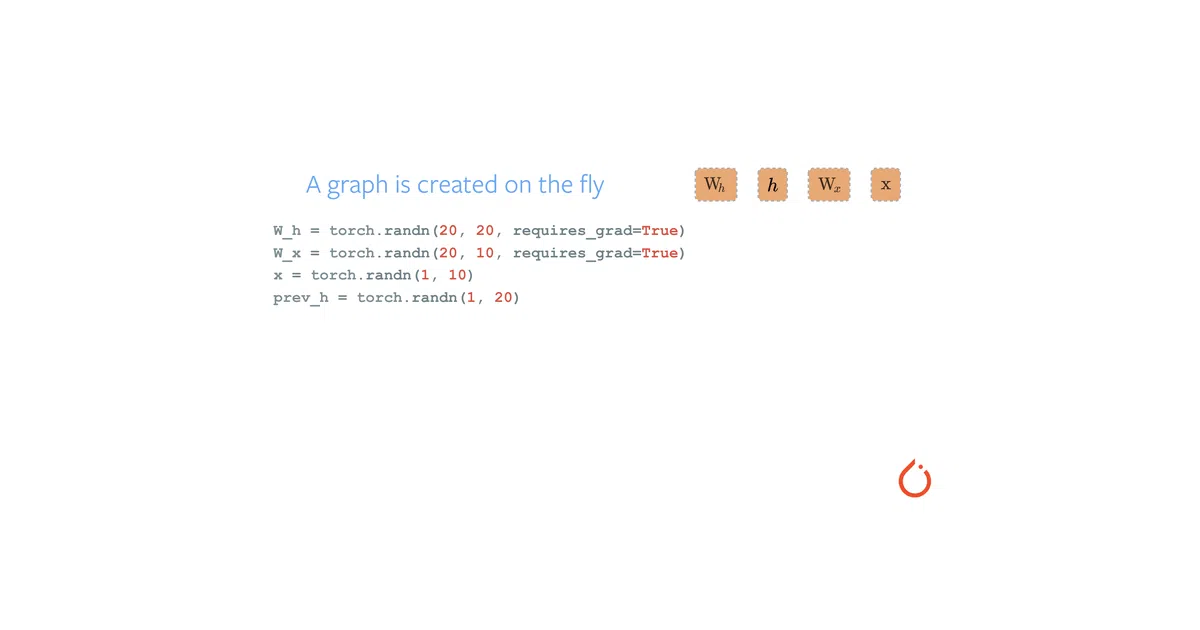
The interesting bit The framework treats every forward pass as a tape recording that can be replayed backward to compute gradients, which means you can change network behavior on the fly without rebuilding a static graph. The README notes that this is one of the fastest implementations of reverse-mode auto-differentiation to date.
Key highlights
- Tensors run on CPU or GPU with routines for linear algebra, slicing, and reductions.
torch.multiprocessingshares tensor memory across processes for data loading and Hogwild training without copies.- Custom GPU memory allocators aim to keep footprint lower than prior Torch versions.
- You can write new layers in Python with NumPy/SciPy, or drop to C/C++ via an extension API with minimal boilerplate.
torch.jit(TorchScript) can serialize and optimize models for production.
Caveats
- Building from source requires a C++20 compiler, at least 10 GB of disk space, and 30–60 minutes for the first compile.
- ROCm support is currently Linux-only.
Verdict If you want a research platform that treats Python as a first-class citizen and lets you change model architecture mid-flight, PyTorch is built for you. If you prefer a fully static graph compiled ahead of time, the imperative style may feel like unnecessary overhead.
Frequently asked
- What is pytorch/pytorch?
- PyTorch exists to give researchers and engineers GPU-accelerated tensor math and automatic differentiation without forcing them to leave Python’s debugger and stack traces behind.
- Is pytorch open source?
- Yes — pytorch/pytorch is an open-source project tracked on heatdrop.
- What language is pytorch written in?
- pytorch/pytorch is primarily written in Python.
- How popular is pytorch?
- pytorch/pytorch has 105.2k stars on GitHub and is currently accelerating.
- Where can I find pytorch?
- pytorch/pytorch is on GitHub at https://github.com/pytorch/pytorch.