01
debpalash/VoiceStudio
+1647 ★/day↘cooling
OmniVoice Studio bundles voice cloning, dubbing, dictation, and TTS into a desktop app that keeps all audio processing off the internet and away from API keys.
OmniVoice Studio bundles voice cloning, dubbing, dictation, and TTS into a desktop app that keeps all audio processing off the internet and away from API keys.
It exists because clicking 'generate' isn't enough when you need to control every model, parameter, and preprocessing step.
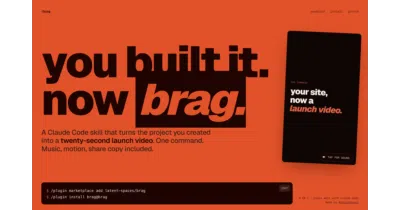
The gap between 'it works' and 'anyone knows it works' is usually a launch video nobody wants to make — so this agent skill makes it for you.
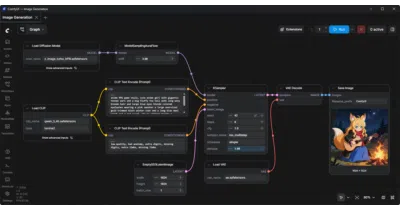
ArtCraft swaps dice-roll prompting for deliberate scene blocking, compositing, and character posing across a dozen generative models.
An open-source system that turns AI coding assistants into autonomous video studios, handling research, scripting, asset generation, and final render.
Hypit gives AI agents a markup language and compiler to turn reference clips—or text prompts—into templated, batch-rendered video variants.
Toonflow exists to turn a manuscript into an animated short drama without juggling five different browser tabs.
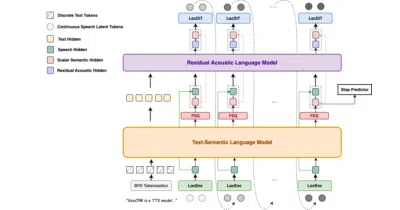
VoxCPM2 proves TTS doesn't need discrete tokens: a 2B-parameter diffusion model generates continuous 48kHz speech for 30 languages and text-prompted voice cloning.
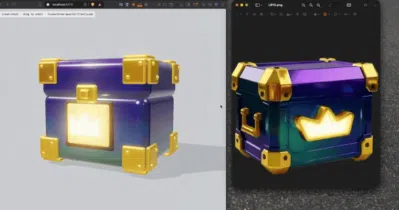
It exists to rebuild objects from reference photos as token-efficient, animation-ready Three.js code, using agent vision to gate quality before every sculpting pass.
SGLang exists to push low-latency, high-throughput inference for LLMs and multimodal models from a single GPU up to massive clusters.
An Electron app that wraps 200+ generative models behind a single UI, with an unusual pitch: no guardrails, no cloud lock-in, and a split personality between local and remote inference.
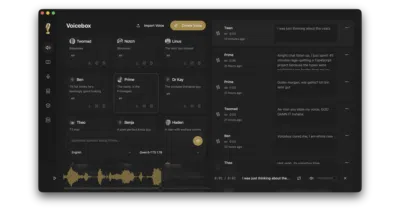
Voicebox is a local-first alternative to ElevenLabs and WisprFlow that clones voices, dictates anywhere, and gives AI agents a mouthpiece — all without shipping audio to the cloud.
A TTS project built to clone realistic voices from just one minute of training audio.
An offline, cross-platform dictation app that aims to be the most forkable speech-to-text tool, not the most polished one.
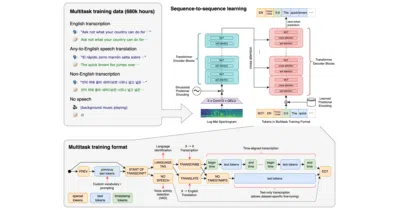
To give developers a single, general-purpose speech model that handles transcription, translation, and language identification by treating tasks as tokens to predict.
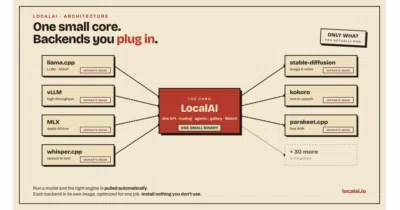
LocalAI wraps 36+ inference engines behind one OpenAI-compatible API and pulls them on demand, so you can run LLMs, vision, voice, and video on anything from a CPU to a Jetson.
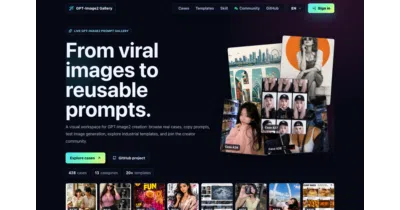
A community knowledge base that reverse-engineers hundreds of GPT-Image2 examples into structured, agent-ready prompt protocols.
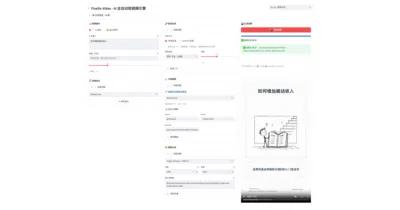
Pixelle-Video exists because producing a short video still requires scripting, generating assets, narrating, and editing; it automates all of that behind a single Web UI by orchestrating external AI services.
A minimal C/C++ port of OpenAI’s Whisper built to transcribe speech locally on phones, browsers, and underclocked POWER9 boxes.
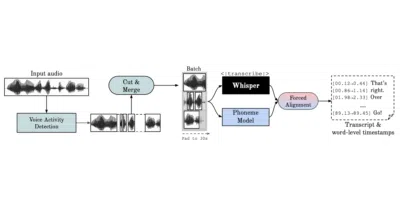
OpenAI's Whisper is accurate but slow and timestamp-imprecise; WhisperX bolts on batching, forced phoneme alignment, and speaker diarization to fix that.
heatdrop uses Google Analytics to see which pages get read — nothing else. Your call. How we handle data.