01
PSRben/VisionHOPE
+25% /wk +43 ★/day↗accelerating
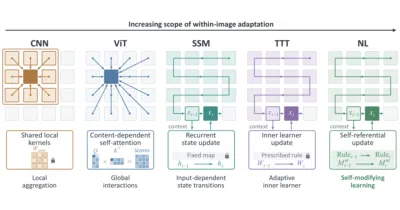
VisionHOPE is a PyTorch visual backbone built on self-referential nested learning, where what the model remembers and how it learns co-evolve while it processes a single image.
VisionHOPE is a PyTorch visual backbone built on self-referential nested learning, where what the model remembers and how it learns co-evolve while it processes a single image.
It packages a C++17 video analytics runtime, a browser-based pipeline editor, and async VLM nodes into a single deployable appliance stack for edge hardware.
ollaya applies Ollama's pull-and-serve ergonomics to decision models — small networks that return calibrated probabilities in a single forward pass and never generate a token.
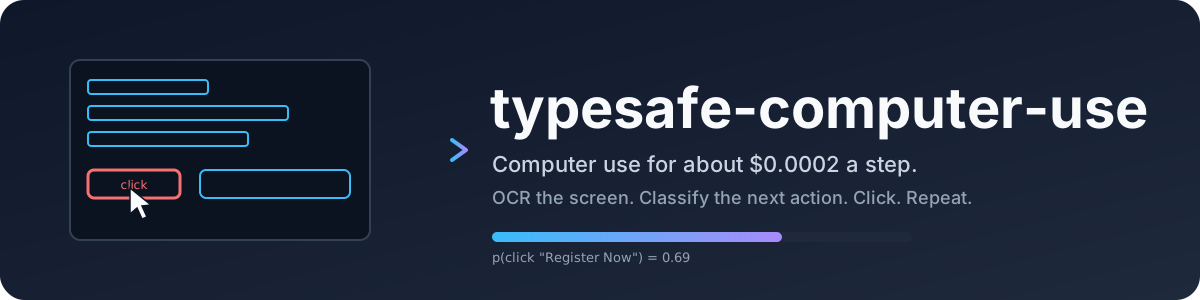
Because most computer-use steps don't need a frontier model—they just need a fast, cheap choice from a short list.
AutoShade turns a described look into an editable, Lightroom-compatible develop recipe instead of handing you a generated picture you can't use.
A hobbyist-built, outside-in motion capture system that autonomously flies multiple drones indoors using commodity cameras and classic computer vision.
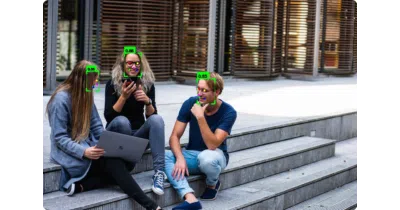
It gives Python developers on Windows and Linux a fully offline shortcut for detecting faces, extracting landmarks, and scoring similarity.
VisoMaster wraps face-swapping pipelines in a point-and-click interface, complete with live preview and webcam streaming.
SamGeo wraps Meta's Segment Anything Model in geospatial plumbing so remote sensing imagery becomes GIS-ready vectors with minimal code.
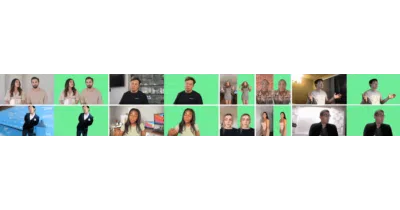
A matting network that uses recurrent memory to keep human cutouts stable across video frames instead of treating each image in isolation.
BetterGI automates Genshin Impact by reading the screen and simulating clicks, not by modifying game memory.
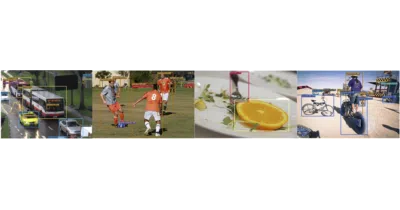
YOLOX removes anchor boxes from YOLO to simplify the model and ship it to actual hardware.
An ONNX-exported, multi-engine OCR toolkit that runs offline on basically anything.
UniFace wraps two dozen specialized face models into one Python library so you can detect, recognize, track, parse, and anonymize faces without managing a zoo of dependencies.
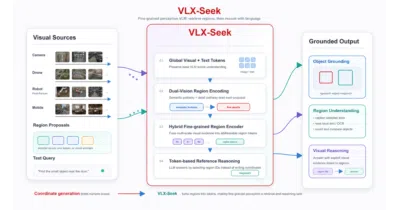
VLX-Seek reformulates visual grounding as region retrieval, letting a language model select and refer to pre-encoded region tokens instead of generating raw coordinates.
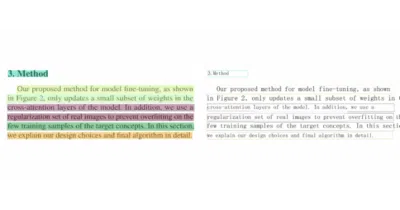
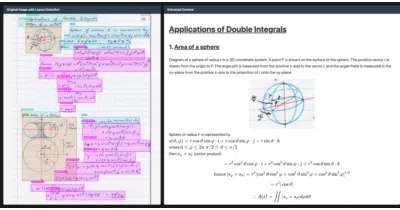
It converts images and PDFs into structured HTML, Markdown, or JSON while reconstructing tables, forms, and handwriting that most OCR tools reduce to plain text soup.
Agent S is an open-source framework that lets autonomous AI agents operate a computer through its GUI, learning from experience to complete complex tasks.
A living index that sorts the exploding literature of factory-floor defect detection by technique, venue, and whether the authors actually released code.
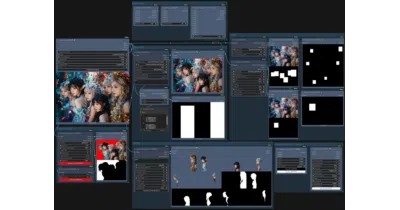
Because switching between a dozen segmentation models in ComfyUI shouldn't require a dozen different extensions.
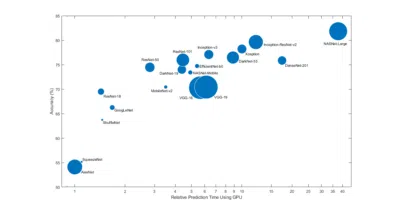
A curated index of pretrained networks for MATLAB that lists size, accuracy, and mAP up front, so picking a model becomes arithmetic instead of guesswork.
heatdrop uses Google Analytics to see which pages get read — nothing else. Your call. How we handle data.