01
karpathy/nanochat
+230 ★/day→steady
Karpathy's minimal LLM training harness turns a $43K 2019 training run into a sub-$100 afternoon project.
Karpathy's minimal LLM training harness turns a $43K 2019 training run into a sub-$100 afternoon project.
A step-by-step PyTorch walkthrough that trains a small-but-real LLM on ordinary laptops, no external libraries allowed.
A weekend research hack that reverse-engineers private APIs to run backpropagation on the Neural Engine Apple reserves for inference only.
Unsloth Studio wraps training, inference, and RL into a single web UI with aggressive memory optimizations.
One framework claims to handle 100+ LLMs and VLMs with zero-code CLI and a web UI—backed by enough quantization methods to make a compression engineer weep.
exo automatically clusters your Apple devices to run frontier models that won't fit on one machine, using Thunderbolt like a datacenter backplane.
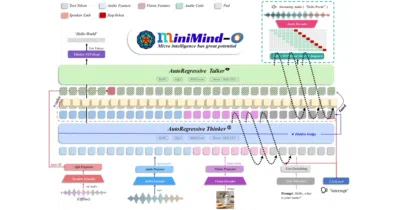
MiniMind-O is a from-scratch Omni implementation small enough to train in ~2 hours on a single RTX 3090, designed for developers who want to understand the full pipeline rather than download a black box.
A stripped-down workshop that trades GPT-2 scale for the clarity of writing every transformer component yourself.
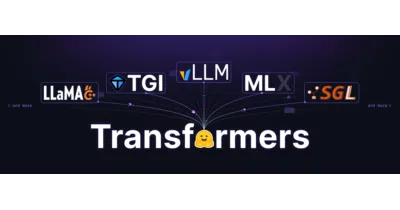
Hugging Face's Transformers library became the de facto standard for model definitions by being the boring part everyone agrees on.
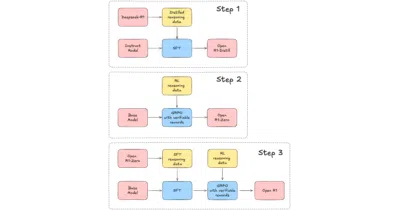
A community effort to reverse-engineer and openly reproduce the training pipeline behind DeepSeek's famous reasoning model.
Lightricks open-sources the full inference stack and LoRA trainer for their DiT-based audio-video model, complete with camera-control LoRAs and HDR output pipelines.
LeWorldModel cuts JEPA training from six loss hyperparameters to one, then plans 48× faster than foundation-model competitors.
Google's ML framework wants to be the entire pipeline, not just the model.
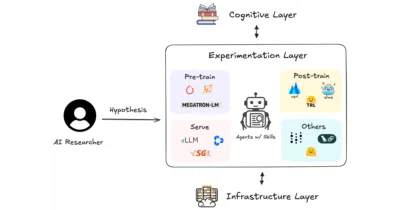
A structured prompt library that teaches Claude Code, Codex, or Gemini how to run the full ML research lifecycle — from literature review to LaTeX.
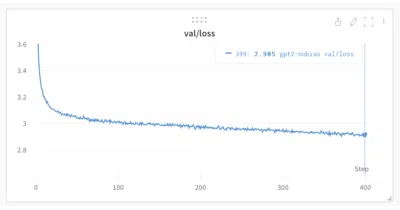
A deliberately minimal GPT-2 implementation that taught a generation how transformers work, now officially succeeded by nanochat.
Ultralytics turned the classic object detector into a unified computer-vision Swiss Army knife you can train via CLI or Python.
A from-scratch inference engine that trades the kitchen sink for a readable codebase without tanking throughput.
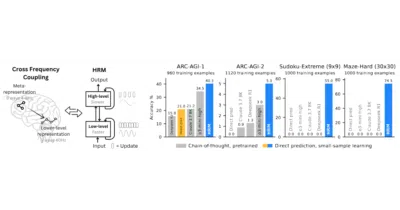
HRM replaces Chain-of-Thought with a brain-inspired recurrent architecture that plans slowly and computes fast, all in one forward pass.
A from-scratch LLM trainer that ditches 245MB of PyTorch dependencies for raw C/CUDA, and somehow runs slightly faster.
DINOv3 is a family of self-supervised vision backbones designed to produce high-quality dense features for everything from semantic segmentation to satellite canopy mapping, often beating task-specialized models out of the box.
heatdrop uses Google Analytics to see which pages get read — nothing else. Your call. How we handle data.