01
Niko1221/Strata
+4437 ★/day↗accelerating
A 125-billion-parameter model that normally needs a server, packed onto one gaming PC — NVIDIA card plus RAM plus SSD — writing answers faster than you can read.
A 125-billion-parameter model that normally needs a server, packed onto one gaming PC — NVIDIA card plus RAM plus SSD — writing answers faster than you can read.
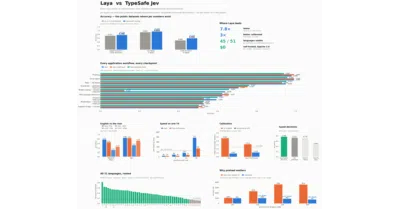
Laya exists to give multilingual documents a fast, deterministic decision layer without the latency and parsing drama of autoregressive models.
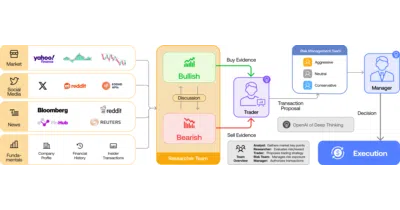
A research framework that assigns LLMs to trading-floor roles—analyst, researcher, trader, risk manager—to debate and execute simulated stock decisions.
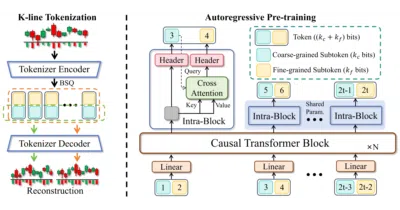
Kronos recasts noisy, multi-dimensional candlestick data as hierarchical discrete tokens so an autoregressive Transformer can forecast financial markets like a language model.
SGLang exists to push low-latency, high-throughput inference for LLMs and multimodal models from a single GPU up to massive clusters.
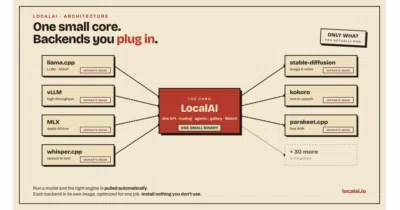
LocalAI wraps 36+ inference engines behind one OpenAI-compatible API and pulls them on demand, so you can run LLMs, vision, voice, and video on anything from a CPU to a Jetson.
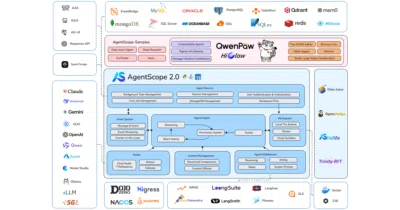
A Python framework for building production multi-agent systems that leans on LLM reasoning instead of rigid prompt choreography.
ZeroClaw exists so you can run a fully local AI agent that answers across 30+ channels and controls hardware without shipping your keys or data to a hosted dashboard.
MiniMind is an educational training ground that rebuilds every stage of a modern language model—from tokenizer to RLHF—in raw PyTorch so you can see the gears turning instead of just calling high-level APIs.
It teaches how LLMs work by implementing tokenization, attention, pretraining, and finetuning in pure PyTorch, one notebook at a time.
It exists so you can download, run, and chat with open-weight LLMs locally through one CLI and REST API, keeping inference on your own silicon.
It rounds up hundreds of AI project links so you don't have to hunt them down yourself.
A curated directory of software, plugins, and frameworks that integrate with the DeepSeek API, maintained by DeepSeek itself.
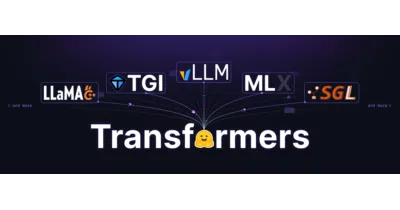
It centralizes model definitions so the same architecture works across PyTorch, JAX, vLLM, and llama.cpp without rewrites.
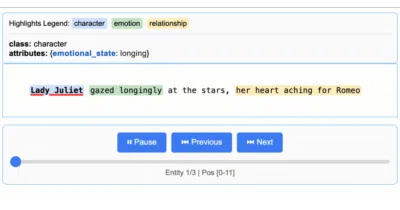
LangExtract exists because asking an LLM to pull names and dates out of a report is easy; proving exactly which sentence each came from is the hard part.
FinGPT offers lightweight, open-source financial LLMs and datasets as an alternative to million-dollar proprietary training runs like BloombergGPT.
Google Research releases all its code and datasets in one place, which has grown so large that the README treats a full clone as a hazard.
To teach developers agent engineering from scratch using smolagents, LangGraph, and LlamaIndex, capped by an automated benchmark.
Official Python notebooks and guides for common OpenAI API tasks.
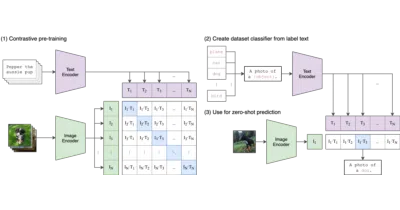
CLIP learns shared image-text representations so you can label photos with natural language instead of curated datasets.
heatdrop uses Google Analytics to see which pages get read — nothing else. Your call. How we handle data.