01
baidu/Unlimited-OCR
+222 ★/day↗accelerating
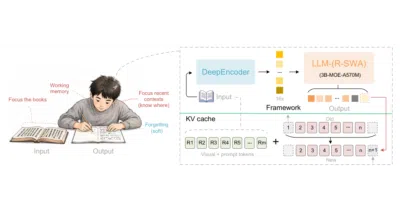
It wants to parse entire documents in one shot without the model getting stuck in repetitive loops.
It wants to parse entire documents in one shot without the model getting stuck in repetitive loops.
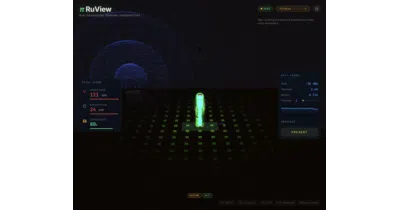
Because commodity WiFi already bounces off your body, RuView uses cheap ESP32 nodes to detect presence, vital signs, and even body pose without cameras or wearables.
It turns images and PDFs into structured JSON and Markdown so your RAG pipeline doesn't have to squint.
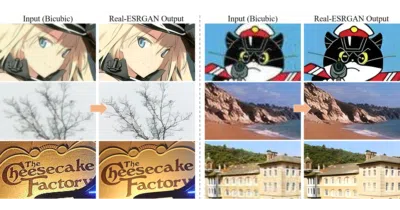
Upscayl gives desktop users a free way to enlarge and enhance low-resolution images using local Real-ESRGAN models and a Vulkan-compatible GPU.
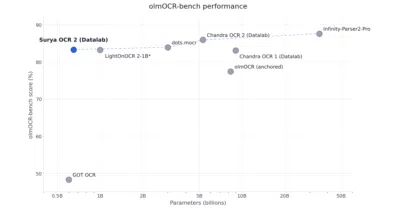
Surya exists because most OCR tools treat text, layout, and tables as separate problems; it handles all three with a single 650M-parameter vision-language model.
Ultralytics wants to stop you from stitching together separate repos for every computer vision task by bundling detection, segmentation, tracking, and pose estimation into one YOLO-backed package.
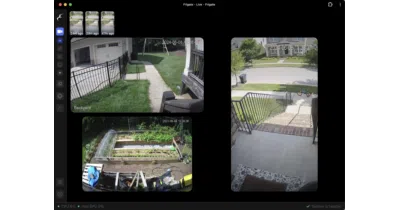
Frigate performs real-time, local object detection on IP camera streams using OpenCV and TensorFlow, designed to integrate tightly with Home Assistant.
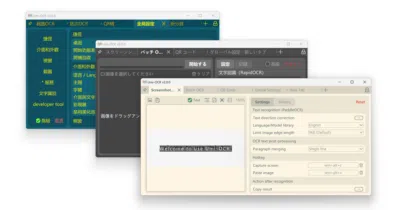
It exists so you can extract text from screenshots, PDFs, and barcodes without a network connection or a cloud bill.
MAA automates the daily chores of Arknights by treating the game screen as a computer vision problem, using OpenCV and OCR to handle farming, recruitment, and base shifts without human tapping.
It rounds up hundreds of AI project links so you don't have to hunt them down yourself.
A NeurIPS 2022 face restoration model that treats facial features as entries in a discrete codebook, making it harder to hallucinate implausible noses.
It exists to handle the tedious wiring—annotations, dataset formats, tracking—that sits between a trained model and a useful application.
It turns images of text into searchable documents across more than 100 languages, offering both a command-line tool and a C++ library for builders.
OpenCV is an open-source C++ computer vision library whose own README acts as a portal rather than a product page.
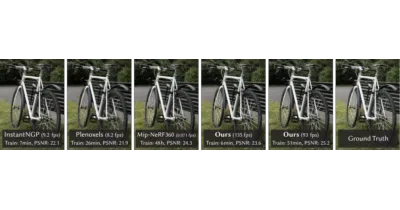
It renders high-quality novel views of real-world scenes at 30 fps by replacing costly neural radiance fields with optimized 3D Gaussians.
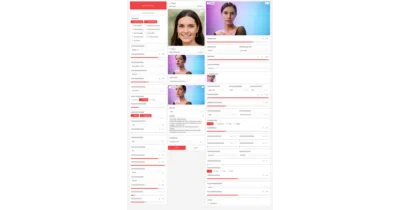
It turns face swaps and lip-syncs into queued, retryable batch jobs instead of one-off scripts.
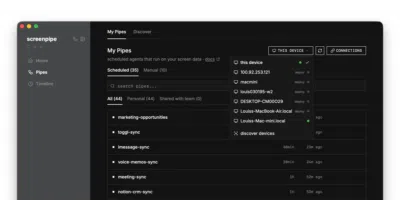
screenpipe continuously records your screen and audio locally so AI can search, summarize, and act on everything you’ve done without sending data to the cloud.
It exists to let developers run customized vision, text, and audio machine learning across mobile, web, and edge hardware without cloud round-trips.
Google Research releases all its code and datasets in one place, which has grown so large that the README treats a full clone as a hazard.
Real-ESRGAN turns the ESRGAN research model into a practical tool for upscaling and restoring real-world images and videos using only synthetic training data.
heatdrop uses Google Analytics to see which pages get read — nothing else. Your call. How we handle data.