01
datalab-to/indra
+55% /wk +86 ★/day→steady
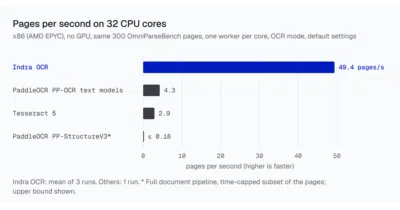
Indra OCR trades heavyweight pipelines for a tiny ONNX recognizer, and somehow still beats Tesseract and PaddleOCR on accuracy.
Indra OCR trades heavyweight pipelines for a tiny ONNX recognizer, and somehow still beats Tesseract and PaddleOCR on accuracy.
It packages a C++17 video analytics runtime, a browser-based pipeline editor, and async VLM nodes into a single deployable appliance stack for edge hardware.
OXR turns PDFs and document images into agent-ready Markdown or JSON, and claims #1 on three parsing benchmarks while being small enough to be fast.
ollaya applies Ollama's pull-and-serve ergonomics to decision models — small networks that return calibrated probabilities in a single forward pass and never generate a token.
Because most computer-use steps don't need a frontier model—they just need a fast, cheap choice from a short list.
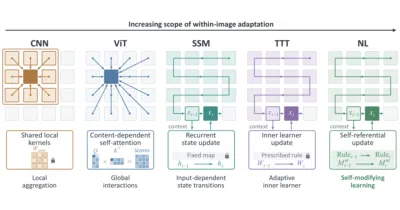
VisionHOPE is a PyTorch visual backbone built on self-referential nested learning, where what the model remembers and how it learns co-evolve while it processes a single image.
An agent skill that finds where a photo was taken from pier spacing, shadows and ridge lines — and forces every conclusion to cite the command and file behind it.
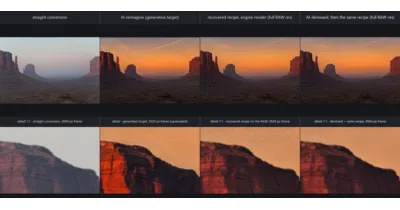
AutoShade turns a described look into an editable, Lightroom-compatible develop recipe instead of handing you a generated picture you can't use.
It gives Python developers on Windows and Linux a fully offline shortcut for detecting faces, extracting landmarks, and scoring similarity.
A hobbyist-built, outside-in motion capture system that autonomously flies multiple drones indoors using commodity cameras and classic computer vision.
4DAnyone generates dense multi-view video from a single casual clip, feeding standard 4D Gaussian Splatting pipelines without a real camera rig.
VLX-Seek reformulates visual grounding as region retrieval, letting a language model select and refer to pre-encoded region tokens instead of generating raw coordinates.
Glance uses your MacBook webcam and an ArcFace model to unlock your Mac by typing your password for you when it sees your face — a convenience feature, and honest about it.
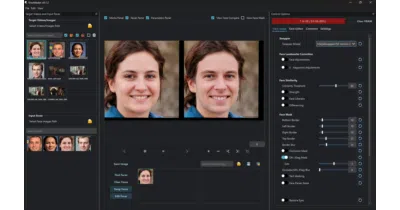
VisoMaster wraps face-swapping pipelines in a point-and-click interface, complete with live preview and webcam streaming.
Corridor Digital's ML keyer replaces green-screen spill wrestling with a PyTorch model that pulls mattes from ordinary footage — with or without hints.
Spirula Studio rebuilds the entire 3D Gaussian Splatting pipeline—video to splat to textured mesh—as a single C++ binary that runs on NVIDIA, AMD, Intel, and Apple GPUs via Vulkan, no Python required.
A collection of pure-Python simulations that let you watch autonomous vehicle algorithms localize, plan, and steer in real time.
GardenPulse adapts its whole UI, care schedules, and AI advice to soil, hydro, container, or indoor setups — plus your local weather.
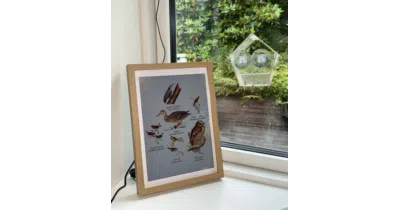
Turns live backyard bird detections into an e-ink collage of hand-cut 1800s public-domain illustrations.
A ComfyUI node pack that tracks, crops, re-generates, and stitches back every small face in H3 video — FaceDetailer, but moving.
heatdrop uses Google Analytics to see which pages get read — nothing else. Your call. How we handle data.