01
Jakeschincariol/day-trader-skill
+127% /wk +301 ★/day→steady
Eleven plain-Python Claude skills that scan charts, time entries, and Monte-Carlo your trade 10,000 times before any order goes out — and no order goes out without your yes.
Eleven plain-Python Claude skills that scan charts, time entries, and Monte-Carlo your trade 10,000 times before any order goes out — and no order goes out without your yes.
REAP is a curated set of paste-ready prompts that turn an AI coding agent armed with REA into a disciplined reverse-engineering investigator.
huashu-motion turns a coding agent into a one-person film studio: it writes the film as code, composes the music, and takes frame-level notes from you.
A tiny ad-free home screen plus a carefully engineered prompt that has an AI agent strip bloatware off your TV — with an undo script for when it gets too confident.
unlazy forces AI agents to prove their work through runnable acceptance gates instead of trusting their own exit reports.
Most browser agents chat at you; this one returns editable spreadsheets, slides, and sites you can actually use.
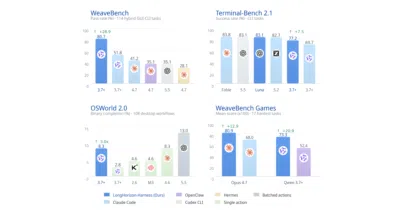
leanrea replaces the REA reverse-engineering MCP server with a single markdown file of routing advice, and the agent just runs the CLI tools directly.
A tiny Rust daemon that turns every coding agent on the team into a reachable peer — no server in the middle.
Co-op Anything is an MCP server and playbook that turns coding agents into co-op mod engineers — reviving abandoned mods or building netplay from scratch.
ThinkRail is a mobile-first IDE whose entire engine is the pi coding agent, run in-process and scoped to git worktrees.
It stops long-running agents from drifting by forcing them to verify progress through independent roles before every new round.
A Claude Code skill that ships 39 film styles as prompts — and proves each one with a demo film its agent rendered, scored, and narrated entirely in code.
A read-only MCP bridge that turns your paid ChatGPT web session into the planning and review brain for Codex, while execution stays locked to the agent.
A Blender addon that pairs a visual chat workspace with a built-in MCP server, so AI assistants can inspect, build and edit 3D scenes rather than guessing at them.
This contest entry orchestrates 15 McDonald's MCP tools to turn "city + headcount + budget" into real, priced group-meal plans — without ever inventing a number.
Folkbench continuously probes API relay stations for availability, latency, and price, then lets you swap them into Claude Code or Codex with one click.
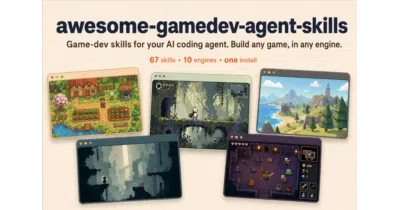
67 game-dev skills and a router that auto-loads the right context so your AI agent stops guessing your engine.
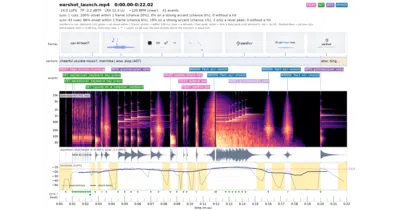
AI agents can render a whole launch film in code but can't hear it — earshot turns sound into evidence they can reason about, and critique, and even synthesize.
Agent-side workflows that turn novels into production-ready short-drama bibles—characters, outlines, and art guides—without leaving Claude Code or Codex.
Scrawl records your screen, voice, and ink annotations, then bundles it all into a format a coding agent can actually read.
heatdrop uses Google Analytics to see which pages get read — nothing else. Your call. How we handle data.