01
rocketride-org/rocketride-server
+658 ★/day↗accelerating
RocketRide exists because wiring LLM workflows shouldn't require leaving your IDE or surrendering your data to a cloud dashboard.
RocketRide exists because wiring LLM workflows shouldn't require leaving your IDE or surrendering your data to a cloud dashboard.
Graphify builds a queryable knowledge graph from your whole project so AI assistants can answer architecture questions without grepping raw files.
Ruflo turns Claude Code from a solo assistant into a coordinated swarm with shared memory, plugins, and cross-machine federation.
Because making AI agents read Twitter, Reddit, or Bilibili usually means wrestling with a dozen scrapers, API keys, and cookie jars.
Onyx bundles chat, RAG, agents, and sandboxed code into a single self-hosted interface so teams can use any LLM without shipping data to a SaaS black box.
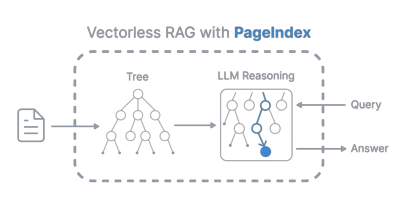
PageIndex replaces vector similarity search with hierarchical tree reasoning to retrieve complex documents more accurately.
A privacy-focused AI answering engine that runs entirely on your own hardware so your searches never leave the building.
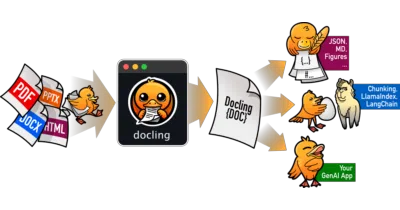
Docling turns PDFs, Office files, images, and even audio into structured AI-ready formats, entirely on your own hardware.
OpenDataLoader PDF exists to extract structured data from PDFs for AI pipelines while auto-tagging untagged documents for screen readers, all without proprietary dependencies.
A CLI and library that turns prompt evaluation and red-teaming into repeatable, automatable engineering instead of vibe-based guesswork.
LangBot is a Python framework that wires LLMs into every major chat app—WeChat, Discord, Slack, Telegram, Lark, DingTalk, QQ, and more—without making you rewrite adapters for each.
Because stitching together LLM workflows, RAG, agents, and observability by hand is a full-time job.
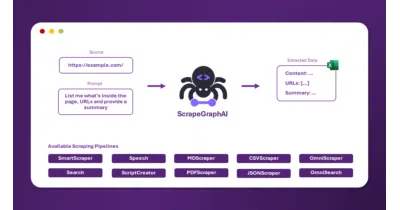
ScrapeGraphAI lets you extract structured data from websites and documents by describing what you want in plain English, leaving the LLM to wrestle with the markup.
GBrain gives AI agents a persistent memory, synthesizing cited answers from your notes and wiring a knowledge graph autonomously while you sleep.
Sim exists so you can orchestrate LLMs, tools, and vector stores on a visual canvas instead of writing another ad-hoc Python script.
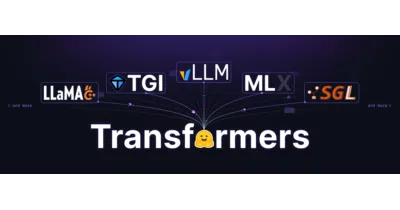
It centralizes model definitions so the same architecture works across PyTorch, JAX, vLLM, and llama.cpp without rewrites.
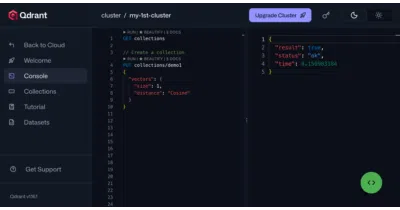
Qdrant stores neural network outputs as searchable vectors and lets you filter them with SQL-like payload queries, bridging the gap between embedding models and production search.
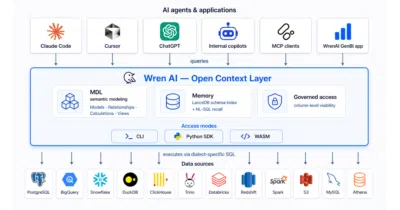
An open-source context layer that stops AI agents from guessing what your business data means.
Haystack wires retrieval, memory, routing, and generation into explicit, inspectable pipelines so you can debug why your RAG bot hallucinated instead of praying to the prompt gods.
An open-source search engine trying to make relevance the default, not a weekend tuning project.
heatdrop uses Google Analytics to see which pages get read — nothing else. Your call. How we handle data.