01
Graphify-Labs/graphify
+986 ★/day↗accelerating
Graphify builds a queryable knowledge graph from your whole project so AI assistants can answer architecture questions without grepping raw files.
Graphify builds a queryable knowledge graph from your whole project so AI assistants can answer architecture questions without grepping raw files.
RocketRide exists because wiring LLM workflows shouldn't require leaving your IDE or surrendering your data to a cloud dashboard.
Because making AI agents read Twitter, Reddit, or Bilibili usually means wrestling with a dozen scrapers, API keys, and cookie jars.
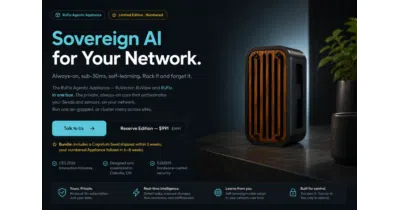
Ruflo turns Claude Code from a solo assistant into a coordinated swarm with shared memory, plugins, and cross-machine federation.
Hindsight is an agent memory system that tries to make AI agents learn from experience rather than just retrieving conversation logs.
Persistent memory for coding agents that currently forget everything when the session ends.
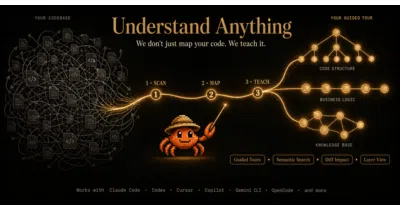
Builds interactive knowledge graphs that teach you a codebase instead of just flexing its complexity.
This repo open-sources a full Chinese textbook on AI agent engineering—complete with Markdown source, compiled PDF, and runnable Python demos for every chapter.
Why rebuild the same RAG pipeline or agent loop from scratch when you can fork a working template instead?
WeKnora exists to turn scattered enterprise documents into a queryable RAG, an autonomous reasoning agent, and a self-maintaining wiki.
Because stitching together LLM workflows, RAG, agents, and observability by hand is a full-time job.
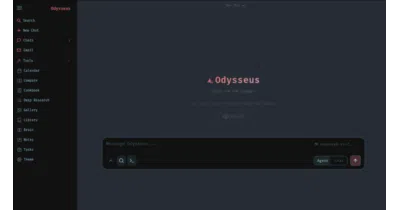
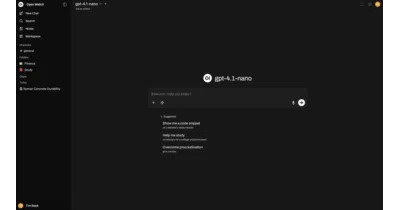
Odysseus is a self-hosted AI workspace that replicates the ChatGPT experience on your own hardware while also handling email, calendars, documents, and deep research without shipping your data to third-party clouds.
To wrap every LLM backend, RAG pipeline, and enterprise auth scheme into a single self-hosted interface.
OpenViking replaces fragmented vector-database storage with a filesystem paradigm that unifies agent memory, knowledge RAG, and skills in one browsable hierarchy.
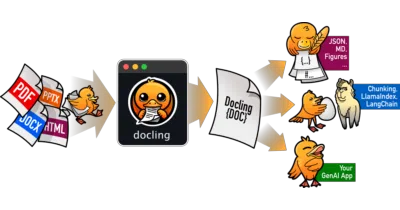
Docling turns PDFs, Office files, images, and even audio into structured AI-ready formats, entirely on your own hardware.
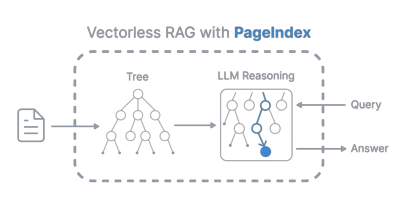
PageIndex replaces vector similarity search with hierarchical tree reasoning to retrieve complex documents more accurately.
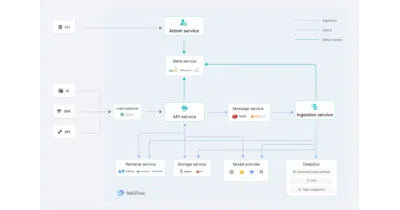
RAGFlow fuses deep document parsing with agentic workflows so LLMs can answer from messy corporate documents without making things up.
Onyx bundles chat, RAG, agents, and sandboxed code into a single self-hosted interface so teams can use any LLM without shipping data to a SaaS black box.
Mem0 gives AI agents a persistent memory layer that accumulates user context across sessions instead of overwriting it every time.
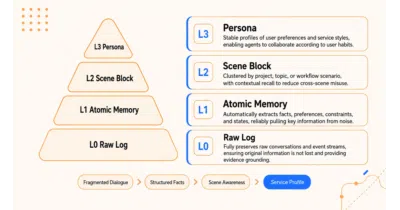
It replaces flat vector dumps with a four-tier semantic pyramid and Mermaid symbol graphs so agents remember workflows without drowning in their own tool logs.
heatdrop uses Google Analytics to see which pages get read — nothing else. Your call. How we handle data.