01
milind-soni/OpenMausBot
+1698 ★/day↗accelerating
It takes Grok Bot's idea — AI as a messaging app with a roster of bots — and rebuilds it open-source and local-first, on the Claude, Codex, and Grok CLIs you already have.
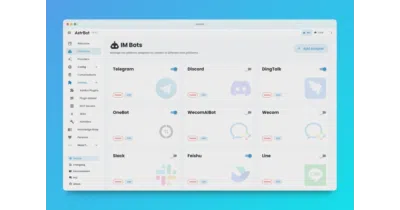
It is an open-source bridge between large language models and the instant messaging apps you already tolerate.
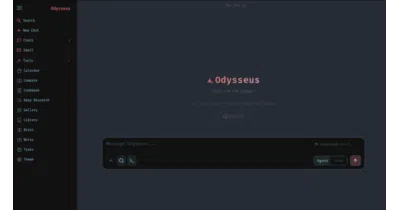
Odysseus is a self-hosted AI workspace that replicates the ChatGPT experience on your own hardware while also handling email, calendars, documents, and deep research without shipping your data to third-party clouds.
To wrap every LLM backend, RAG pipeline, and enterprise auth scheme into a single self-hosted interface.
Because downloading yet another chat app just to talk to an LLM is exhausting.
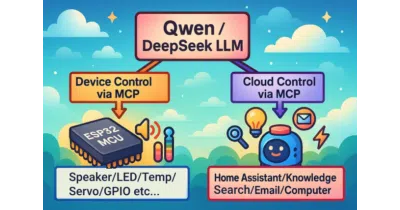
XiaoZhi is open-source ESP32 firmware that streams voice to LLMs like Qwen and DeepSeek, then uses the MCP protocol to let those models control your LEDs, servos, and smart home gear.
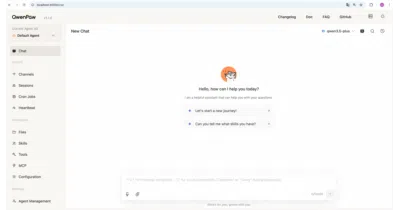
QwenPaw is a self-hostable personal AI assistant that plugs into your chat apps and coordinates multiple agents to handle tasks while keeping your data local.
Jan is a desktop chat client that makes running local LLMs as mundane as using ChatGPT, while quietly exposing an OpenAI-compatible API for your other tools.
LibreChat bundles every major LLM provider into a single self-hosted chat platform so teams don't have to choose—or leak data.
AnythingLLM bundles document chat, AI agents, and multi-user support into one local-first application so you don't have to duct-tape five tools together.
To let you own a game-playing, voice-chatting AI companion that doesn't vanish when the stream ends.
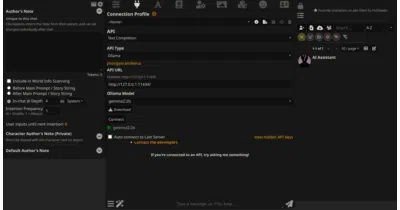
SillyTavern gives AI hobbyists a single, local interface to command text generators, image engines, and voice models across dozens of backends without losing control of their prompts or data.
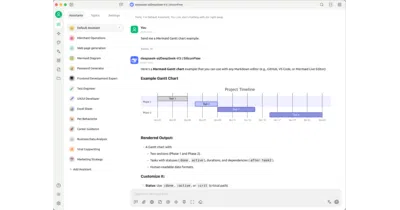
Cherry Studio exists to end the browser-tab shuffle by putting every major cloud and local LLM into one ready-to-run desktop client.
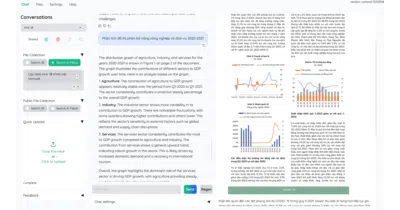
Kotaemon is an open-source document chat tool built on Gradio that exposes citations, scores, and PDF highlights instead of hiding them.
Wechaty abstracts away the mess of messaging-platform APIs so you can write a chatbot once and run it anywhere.
A maintainer cataloged every Chinese NLP repo they touched into a single, obsessively categorized list so others wouldn’t have to hunt.
Onyx bundles chat, RAG, agents, and sandboxed code into a single self-hosted interface so teams can use any LLM without shipping data to a SaaS black box.
Pipecat is the Python plumbing layer for real-time voice and multimodal AI, weaving together audio, video, AI services, and network transports into composable pipelines.
Khoj exists to unify your documents, web search, and chosen LLM into a single self-hosted brain accessible from Emacs to WhatsApp.
Hermes WebUI gives the Hermes autonomous agent a browser interface without adding a JavaScript build pipeline.
heatdrop uses Google Analytics to see which pages get read — nothing else. Your call. How we handle data.