01
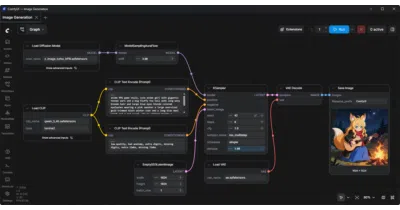
Comfy-Org/ComfyUI
+616 ★/day↗accelerating
It exists because clicking 'generate' isn't enough when you need to control every model, parameter, and preprocessing step.
It exists because clicking 'generate' isn't enough when you need to control every model, parameter, and preprocessing step.
Open Design turns the coding agents already on your laptop into a local-first design engine for prototypes, decks, motion graphics, and brand systems.
It gives teams a self-hosted, API-friendly way to queue posts across every major network while keeping OAuth tokens under their own roof.
Six quickstarts for building deployable Claude agents across support, analysis, browser automation, desktop control, and coding.
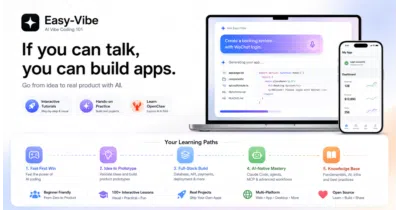
It is a free, multi-stage curriculum that teaches beginners how to turn conversational prompts into shipping products using AI IDEs and agents.
The Pydantic team built this agent framework because existing options didn’t feel ergonomic enough for their own LLM products.
AiToEarn treats content like a supply chain: it generates videos and posts, blasts them to a dozen platforms, and hooks creators up with paid brand tasks.
NocoBase exists so AI agents and humans can build business systems on the same proven infrastructure instead of generating disposable code from scratch.
Dyad is a local, open-source alternative to cloud-based AI app builders like v0 and Bolt, letting you generate applications on your own machine without surrendering your API keys or code.
Gradio generates interactive web interfaces from plain Python functions so you can demo models or tools without touching JavaScript.
Windmill is a self-hostable, code-first platform where AI-built scripts, flows and apps go through the same review as engineer-written code.
It keeps generative UIs predictable by forcing LLMs to assemble JSON from a developer-approved component catalog instead of writing raw code.
Onlook instruments your React code so that dragging a div in the browser updates the JSX behind it, giving designers a Figma-like canvas that actually commits to git.
W&B's internal prototyping tool lets you prompt your way to live UI components, then export to React or Svelte.
Univer lets you embed spreadsheet, document, and presentation editing into your own product, running the same canvas-based runtime in browsers and headlessly on Node.js for AI agent workflows.
JeecgBoot exists so Java teams can describe an ERP in plain language, generate the Spring Boot and Vue code, and then manually merge it to keep things flexible.
Coze Studio open-sources the core engine of ByteDance's commercial agent platform into a self-hosted visual IDE for assembling LLM agents, workflows, and plugins with minimal code.
heatdrop uses Google Analytics to see which pages get read — nothing else. Your call. How we handle data.