01
morluto/rea
+8890 ★/day↘cooling
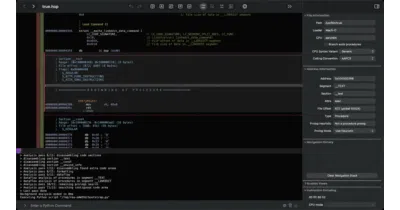
REA hands reverse-engineering tools — Hopper, Ghidra, process capture, JS reconstruction — to coding agents as one consistent MCP workflow.
REA hands reverse-engineering tools — Hopper, Ghidra, process capture, JS reconstruction — to coding agents as one consistent MCP workflow.
Moli is a standalone Rust headless browser that avoids continuous rendering by computing layout and paint only when an operation explicitly demands geometry or pixels.
A Claude Code framework that automates job hunting with fit scoring, LaTeX document tailoring, and a two-agent review loop.
It is an open-source agent harness that treats every component as a plugin, built on an academic framework called Cordis.
A dsh plugin that wires OpenCode's Zen gateway — free, keyless frontier models like Muse Spark 1.3 and MiMo V2.6 — straight into the harness, then spends its engineering budget on the failure modes everyone else skips.
Orca gives every CLI coding agent its own git worktree so you can run Claude, Codex, and Grok in parallel without stashing or branch juggling.
iFixAi runs up to 32 inspections against any LLM or agent and returns a letter-grade scorecard in minutes, using a separate provider as judge so the model isn't grading its own homework.
RocketRide exists because wiring LLM workflows shouldn't require leaving your IDE or surrendering your data to a cloud dashboard.
It exists to make browser agents fast and cheap by replacing screenshot analysis with a live, indexed table of DOM elements.
Because making AI agents read Twitter, Reddit, or Bilibili usually means wrestling with a dozen scrapers, API keys, and cookie jars.
It forces your AI coding agent to ask what you're building, write a plan, and get sign-off before it writes a single line of code.
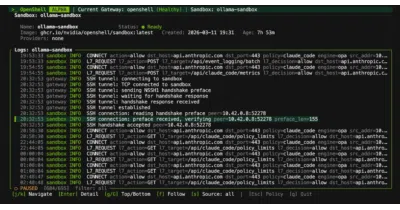
A Rust-based runtime that sandboxes autonomous agents with declarative YAML policies and hot-reloadable network controls.
Paperclip exists because twenty Claude Code tabs and a folder of bash scripts do not constitute a company.
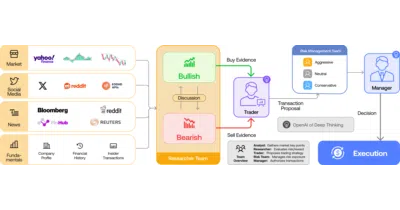
A research framework that assigns LLMs to trading-floor roles—analyst, researcher, trader, risk manager—to debate and execute simulated stock decisions.
A library of domain-specific system prompts that turns generic AI assistants into specialized team members with job descriptions, workflows, and communication styles.
This curriculum closes the gap between calling AI APIs and understanding the loss curves underneath.
Open-source role templates that teach Claude your team's tools, terminology, and workflows so you stop repeating yourself.
Ruflo turns Claude Code from a solo assistant into a coordinated swarm with shared memory, plugins, and cross-machine federation.
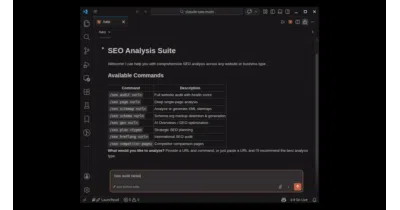
Claude SEO turns Claude Code into a parallel army of 18 specialist agents that audit websites against Google's own guidance—and every recommendation comes with a built-in falsifiability check.
Firecrawl turns search, scraping, and browser interaction into a single API so your agents can read the web without wrestling with proxies, rate limits, or JavaScript rendering.
heatdrop uses Google Analytics to see which pages get read — nothing else. Your call. How we handle data.