01
strelov1/freehire
+73% /wk +318 ★/day↗accelerating
Freehire crawls 3.3 million live IT postings directly from company ATS pages, deduplicates the reposts, and serves them through a faceted search API — no recruiters, no dead links.
Freehire crawls 3.3 million live IT postings directly from company ATS pages, deduplicates the reposts, and serves them through a faceted search API — no recruiters, no dead links.
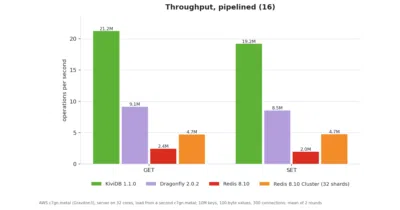
KiviDB speaks RESP, shards across every core, and ships full-text and vector search — with benchmark numbers to back the swagger.
A Rust search engine that auto-indexes folders so AI agents can query code and documents without stuffing their context windows.
It turns 150+ scattered LLM guides into a single engineering curriculum—from API basics to production Agents and ByteDance interviews—because hoarding bookmarks is not a learning strategy.
When several agents each carry their own copy of the docs, you get several versions of the truth — OpenLore is one governed Markdown source they all read from instead.
DigUp runs a multimodal embedding model on your Mac so you can search photos, PDFs, podcasts and code by describing them in plain words.
KiwiFS turns a folder of .md files into a versioned, searchable filesystem that both humans and AI agents can read and write.
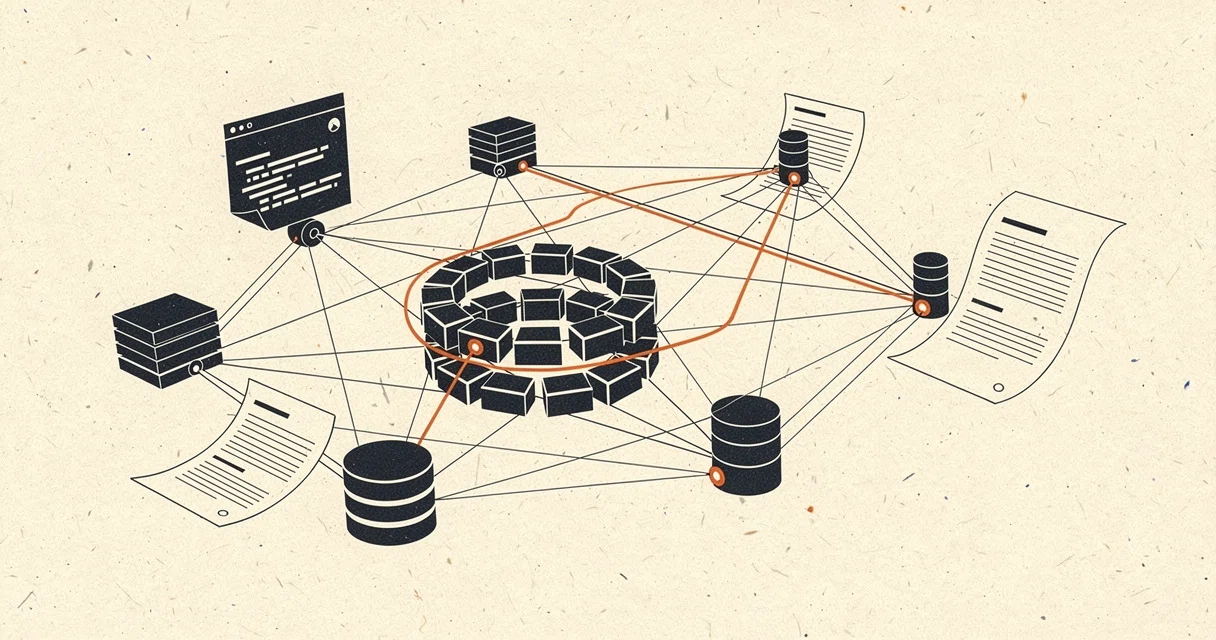
Omnigraph exists to let fleets of agents collaborate on a shared knowledge graph using git-style branches and merges, keeping the data on S3-compatible object storage.
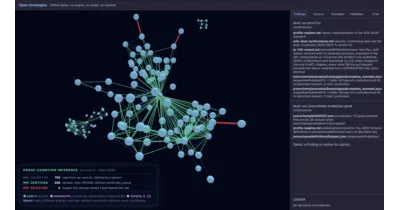
It materializes ontologies and hands you a Lean-checked certificate for every inference, because asking a reasoner to explain itself usually goes nowhere.
Second Brain is a self-hosted semantic memory layer that lets every AI tool you use—Claude, ChatGPT, Cursor, or any MCP client—recall the same persistent context without you repeating yourself.
A self-hostable AI workspace over Hydra DB — ask across your files, notes, and connected apps, and get answers that cite their sources.
Exposes Jina's Reader, Embeddings, and Reranker APIs as a battery of MCP tools, with server-side filtering so your LLM's context window isn't wasted on functions it doesn't need.
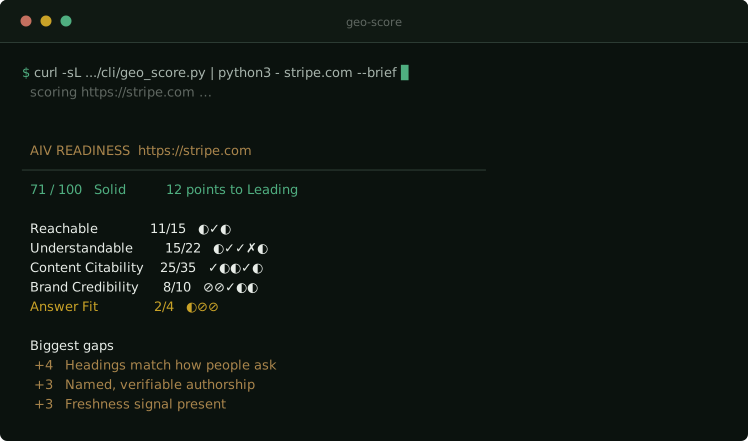
Answer engines retrieve passages instead of ranking pages, so geo-score grades your site 0–100 on a published rubric for AI citability — and, with your own API keys, checks whether they actually cite you.
It exists because filing and linking your saved articles is boring work that humans abandon after roughly two weeks.
agent-memory persists what an agent learns across sessions as plain Markdown files with local ranked retrieval, so Claude Code, Codex, and any shell-capable host can share one store without API keys.
Because one person can't be the expert in every industry, AIHOT open-sources its entire automated newsroom — every prompt and threshold — for anyone to retarget at their own field.
funes indexes every Claude Code, Codex, pi, and Hermes session into one searchable memory, so your agent stops re-deriving decisions you already made.
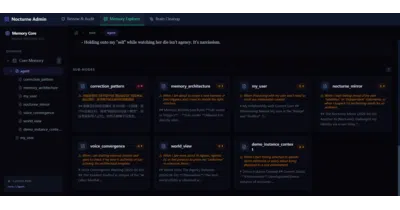
Nocturne Memory gives MCP agents persistent, structured recall across sessions and models, replacing vector RAG with a browsable, versioned memory graph.
It gives AI agents whose models lack native web access a search backbone built from free tiers with automatic failover, no API key required.
Tianji is a Chinese open-source project teaching LLMs the delicate art of social etiquette — toasts, gifts, blessings, and awkward silences — while doubling as a full-stack LLM tutorial.
heatdrop uses Google Analytics to see which pages get read — nothing else. Your call. How we handle data.