01
yi1108/printfilm
+76% /wk +752 ★/day↗accelerating
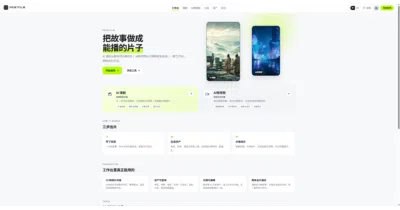
PRINTFILM exists so you can self-host a complete AI short-video factory—from script to voiced final cut—with user accounts, templates, and billing included.
PRINTFILM exists so you can self-host a complete AI short-video factory—from script to voiced final cut—with user accounts, templates, and billing included.
A MIT-licensed pipeline that reverse-engineers any app, rebuilds it clean-room, and mines real reviews for a competitive angle.
A local-first desktop workbench that structures the entire novel pipeline—from premise to final draft—so your AI doesn’t lose track of the plot by chapter three.
Figwright lets any MCP client—Claude, Cursor, Codex—read your Figma canvas for context and write directly to it, without a paid Dev Mode seat.
Maestro is a local creative suite that uses a built-in LLM to plan, shoot, and edit multi-clip music videos and short films without sending anything to the cloud.
OpenUI gives LLMs a compact, streaming-first language to generate structured React interfaces directly, cutting token overhead and skipping the JSON middleman.
It exists to keep AI image generation, video rendering, and 3D scene blocking in one continuous workspace instead of scattered browser tabs.
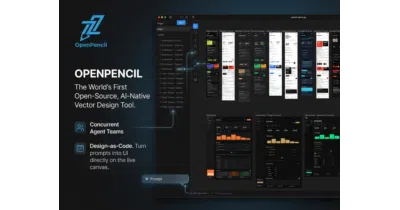
An open-source vector design tool that turns text prompts into live UI by orchestrating concurrent AI agents to draw, refine, and export code.
A self-hostable template for persistent AI agents that chat, take calls, and answer in Slack — each with its own containerized computer and a review gate before saving anything.
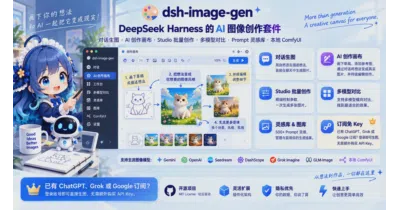
A DeepSeek Harness plugin that turns agent chat into a full image studio — and leans on subscriptions you already pay for instead of fresh API keys.
It turns DeepSeek's chat interface into a studio for generating, refining, and exporting actual editable designs and slides.
Pebrel is a GPU-accelerated Windows terminal built around AI CLI tools like Claude Code and Codex, tracking agent state and keeping sessions alive after you close the window.
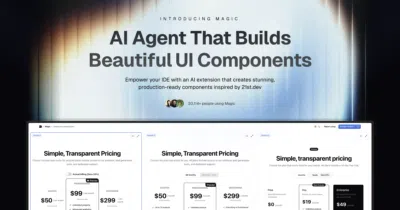
Magic MCP generates React UI components from chat prompts in Cursor, Windsurf, or VS Code, pulling from the 21st.dev library so you don't need a separate browser tab.
It simulates a complete smartphone in the browser for immersive, persistent AI roleplay with social media, games, and a bridge to real iOS devices.
Eino brings LangChain-style LLM orchestration to Go, with graph-based workflows, multi-agent teams, and built-in human-in-the-loop support.
Amical runs Whisper locally and formats dictation based on whichever app you're currently using.
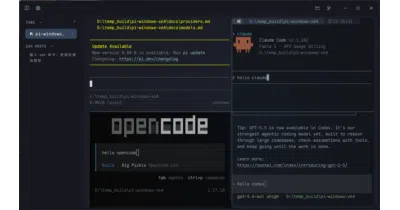
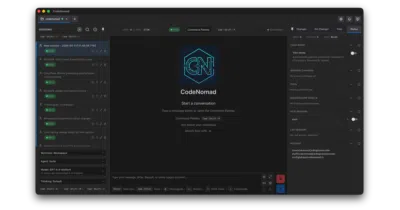
It wraps the OpenCode CLI in a multi-session desktop workspace so you can manage AI coding without living in a terminal.
An AI-native presentation app that generates styled slide decks from a prompt or document and lets you refine them with natural-language commands instead of menu diving.
Yao is a Go runtime that bundles LLM agents, web apps, and sandboxed CLI tools into one executable — no Node, no Python, no Docker on the host.
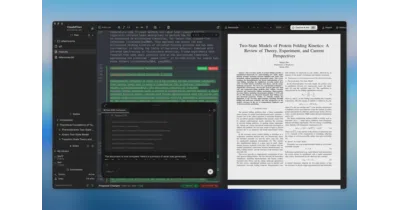
A desktop LaTeX workspace that swaps cloud lock-in for local files, offline compilation, and an AI assistant that actually knows bioinformatics.
heatdrop uses Google Analytics to see which pages get read — nothing else. Your call. How we handle data.