
rocketride-org/rocketride-server · 08 Oct 2026
A C++ Engine Walks Into the Python Orchestration Party
RocketRide bets that AI pipelines deserve a compiled runtime, portable JSON definitions, and a home inside your IDE rather than a browser tab.

Samantha Lowe writes about retrieval, search, and data tooling for AI products. She is happiest tracing why a RAG pipeline returns the wrong chunk.
RocketRide bets that AI pipelines deserve a compiled runtime, portable JSON definitions, and a home inside your IDE rather than a browser tab.
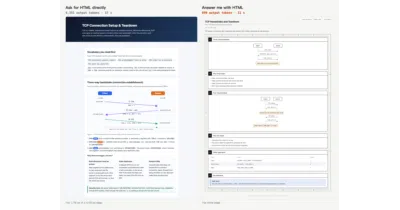
Answer me with HTML splits the labor: the model writes content, a bundled CLI does the layout — and the waiting time collapses while the bill stays the same.
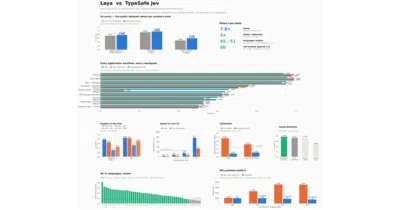
Laya is a multilingual decision engine that trades text generation for typed, calibrated judgments in a single forward pass, targeting the latency and hallucination costs of routing work through large language models.

SenteLabs built an eight-agent open-source council that remembers your decisions and nags you about follow-ups, offering a self-hosted counterweight to proprietary executive AI.

Huashu-design is an agent-agnostic prompt architecture that turns terminal-based AI assistants into high-fidelity design teams—no Figma, no browser tab, no GUI.

Reasonix is a Go-built terminal harness that treats DeepSeek’s prefix cache as a first-class design constraint, keeping token costs low while orchestrating tools, planners, and MCP plugins in a single static binary.
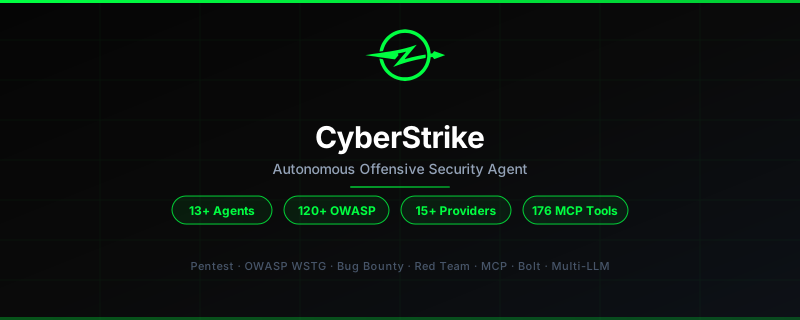
CyberStrike converts general-purpose language models into autonomous offensive-security agents by wrapping them in a domain-specific intelligence layer that orchestrates tools, browsers, and remote execution nodes.
heatdrop uses Google Analytics to see which pages get read — nothing else. Your call. How we handle data.