ultralytics/yolov5
The object detector that launched 57,000 forks
YOLOv5 made real-time object detection as easy as `torch.hub.load`, then exported to everything from iOS to edge chips.
Not currently ranked — collecting fresh signals.
star history
What it does
YOLOv5 is a PyTorch-based object detection, segmentation, and classification framework from Ultralytics. Load a pretrained model in one line via PyTorch Hub, run inference on images, video, webcam, or streams, then export to ONNX, CoreML, TFLite, and other formats for deployment. Training scripts and COCO reproduction configs are included.
The interesting bit
The real product here isn’t the architecture—it’s the packaging. Ultralytics turned a research model into something you can pip-install, run on a YouTube URL, and ship to an iPhone without rewriting the inference stack. The “v5” naming sparked endless debate (there was no official YOLOv4 paper predecessor from the same team), but the convenience won out.
Key highlights
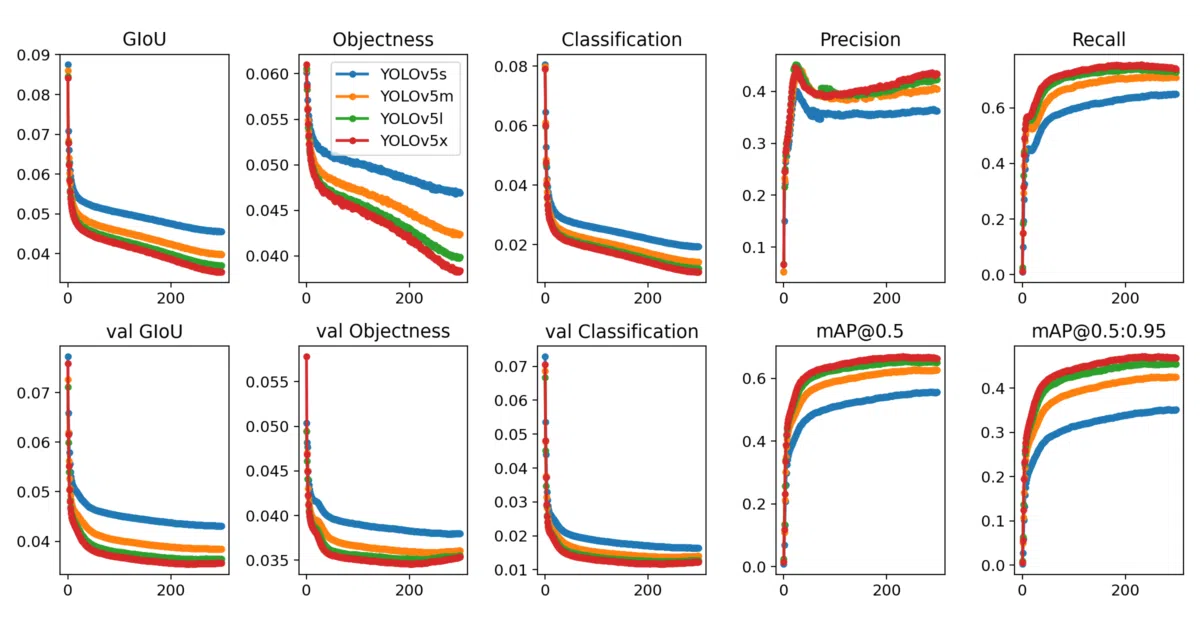
- Five model sizes (n/s/m/l/x) trading off speed and accuracy; training times range from ~1 day (YOLOv5n) to ~8 days (YOLOv5x) on a single V100
- One-line PyTorch Hub loading with automatic batching, resizing, and normalization
detect.pyhandles 10+ input sources including webcam, screen capture, RTSP streams, and YouTube URLs- Built-in export pipeline to ONNX, CoreML, TFLite, and others
- AutoBatch feature (
--batch-size -1) automatically finds the largest batch size your GPU can handle
Caveats
- The README now prominently pushes YOLO11 as “the next evolution”; YOLOv5 appears to be in maintenance mode
- Enterprise licensing requires contacting Ultralytics directly; the open-source license terms aren’t summarized in the README
- Training times and batch sizes in the docs are benchmarked on V100s; your hardware mileage will vary
Verdict
Grab this if you need battle-tested object detection with minimal friction and broad export support. Skip it if you’re starting fresh and want the latest architecture—Ultralytics clearly wants you on YOLO11 instead.
Frequently asked
- What is ultralytics/yolov5?
- YOLOv5 made real-time object detection as easy as `torch.hub.load`, then exported to everything from iOS to edge chips.
- Is yolov5 open source?
- Yes — ultralytics/yolov5 is open source, released under the AGPL-3.0 license.
- What language is yolov5 written in?
- ultralytics/yolov5 is primarily written in Python.
- How popular is yolov5?
- ultralytics/yolov5 has 58.2k stars on GitHub.
- Where can I find yolov5?
- ultralytics/yolov5 is on GitHub at https://github.com/ultralytics/yolov5.