serengil/tensorflow-101
A cookbook of face-recognition recipes, from scratch
Collection of Keras/TensorFlow notebooks that rebuild popular CV models and show how to deploy them at scale.
Not currently ranked — collecting fresh signals.
star history
What it does
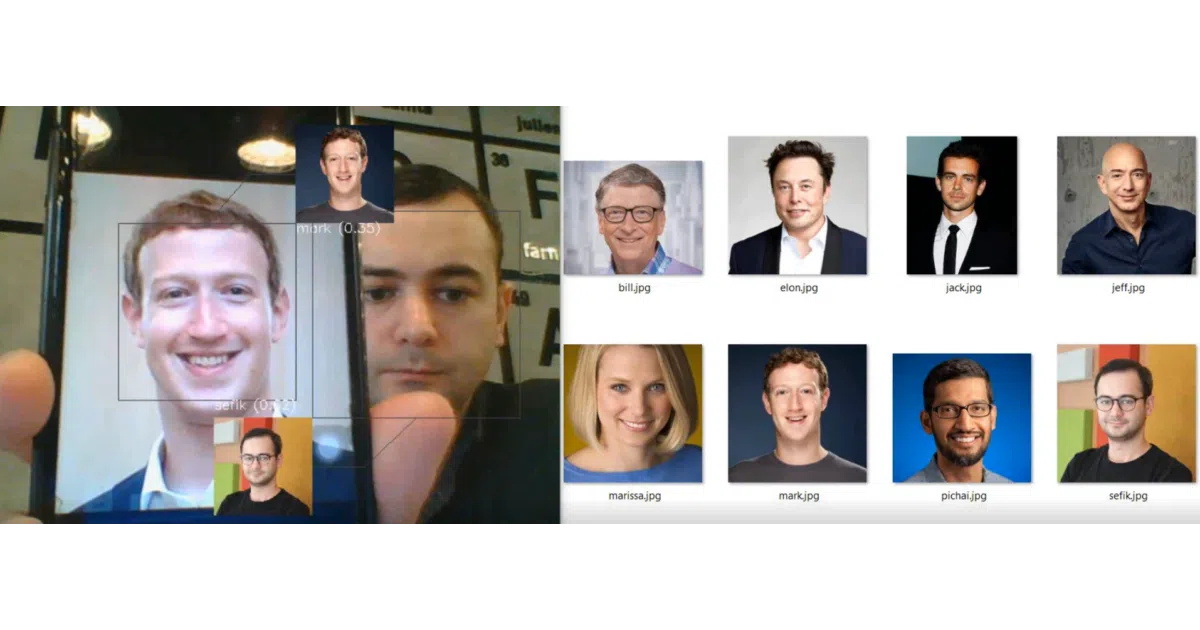
This repo is a grab-bag of computer-vision notebooks: facial expression recognition, age/gender prediction, celebrity look-alike matching, and implementations of nine named face-recognition architectures (VGG-Face, FaceNet, DeepFace, OpenFace, DeepID, Dlib, SphereFace, ArcFace, plus OpenCV variants). Each project ships with Python code, pre-trained weights, and a linked step-by-step blog tutorial on sefiks.com.
The interesting bit
The author didn’t just dump models—he stress-tests them against real-world scaling problems. There’s a whole section on dropping face embeddings into approximate-nearest-neighbor engines (Spotify Annoy, Faiss, NMSLIB, Elasticsearch) and even k-NN queries in SQL, MongoDB, Cassandra, Redis, Hadoop/Spark, and Neo4j. It’s the rare tutorial that admits O(n) verification breaks down at millions of faces and actually shows you the escape hatch.
Key highlights
- Real-time demos for emotion detection, face recognition, and age/gender prediction, with linked YouTube videos.
- Transfer-learning example using VGG-Face locked early layers for fast age prediction.
- Side-by-side LFW scores for models where available (FaceNet 99.65, ArcFace 99.40, VGG-Face 98.78, etc.).
- All “state-of-the-art” face models wrapped into the separate
deepfacelibrary for production use. - AutoML, style transfer, and autoencoder notebooks also included (per topics, though README truncates before showing them).
Caveats
- README is truncated mid-sentence; some sections (R…?) are cut off, so completeness is unclear.
- Several models share the same code link (e.g., VGG-Face and FaceNet both point to
vgg-face.ipynb), which may confuse. - LFW scores are presented without test-protocol details or confidence intervals—treat as rough reference points, not rigorous benchmarks.
Verdict
Great for practitioners who want to see how famous face-recognition papers translate to Keras code, and especially for anyone who needs to scale beyond “compare-every-face-to-every-face.” Skip if you want a unified framework; this is explicitly a scattered tutorial collection, not a product.
Frequently asked
- What is serengil/tensorflow-101?
- Collection of Keras/TensorFlow notebooks that rebuild popular CV models and show how to deploy them at scale.
- Is tensorflow-101 open source?
- Yes — serengil/tensorflow-101 is open source, released under the MIT license.
- What language is tensorflow-101 written in?
- serengil/tensorflow-101 is primarily written in Jupyter Notebook.
- How popular is tensorflow-101?
- serengil/tensorflow-101 has 1.1k stars on GitHub.
- Where can I find tensorflow-101?
- serengil/tensorflow-101 is on GitHub at https://github.com/serengil/tensorflow-101.