01
pallavi-shekhar/ai-engineering-interview-questions-company-wise
+65% /wk +174 ★/day↗accelerating
A curated map of real AI engineering interview questions from 35 companies, tagged by topic and employer so candidates study what actually matters.
A curated map of real AI engineering interview questions from 35 companies, tagged by topic and employer so candidates study what actually matters.
Those viral Claude Opus 5.5 animations are just code the model wrote — this list collects them with the prompts that produced them, so you can copy the technique instead of guessing.
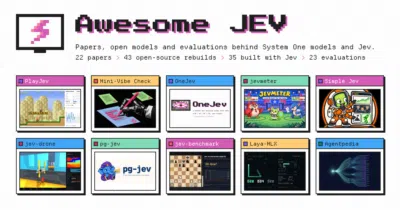
A high-signal field guide that maps where Jev makes real typed decisions in production, with a strict warning that inclusion is not endorsement.
It turns 150+ scattered LLM guides into a single engineering curriculum—from API basics to production Agents and ByteDance interviews—because hoarding bookmarks is not a learning strategy.
One developer's field notes from 8+ hours a day of agentic coding — rules, skills, MCPs, and how to stop writing code yourself.
A curated, commit-pinned directory of open-source projects that implement fast, typed discrete decisions for autonomous agents.
TrenTorch teaches machine learning by having you build a PyTorch-shaped framework from scratch, plus 350+ browser-graded coding questions.
A curated archive of 18 copy-ready prompts and 54 real cases where Claude Opus 5.5 rendered entire videos by writing code, not pixels.
A curated collection of Claude 5.5-made videos that obsessively separates what creators claim from what the evidence actually shows.
A curated, blog-per-lesson curriculum that walks you from ML basics all the way to inference engineering, agents, and AI system design — no paywall in sight.
A Chinese-language LLM curriculum that rebuilds Stanford CS336 into six hands-on assignments, from writing a tokenizer to distributed training and GRPO.
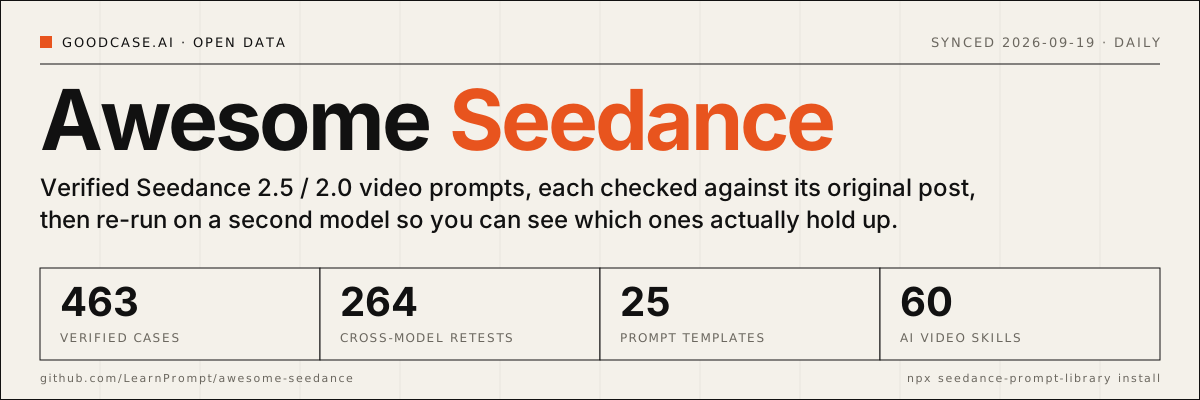
A verified prompt library for ByteDance's Seedance video generator, cross-checked against original posts and retested across models.
Because launch posts describe the vendor’s architecture, not your machine’s permission prompts and credit-card charges.
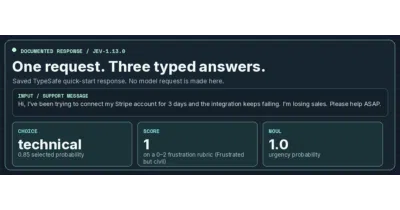
A curated, source-backed catalog of 155 projects built on Jev, a model that answers typed questions with probabilities instead of generating text.
A curated awesome-list tracking 167 papers, models, benchmarks, and independent evaluations around TypeSafe's System One decision models.
A community-maintained awesome list mapping the young 'decision model' ecosystem — models that return a probability for each answer you declare up front instead of generating text.
Because TypeSafe's Jev model returns structured decisions instead of text, and developers needed a curated map to SDKs, live demos, and independent benchmarks.
A from-scratch reimplementation of GPT-2 through Llama 4 and DeepSeek v3, built to teach you what the architecture papers actually mean.
A Markdown-only syllabus for the discipline that appeared overnight: wiring GPUs, caches, RAG, and agents into one system that is fast, cheap, reliable, and safe.
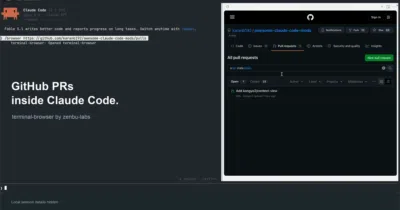
An independent scanner crawls GitHub for Claude Code mods and reports what each one can read, write, run, or send over the network.
heatdrop uses Google Analytics to see which pages get read — nothing else. Your call. How we handle data.