openai/multiagent-particle-envs
OpenAI's archived multi-agent sandbox
A particle-world testbed for teaching agents to deceive, cooperate, and eavesdrop.
Not currently ranked — collecting fresh signals.
star history
What it does
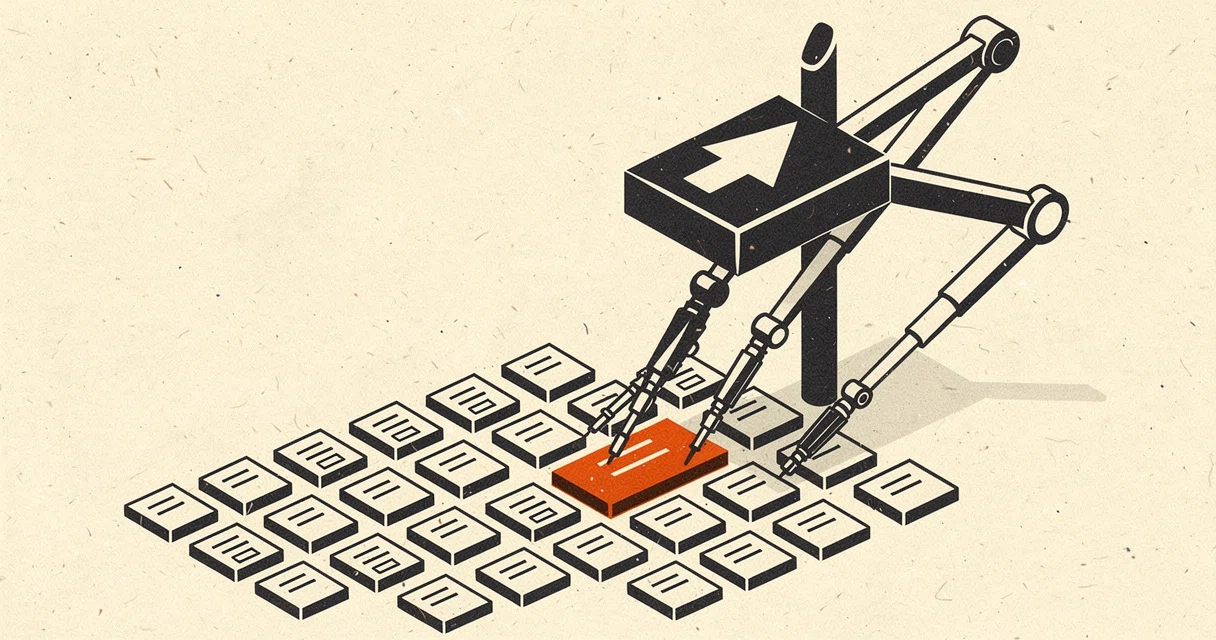
This is OpenAI’s 2017 multi-agent particle environment: a lightweight 2D physics simulator where multiple agents move, collide, observe, and communicate to solve tasks. It packages nine scenarios—ranging from cooperative navigation to adversarial tag and covert communication—into a Gym-like interface for training multi-agent policies. The codebase is explicitly archived and provided as-is.
The interesting bit
The scenarios are where the personality hides. In “physical deception,” good agents must cover multiple landmarks to fool an adversary about which is the real target; in “covert communication,” two agents try to encrypt a message while a third eavesdrops. It is essentially a minimal physics engine wrapped around a social-dynamics laboratory.
Key highlights
- Nine built-in scenarios mixing cooperation, competition, and communication (including predator-prey, keep-away, and speaker-listener reference games)
- Continuous observation and discrete action spaces with basic 2D interaction physics
- Scenario authoring via four functions:
make_world(),reset_world(),reward(), andobservation() - Gym-like API via
make_env.pyfor dropping into RL training loops - Environment used in the Lowe et al., NIPS 2017 multi-agent actor-critic paper
Caveats
- Explicitly archived with no updates expected; OpenAI points to PettingZoo as the maintained successor
- Dependency versions frozen in 2017 (Python 3.5.4, OpenAI Gym 0.10.5, NumPy 1.14.5), so modern environments will likely need massaging or containerization
Verdict
Grab this if you are reproducing 2017-era multi-agent RL papers or need a minimal, hackable scenario template. Skip it if you want modern Python, current Gymnasium APIs, or active maintenance—use PettingZoo instead.
Frequently asked
- What is openai/multiagent-particle-envs?
- A particle-world testbed for teaching agents to deceive, cooperate, and eavesdrop.
- Is multiagent-particle-envs open source?
- Yes — openai/multiagent-particle-envs is open source, released under the MIT license.
- What language is multiagent-particle-envs written in?
- openai/multiagent-particle-envs is primarily written in Python.
- How popular is multiagent-particle-envs?
- openai/multiagent-particle-envs has 2.8k stars on GitHub.
- Where can I find multiagent-particle-envs?
- openai/multiagent-particle-envs is on GitHub at https://github.com/openai/multiagent-particle-envs.