isl-org/ZoeDepth
Metric depth from one image, now left to the community
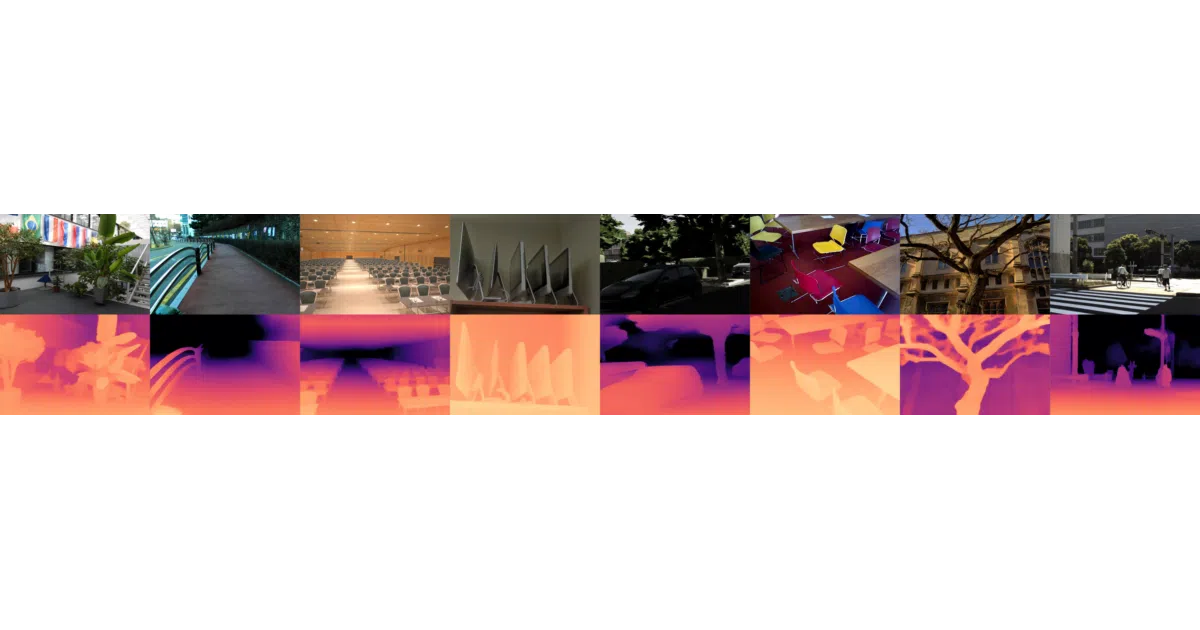
It exists to predict metric depth—actual physical distance—from a single RGB image by combining relative depth patterns with absolute scale, offering pretrained models for zero-shot transfer.
Not currently ranked — collecting fresh signals.
star history
What it does
ZoeDepth is a PyTorch implementation that estimates metric depth—real-world physical distances—from a single RGB image. It ships three pretrained variants: ZoeD_N trained on NYU-Depth-v2, ZoeD_K trained on KITTI, and a multi-headed ZoeD_NK model. You can hand it a PIL image, a torch tensor, or a remote URL, and get back depth maps as numpy arrays, 16-bit PIL images, or tensors. The repo also includes training and evaluation scripts for both single-dataset and mixed-dataset setups.
The interesting bit
Most monocular depth estimators only produce relative up-to-scale depth; ZoeDepth attempts to recover true metric scale by combining relative and metric signals, as the paper title suggests. The codebase reflects this architecturally: ZoeD_N and ZoeD_K use a single metric head each, while ZoeD_NK uses multiple heads to handle both datasets at once. The README never explains how the fusion actually works, so the mechanism remains in the paper.
Key highlights
- Three pretrained variants: ZoeD_N (NYU-Depth-v2), ZoeD_K (KITTI), and multi-headed ZoeD_NK
- Inference accepts PIL images, torch tensors, or URLs; outputs numpy, 16-bit PIL, or tensors
- Loads via torch hub or local paths without manual weight hunting
- Training scripts for single-dataset (
train_mono.py) and mixed-dataset (train_mix.py) workflows - Gradio demo available locally and on HuggingFace Spaces
Caveats
- Intel has formally abandoned the project: no maintenance, bug fixes, patches, or updates accepted
- The README is essentially a quickstart guide; the underlying method is undocumented outside the paper
Verdict
A solid starting point if you need off-the-shelf metric depth inference and can tolerate unmaintained code. Skip it if you need active support, detailed documentation, or a living upstream.
Frequently asked
- What is isl-org/ZoeDepth?
- It exists to predict metric depth—actual physical distance—from a single RGB image by combining relative depth patterns with absolute scale, offering pretrained models for zero-shot transfer.
- Is ZoeDepth open source?
- Yes — isl-org/ZoeDepth is open source, released under the MIT license.
- What language is ZoeDepth written in?
- isl-org/ZoeDepth is primarily written in Jupyter Notebook.
- How popular is ZoeDepth?
- isl-org/ZoeDepth has 2.8k stars on GitHub.
- Where can I find ZoeDepth?
- isl-org/ZoeDepth is on GitHub at https://github.com/isl-org/ZoeDepth.