dvgodoy/FineTuningLLMs
Fine-Tuning LLMs Without Renting a Data Center
These notebooks teach the stable, stackable tricks—quantization, LoRA, and templates—needed to fine-tune large language models on a single consumer GPU.
Not currently ranked — collecting fresh signals.
star history
What it does
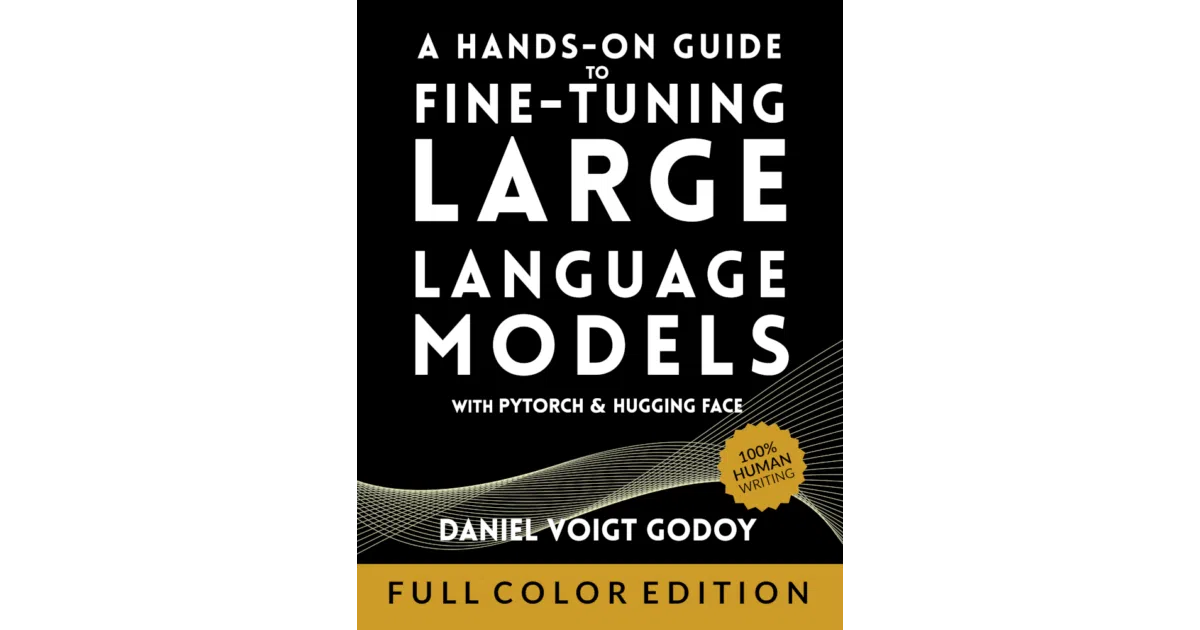
This repository holds the companion notebooks for an intermediate book on fine-tuning large language models with PyTorch and Hugging Face. It walks through loading quantized models, configuring low-rank adapters, formatting datasets, training with SFTTrainer, and deploying locally via GGUF, Ollama, or llama.cpp. The whole pipeline is designed to run on a single consumer-grade GPU, including Google Colab.
The interesting bit
Rather than chasing the latest daily announcement, the author treats quantization, adapters, and chat templates as durable fundamentals. Chapter 0 is a full end-to-end “TL;DR” that gets you training and querying a model before the slower theory chapters begin. There is even a dedicated troubleshooting chapter—Chapter -1—which is a refreshing admission that things actually go wrong.
Key highlights
- Chapter 0 runs the full pipeline—quantization, LoRA, formatting, training, and inference—in one shot before diving into theory.
- Detailed coverage of 4-bit and 8-bit quantization with BitsAndBytes, LoRA setup via PEFT, and dataset formatting with chat templates and collators.
- Training chapter compares Flash Attention and PyTorch’s SDPA for speed and memory on consumer hardware.
- Deployment chapter covers GGUF conversion and local serving with Ollama or llama.cpp.
- Includes appendices on cloud GPU setup (RunPod) and the bitwise internals of data types.
Verdict
Worth bookmarking if you already speak Transformer and want a structured, hands-on path to single-GPU fine-tuning. If tokens, embeddings, and Adam are still foreign concepts, the author explicitly suggests starting with a beginner series instead.
Frequently asked
- What is dvgodoy/FineTuningLLMs?
- These notebooks teach the stable, stackable tricks—quantization, LoRA, and templates—needed to fine-tune large language models on a single consumer GPU.
- Is FineTuningLLMs open source?
- Yes — dvgodoy/FineTuningLLMs is open source, released under the MIT license.
- What language is FineTuningLLMs written in?
- dvgodoy/FineTuningLLMs is primarily written in Jupyter Notebook.
- How popular is FineTuningLLMs?
- dvgodoy/FineTuningLLMs has 875 stars on GitHub.
- Where can I find FineTuningLLMs?
- dvgodoy/FineTuningLLMs is on GitHub at https://github.com/dvgodoy/FineTuningLLMs.