01
lexmount/moli
+2845 ★/day↗accelerating
Moli is a standalone Rust headless browser that avoids continuous rendering by computing layout and paint only when an operation explicitly demands geometry or pixels.
Moli is a standalone Rust headless browser that avoids continuous rendering by computing layout and paint only when an operation explicitly demands geometry or pixels.
RocketRide exists because wiring LLM workflows shouldn't require leaving your IDE or surrendering your data to a cloud dashboard.
A Claude Code framework that automates job hunting with fit scoring, LaTeX document tailoring, and a two-agent review loop.
It is an open-source agent harness that treats every component as a plugin, built on an academic framework called Cordis.
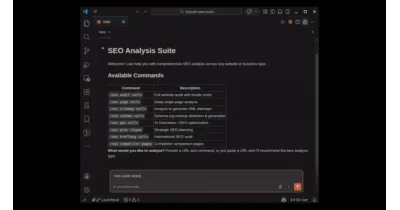
Claude SEO turns Claude Code into a parallel army of 18 specialist agents that audit websites against Google's own guidance—and every recommendation comes with a built-in falsifiability check.
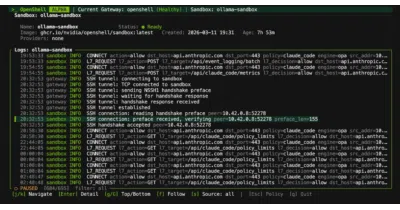
A Rust-based runtime that sandboxes autonomous agents with declarative YAML policies and hot-reloadable network controls.
A Claude Code template that turns one chat session into a structured game dev team with hierarchy, slash commands, and enough process to maybe stop you from hardcoding magic numbers.
Open-source role templates that teach Claude your team's tools, terminology, and workflows so you stop repeating yourself.
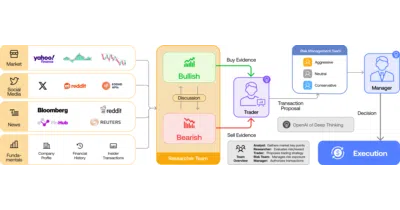
A research framework that assigns LLMs to trading-floor roles—analyst, researcher, trader, risk manager—to debate and execute simulated stock decisions.
ego lite is a macOS browser that isolates AI agents in parallel Spaces so they can automate the web with your real logins while your tabs stay untouched.
Headroom sits between your agents and the LLM to compress tool outputs, logs, and RAG chunks, delivering the same answers with a fraction of the tokens.
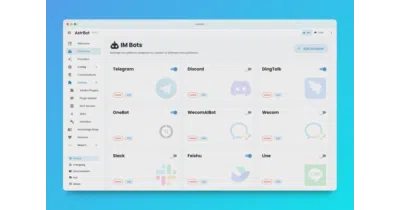
It is an open-source bridge between large language models and the instant messaging apps you already tolerate.
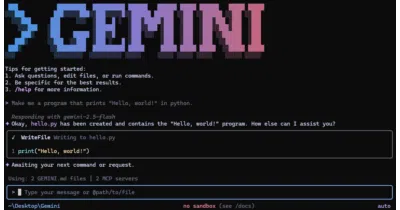
Gemini CLI is Google's bet that developers want an AI agent that actually lives in their shell, not just chats in a browser tab.
A library of domain-specific system prompts that turns generic AI assistants into specialized team members with job descriptions, workflows, and communication styles.
Strix deploys autonomous LLM agents to attack your applications and validate findings with working proof-of-concepts, trading the false-positive noise of static scanners for actual exploits.
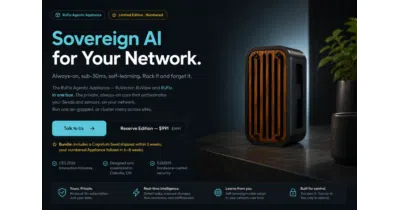
Ruflo turns Claude Code from a solo assistant into a coordinated swarm with shared memory, plugins, and cross-machine federation.
DeepTutor was built to turn generic LLM chats into persistent, agentic tutoring that can research, co-write, and remember across sessions.
Orca gives every CLI coding agent its own git worktree so you can run Claude, Codex, and Grok in parallel without stashing or branch juggling.
Because making AI agents read Twitter, Reddit, or Bilibili usually means wrestling with a dozen scrapers, API keys, and cookie jars.
SkillSpector scans AI agent skills for backdoors and malicious patterns before installation, because they currently execute with implicit trust and minimal vetting.
heatdrop uses Google Analytics to see which pages get read — nothing else. Your call. How we handle data.