zzh8829/yolov3-tf2
YoloV3 in TF 2.0: a clean port with the migration notes included
It ports YoloV3 to TensorFlow 2.0’s eager execution and Keras functional API, then documents exactly where the framework bites back.
Not currently ranked — collecting fresh signals.
star history
What it does
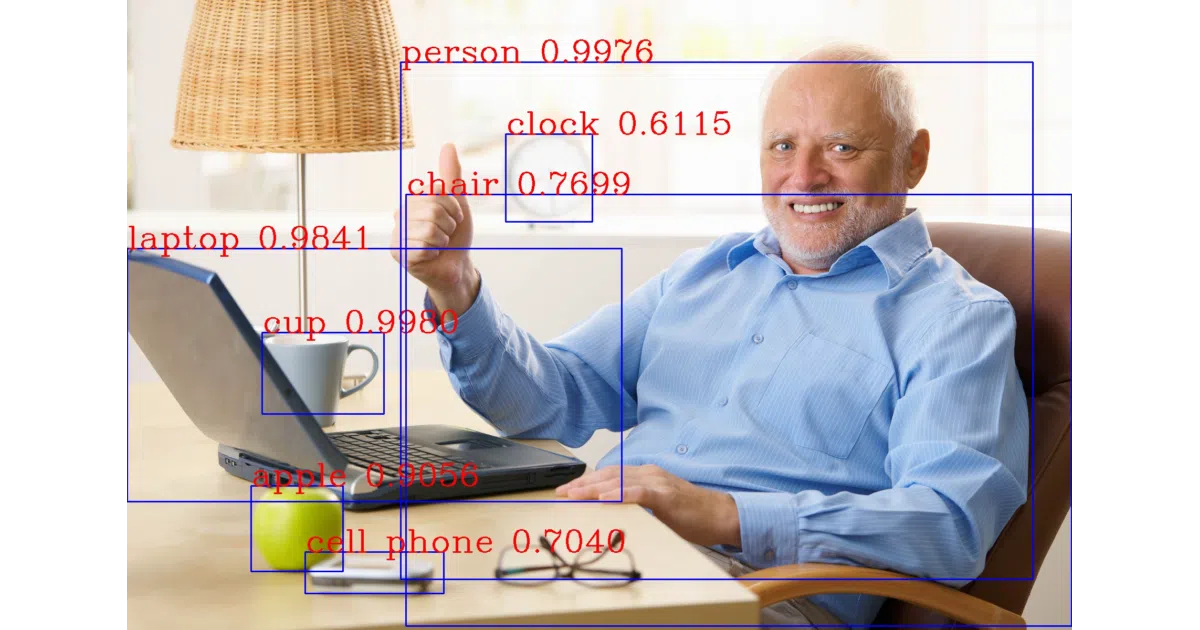
This is a ground-up re-implementation of the YoloV3 object-detection network for TensorFlow 2.0, packaging both the full model and the lightweight yolov3-tiny variant with pre-trained Darknet weights. It covers the whole lifecycle: inference on images and video, transfer learning, eager training with tf.GradientTape, graph-mode training via model.fit, and export to TensorFlow Serving. The author emphasizes “clean” code and best practices, using tf.keras.layers, tf.data pipelines, and absl-py for flags.
The interesting bit
The README’s value isn’t just the code; it’s the candid implementation notes. The author openly discusses the pain points of loading Darknet weights into Keras’s functional API because of layer ordering mismatches, the re-compilation traps of @tf.function, and why model(x) can be slower than model.predict if you ignore graph compilation overhead. It even includes a “simple hack” for BatchNormalization during transfer learning, which is the kind of detail usually buried in GitHub issues.
Key highlights
- Supports both
yolov3andyolov3-tinywith converted pre-trained weights. - Offers three training modes: eager
GradientTape, graphmodel.fit, and a hybrideager_fit. - Includes a full TF 2.0 data pipeline using
tf.dataand vectorized transformations. - Exports to TensorFlow Serving with a documented signature for bounding boxes, scores, and classes.
- Provides rough latency benchmarks across CPU, desktop GPU, and AWS Tesla instances.
Caveats
- The benchmark numbers are explicitly labeled as “rough calculations” from
detect_video.py, not rigorous training or inference benchmarks. - Training can fail with NaN loss if input bounding-box coordinates are not normalized or if the learning rate is too high; the README warns that label formats vary between tools like VOTT and labelImg.
- Keras’s h5 format cannot save the nested sub-models used for Darknet weight loading, so you must use TF Checkpoints instead.
Verdict
Worth a look if you need a readable, well-commented YoloV3 baseline in modern TensorFlow and want to avoid the usual TF 2.0 migration pitfalls. Skip it if you are married to PyTorch or need a turn-key, production-hardened object-detection framework with enterprise support.
Frequently asked
- What is zzh8829/yolov3-tf2?
- It ports YoloV3 to TensorFlow 2.0’s eager execution and Keras functional API, then documents exactly where the framework bites back.
- Is yolov3-tf2 open source?
- Yes — zzh8829/yolov3-tf2 is open source, released under the MIT license.
- What language is yolov3-tf2 written in?
- zzh8829/yolov3-tf2 is primarily written in Jupyter Notebook.
- How popular is yolov3-tf2?
- zzh8829/yolov3-tf2 has 2.5k stars on GitHub.
- Where can I find yolov3-tf2?
- zzh8829/yolov3-tf2 is on GitHub at https://github.com/zzh8829/yolov3-tf2.