yaojingang/GEOFlow
A Laravel factory line for flattering AI search engines
It exists to turn knowledge bases into AI-search-friendly content assets, then distribute them across WordPress, static sites, and custom agents.
Velocity · 7d
+8.0
★ / day
Trend
→steady
star history
What it does
GEOFlow is a Laravel-based content engineering system built around the premise of GEO—Generative Engine Optimization. It ingests knowledge bases, slices them via structured rules or optional LLM semantic chunking, stores vectors in PostgreSQL with pgvector, and feeds that context into AI generation tasks. Articles then move through a draft-and-audit workflow before publishing locally or pushing to remote targets like WordPress, generic HTTP APIs, or pre-packaged PHP “Agent” sites that render static pages, sitemaps, and llms.txt files.
The interesting bit
The project treats AI crawler legibility as a first-class output format alongside human readability. It ships remote target site packages complete with Schema markup, Open Graph, GFM Markdown, independent CSS, and dedicated llms.txt maps—essentially acknowledging that your real audience might be a bot. The authors also explicitly warn against using the tool to “manufacture information noise,” a rare disclaimer in the automated-content space.
Key highlights
- Multi-model AI support with OpenAI-compatible and Gemini native chat/embedding endpoints, including automatic provider URL adaptation and model fallback.
- RAG pipeline with structured rule-based chunking, optional LLM semantic boundary planning, and vector recall during article generation.
- Multi-site distribution via GEOFlow Agent (pre-configured PHP static-site packages), WordPress REST, and generic HTTP APIs, with remote edit/delete and queue-based sync.
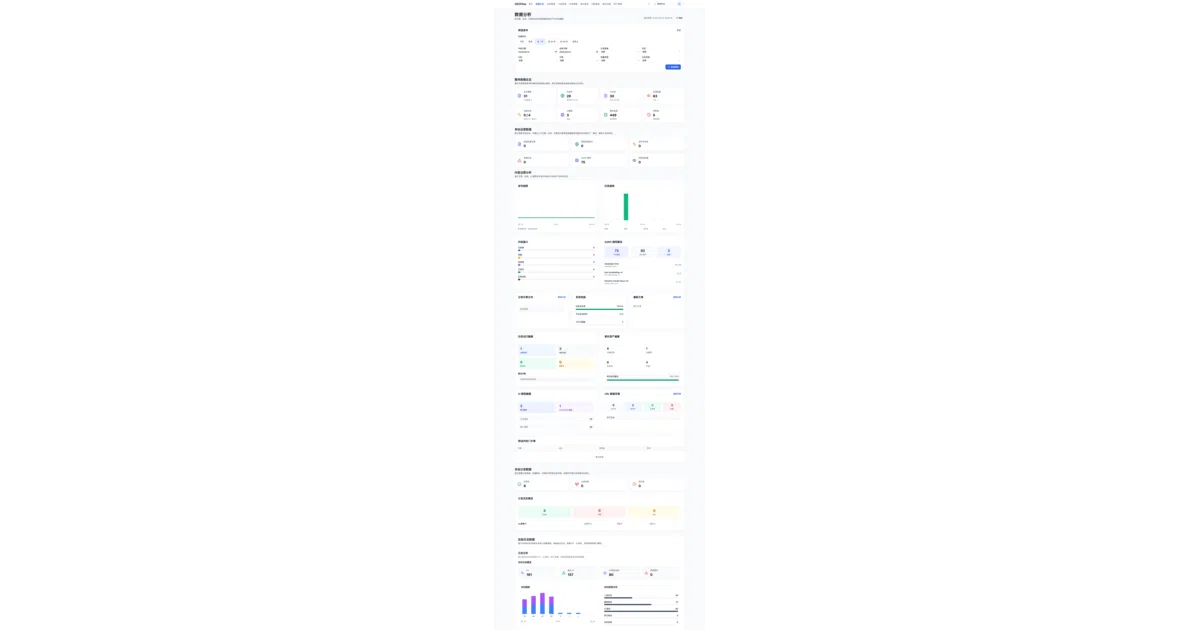
- Analytics dashboard tracking content operations, distribution health, access logs, and AI crawler identification trends.
- Backend internationalization covering six languages (Chinese, English, Japanese, Spanish, Russian, Brazilian Portuguese) through the 2.0 release modules.
Caveats
- The README is thorough on features but leaves actual performance benchmarks, resource requirements, and scaling limits unstated.
- It is a monolithic Laravel application requiring PostgreSQL, Redis, and queue workers; the operational footprint is nontrivial.
- The anti-spam stance is a policy warning rather than a technical guardrail, so the line between “content asset” and “noise” is left to the operator.
Verdict Teams running content operations for AI search visibility—especially those managing multi-site WordPress or static-site fleets—should look here. If you are not in the business of producing structured, machine-readable content at scale, this is elaborate overkill.
Frequently asked
- What is yaojingang/GEOFlow?
- It exists to turn knowledge bases into AI-search-friendly content assets, then distribute them across WordPress, static sites, and custom agents.
- Is GEOFlow open source?
- Yes — yaojingang/GEOFlow is open source, released under the AGPL-3.0 license.
- What language is GEOFlow written in?
- yaojingang/GEOFlow is primarily written in PHP.
- How popular is GEOFlow?
- yaojingang/GEOFlow has 3.9k stars on GitHub and is currently holding steady.
- Where can I find GEOFlow?
- yaojingang/GEOFlow is on GitHub at https://github.com/yaojingang/GEOFlow.