xingyizhou/CenterNet
Skip the anchor boxes—detect objects by their center points
Most detectors exhaustively scan for boxes; CenterNet finds a single center point and regresses the rest, no anchors required.
Not currently ranked — collecting fresh signals.
star history
What it does
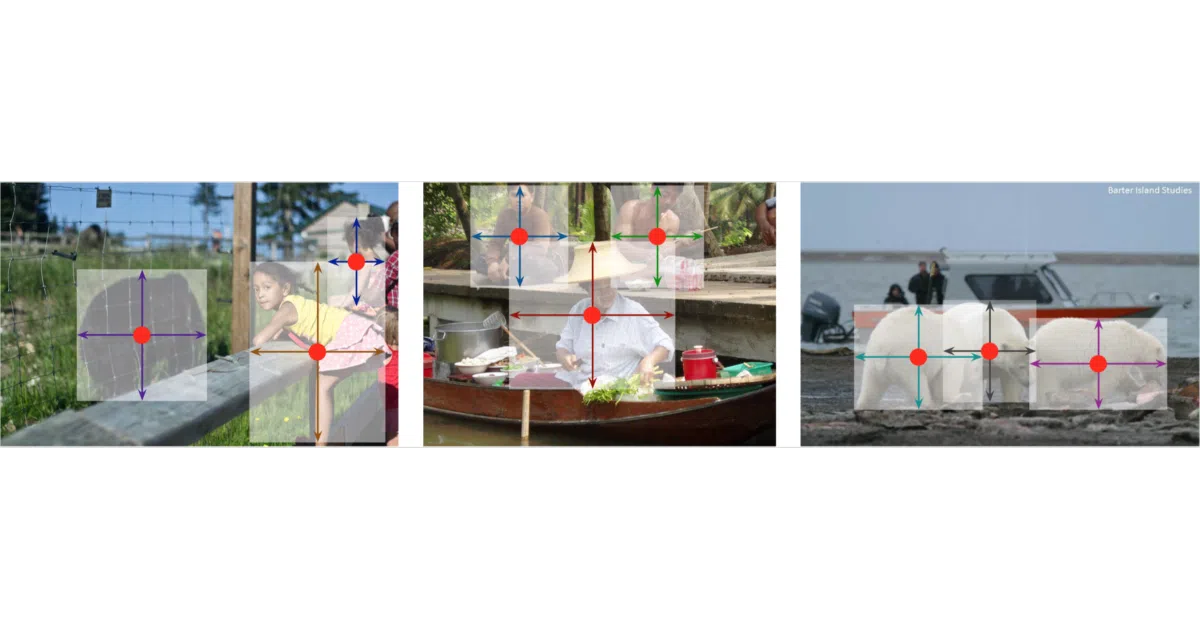
CenterNet treats object detection as keypoint estimation: it locates the center point of each object and regresses directly to bounding box dimensions, 3D location, orientation, and even human pose. The same core network handles 2D detection on COCO, 3D bounding boxes on KITTI, and multi-person pose estimation without architectural contortions. Everything runs in a single feedforward pass, and notably, it drops the usual Non-Maximum Suppression post-processing step entirely.
The interesting bit
The clever twist is modeling objects as points rather than boxes. Instead of maintaining anchor boxes of every shape and size, the network predicts a heatmap of object centers and simply reads off width, height, and depth from the features at those peak locations. It is end-to-end differentiable and, according to the authors, simpler and faster than corresponding bounding-box-based counterparts.
Key highlights
- Achieves 37.4 COCO AP at 52 FPS with a
DLA-34backbone, or 28.1 AP at 142 FPS withResNet-18. - Reaches 45.1 AP on COCO test-dev with multi-scale testing using an
Hourglass-104backbone. - Handles 3D detection and human pose estimation with minor modifications to the same framework.
- No
NMSrequired; the pipeline is a single network forward pass. - Includes webcam demos and a Python API for dropping the detector into other projects.
Verdict
Worth a look if you want a clean, unified intuition for detection, pose, and 3D estimation without anchor-box boilerplate. Skip it if you need a production-ready, maintained framework out of the box—this is a research artifact with a rich family of successor projects.
Frequently asked
- What is xingyizhou/CenterNet?
- Most detectors exhaustively scan for boxes; CenterNet finds a single center point and regresses the rest, no anchors required.
- Is CenterNet open source?
- Yes — xingyizhou/CenterNet is open source, released under the MIT license.
- What language is CenterNet written in?
- xingyizhou/CenterNet is primarily written in Python.
- How popular is CenterNet?
- xingyizhou/CenterNet has 7.6k stars on GitHub.
- Where can I find CenterNet?
- xingyizhou/CenterNet is on GitHub at https://github.com/xingyizhou/CenterNet.