uber-archive/plato-research-dialogue-system
Uber's abandoned Lego kit for conversational AI
A modular research framework that lets you mix, match, and train dialogue components like interchangeable blocks—before Uber archived it.
Not currently ranked — collecting fresh signals.
star history
What it does
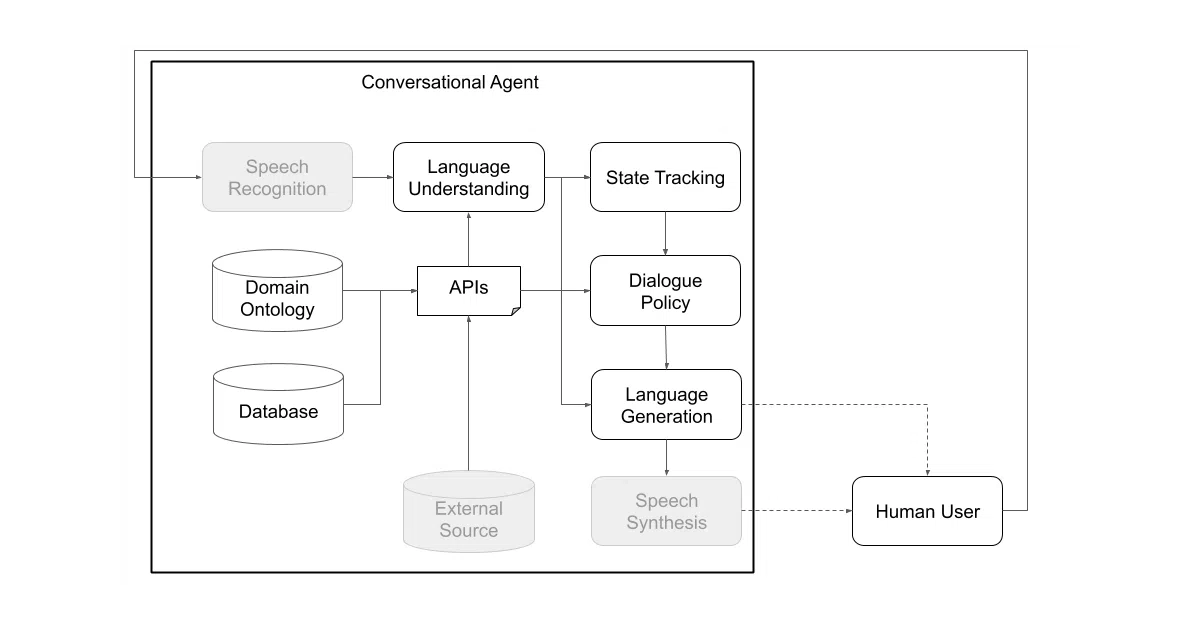
Plato is a Python framework for building conversational AI agents through a pipeline of swappable components: speech recognition, language understanding, dialogue state tracking, policy decisions, and language generation. You can train each piece independently or jointly, swap in your own models, and run everything via text, speech, or structured dialogue acts.
The interesting bit
The multi-agent mode is the real curiosity: Plato can spawn multiple agents that talk to each other, learn concurrently, and solve distributed problems. It’s designed for research into how agents develop language to collaborate—less “customer service chatbot,” more “artificial society in a box.” The framework also wraps around virtually any existing model by asking only that you adhere to its interface, making it closer to a universal adapter than a monolithic platform.
Key highlights
- Modular architecture: swap NLU, DST, policy, or NLG components without touching the rest
- Supports serial or parallel execution of custom component chains, including joint models and speech-to-speech pipelines
- Multi-agent conversations with concurrent training and role-specific configurations
- Built-in Bayesian optimization (BOCS) for architecture and parameter search
- Optional GUI and user simulators for pre-training before human interaction
- Designed to wrap Ludwig, TensorFlow, PyTorch, or custom implementations
Caveats
- Repository is archived by Uber; no active maintenance (last version v0.3.1)
- Installation requires manual dependency wrangling, especially PyAudio with platform-specific system libraries
- README is truncated mid-documentation; some sections appear incomplete
Verdict
Academic researchers and dialogue systems tinkerers who need a flexible, componentized sandbox should still find value here—especially for multi-agent experiments. Production engineers or anyone needing current dependencies and security patches should look elsewhere; this is a fossil, not a foundation.
Frequently asked
- What is uber-archive/plato-research-dialogue-system?
- A modular research framework that lets you mix, match, and train dialogue components like interchangeable blocks—before Uber archived it.
- Is plato-research-dialogue-system open source?
- Yes — uber-archive/plato-research-dialogue-system is open source, released under the Apache-2.0 license.
- What language is plato-research-dialogue-system written in?
- uber-archive/plato-research-dialogue-system is primarily written in Python.
- How popular is plato-research-dialogue-system?
- uber-archive/plato-research-dialogue-system has 980 stars on GitHub.
- Where can I find plato-research-dialogue-system?
- uber-archive/plato-research-dialogue-system is on GitHub at https://github.com/uber-archive/plato-research-dialogue-system.