tobegit3hub/simple_tensorflow_serving
A Swiss Army knife for model serving that predates the hype
Before every MLOps platform promised universal deployment, this project actually tried it—TensorFlow, PyTorch, ONNX, and a dozen others via one REST server.
Not currently ranked — collecting fresh signals.
star history
What it does
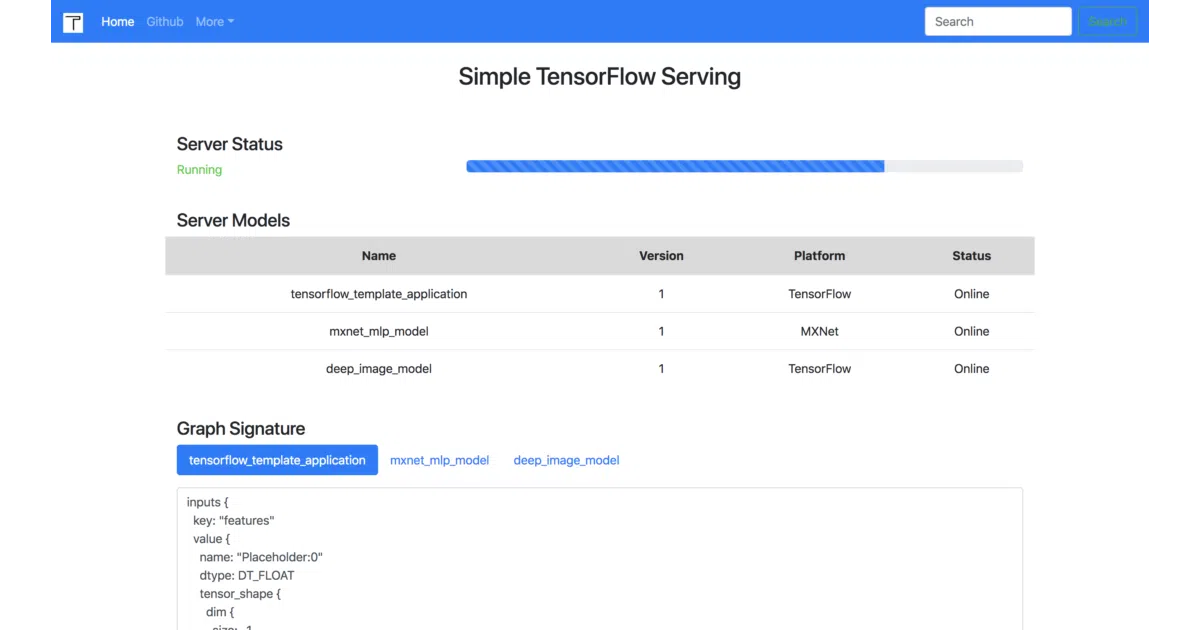
Simple TensorFlow Serving is a single HTTP server that hosts trained models and exposes them through RESTful APIs. You point it at a model directory, it loads the SavedModel (or MXNet/ONNX/etc. equivalent), and you get curl-able endpoints for inference. It also generates client code in Python, Bash, Go, or JavaScript on demand—scrape the model signature, spit out a working script.
The interesting bit
The breadth is almost anachronistic. The README lists TensorFlow, MXNet, PyTorch, Caffe2, CNTK, ONNX, H2O, Scikit-learn, XGBoost, PMML, and Spark MLlib as supported platforms. That ambition—one serving layer for the entire 2017-era ML zoo—feels like a time capsule from before the industry consolidated around TensorFlow Serving and TorchServe. The auto-generated clients are genuinely handy: hit /gen_client?language=python and you get runnable code without reading protobuf definitions.
Key highlights
- Serves multiple models and versions simultaneously from a JSON config file; hot-swaps versions without restarts
- GPU acceleration via Docker tags with CUDA passthrough, plus per-model GPU memory fraction controls
- Raw image file uploads for vision models (
-F 'image=@mew.jpg') instead of manual tensor construction - Basic auth and TLS/SSL for the “enterprise” checkbox
- Custom TensorFlow ops loadable via
--custom_op_paths
Caveats
- The project name oversells: “TensorFlow” is only one of many supported backends, which probably confused searchers then and now
- README has a typo for TLS (“TSL/SSL”) and the Scikit-learn example is truncated mid-filename—small signs of maintenance drift
- 758 stars suggests it found an audience, but the multi-framework promise means surface area that may outstrip testing depth
Verdict
Worth a look if you’re maintaining legacy models across frameworks and want one server instead of three. Skip it if you’re already standardized on modern TensorFlow Serving or KServe—this is a useful utility, not a platform migration target.
Frequently asked
- What is tobegit3hub/simple_tensorflow_serving?
- Before every MLOps platform promised universal deployment, this project actually tried it—TensorFlow, PyTorch, ONNX, and a dozen others via one REST server.
- Is simple_tensorflow_serving open source?
- Yes — tobegit3hub/simple_tensorflow_serving is open source, released under the Apache-2.0 license.
- What language is simple_tensorflow_serving written in?
- tobegit3hub/simple_tensorflow_serving is primarily written in JavaScript.
- How popular is simple_tensorflow_serving?
- tobegit3hub/simple_tensorflow_serving has 756 stars on GitHub.
- Where can I find simple_tensorflow_serving?
- tobegit3hub/simple_tensorflow_serving is on GitHub at https://github.com/tobegit3hub/simple_tensorflow_serving.