stanfordnmbl/osim-rl
Teaching AI to walk with muscles, not motors
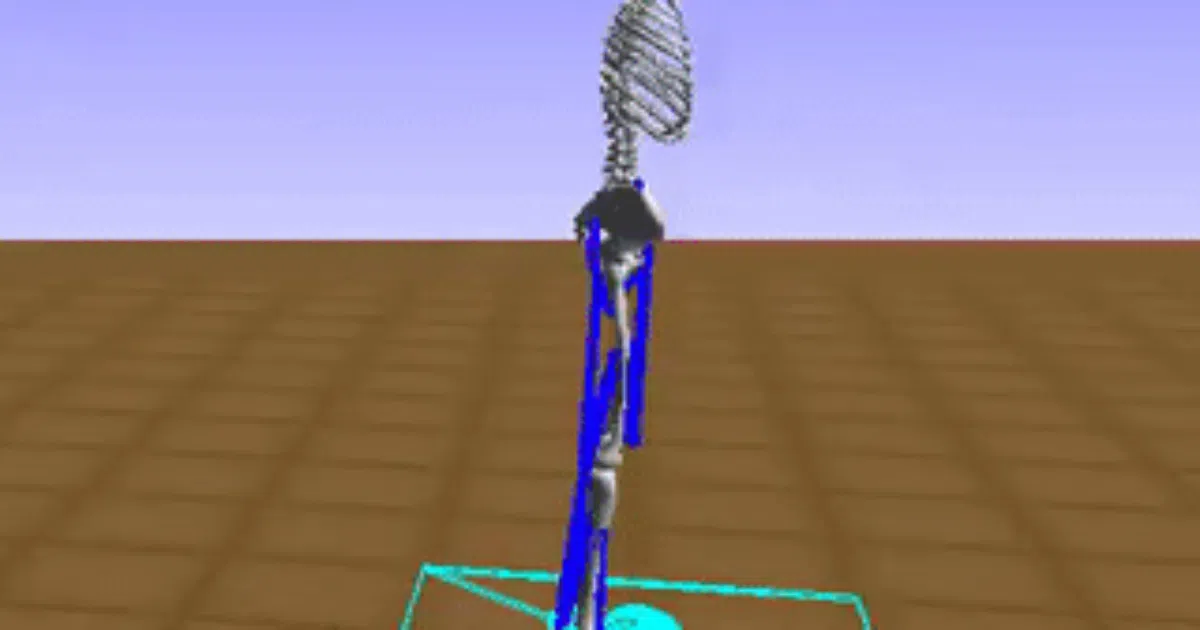
A reinforcement learning environment where agents control a 3D human musculoskeletal model—prosthetic leg included—instead of the usual robotic joints.
Not currently ranked — collecting fresh signals.
star history
What it does
osim-rl wraps the biomechanical simulator OpenSim into a standard RL interface. Your agent outputs muscle excitations, not joint torques, to make a physiologically plausible human model walk, run, or adapt to a prosthetic leg. The reward trades off following velocity commands against energy expenditure.
The interesting bit
Most locomotion benchmarks let you command joint angles directly. Here you control 22+ muscle actuators with realistic delay and fatigue properties, which means your policy has to solve a harder coordination problem—one that actually resembles human motor control. The 2019 challenge added a prosthetic-leg track, turning a research competition into a potential prosthetics-design tool.
Key highlights
- Built on OpenSim, a Stanford biomechanics simulator with decades of validation behind it
- Full 3D dynamics (the 2017 version was planar); the model can actually fall sideways
- Experimental motion-capture data is provided to bootstrap training
- Standard Gym-style API:
reset(),step(),observation,reward - Conda-packaged binaries for Windows, Linux, and macOS
Caveats
- Requires Anaconda and a specific Python 3.6.1 environment; not a quick
pip installoutside conda - Documentation lives on an external site; the README is basically a setup and submission guide
- The repo appears tied to a concluded 2019 NeurIPS challenge, so active maintenance is unclear
Verdict
Worth a look if you’re doing biomechanics-informed RL, sim-to-real transfer for legged robots, or prosthetics research. Skip it if you just want a fast locomotion benchmark—MuJoCo’s HalfCheetah will get you published quicker.
Frequently asked
- What is stanfordnmbl/osim-rl?
- A reinforcement learning environment where agents control a 3D human musculoskeletal model—prosthetic leg included—instead of the usual robotic joints.
- Is osim-rl open source?
- Yes — stanfordnmbl/osim-rl is open source, released under the MIT license.
- What language is osim-rl written in?
- stanfordnmbl/osim-rl is primarily written in Python.
- How popular is osim-rl?
- stanfordnmbl/osim-rl has 948 stars on GitHub.
- Where can I find osim-rl?
- stanfordnmbl/osim-rl is on GitHub at https://github.com/stanfordnmbl/osim-rl.