raghakot/keras-resnet
ResNet in Keras 1.0: a museum piece with honest footnotes
A clean, pre-keras-2 implementation of residual networks that openly admits where its CIFAR-10 example falls short.
Not currently ranked — collecting fresh signals.
star history
What it does
Implements ResNet using Keras 1.0’s functional API, supporting both Theano and TensorFlow backends with ’th’ and ’tf’ image dimension ordering. Includes a ResNetBuilder factory for standard architectures and a generic build method for custom setups. Ships with a CIFAR-10 training example.
The interesting bit
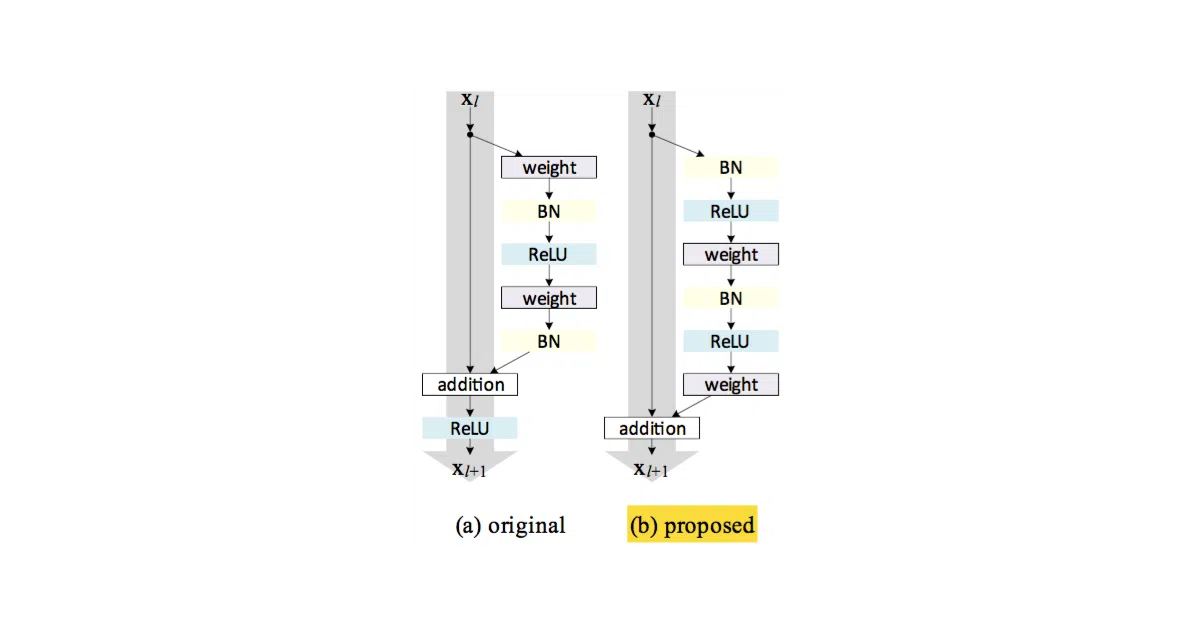
The author implements the improved residual block design from the 2016 “Identity Mappings” paper rather than the original 2015 version — a small but meaningful fidelity that many early implementations skipped. The README also contains a refreshingly candid admission that its ResNet18 CIFAR-10 example (~86% accuracy) is architecturally mismatched for the dataset, pointing readers to a better modified approach.
Key highlights
- Bottleneck and basic residual blocks, switchable by passing a different block function
_shortcuthandles dimension mismatches with 1×1 convolutions when needed, identity mapping otherwise- ResNetBuilder auto-calculates paddings and final pooling filters for custom input shapes
- Stride handling follows the paper’s nuance: first block uses (1,1), subsequent blocks use (2,2)
- ~1.4k stars suggests it was a popular reference during the Keras 1.x era
Caveats
- Frozen in time: targets Keras 1.0, which predates major API changes; likely needs porting for modern use
- The CIFAR-10 example’s accuracy ceiling is acknowledged as a structural limitation, not a training issue
- No indication of maintenance status; Travis CI badge suggests older tooling
Verdict
Worth studying if you’re implementing ResNet from scratch and want a readable, paper-faithful reference. Skip if you need production-ready, modern Keras — use keras.applications or torchvision instead.
Frequently asked
- What is raghakot/keras-resnet?
- A clean, pre-keras-2 implementation of residual networks that openly admits where its CIFAR-10 example falls short.
- Is keras-resnet open source?
- Yes — raghakot/keras-resnet is an open-source project tracked on heatdrop.
- What language is keras-resnet written in?
- raghakot/keras-resnet is primarily written in Python.
- How popular is keras-resnet?
- raghakot/keras-resnet has 1.4k stars on GitHub.
- Where can I find keras-resnet?
- raghakot/keras-resnet is on GitHub at https://github.com/raghakot/keras-resnet.