oreilly-japan/deep-learning-from-scratch-2
A Japanese NLP course where you build RNNs by hand
Companion code for a book that teaches deep learning for natural language processing from scratch, with minimal dependencies.
Not currently ranked — collecting fresh signals.
star history
What it does
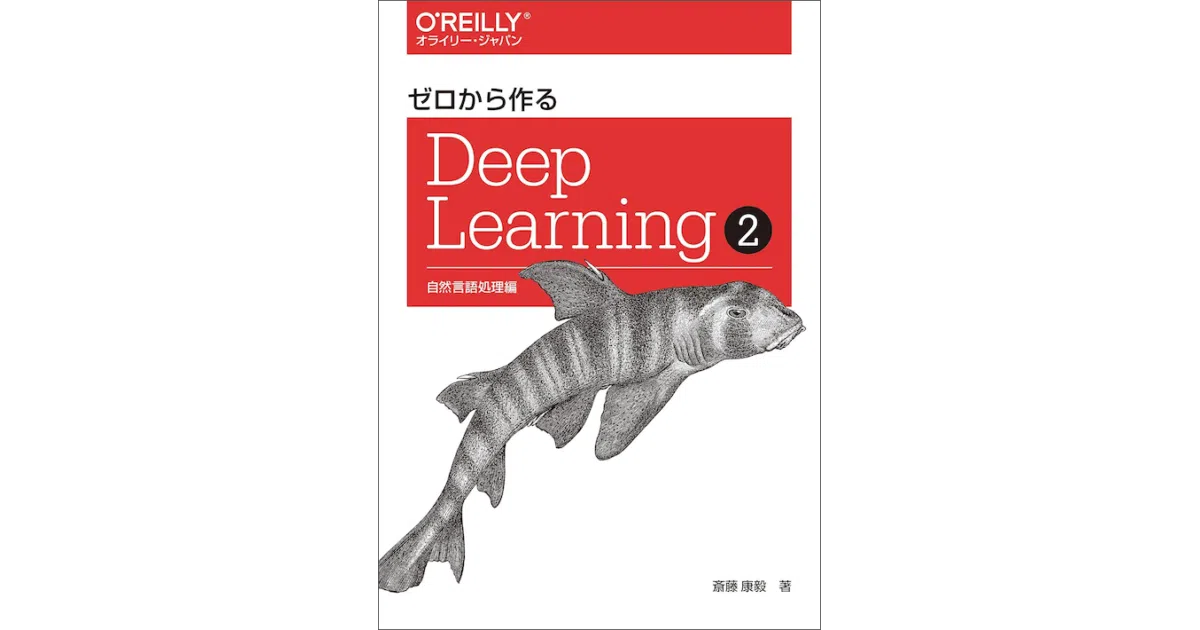
This repository holds the chapter-by-chapter source code for ゼロから作る Deep Learning ❷ (“Deep Learning from Scratch 2: Natural Language Processing”), an O’Reilly Japan book published in 2018. Each folder maps to a book chapter, plus shared utilities in common/ and datasets in dataset/. You get word embeddings, RNNs, LSTMs, and attention mechanisms implemented in plain NumPy, with optional GPU acceleration via CuPy.
The interesting bit
The book’s premise is pedagogical masochism done right: you write the forward and backward passes yourself rather than calling torch.nn.LSTM. The code stays readable because it avoids framework magic — you can actually see where the gradient flows. Pre-trained weights for chapters 6 and 7 are hosted separately, so you can skip the long training runs and still experiment.
Key highlights
- Eight chapters of incremental NLP implementations, from word2vec to attention-based models
- Pure NumPy + Matplotlib core; SciPy and CuPy are strictly optional
- Pre-trained weight file (
BetterRnnlm.pkl) available for chapters 6–7 - MIT licensed, explicitly cleared for commercial use
- Active errata page maintained by the publisher
Caveats
- All documentation and comments are in Japanese; English speakers will need translation help or tolerance
- Published in 2018, so architectures and best practices (Transformers, modern tokenizers) are absent
- The README notes that code explanations live in the book, not the repo — this is strictly companion material
Verdict
Grab this if you’re learning Japanese and want to understand RNN internals by typing them out, or if you teach and need clean, dependency-light reference implementations. Skip it if you want production-grade frameworks or modern Transformer-based NLP.
Frequently asked
- What is oreilly-japan/deep-learning-from-scratch-2?
- Companion code for a book that teaches deep learning for natural language processing from scratch, with minimal dependencies.
- Is deep-learning-from-scratch-2 open source?
- Yes — oreilly-japan/deep-learning-from-scratch-2 is open source, released under the MIT license.
- What language is deep-learning-from-scratch-2 written in?
- oreilly-japan/deep-learning-from-scratch-2 is primarily written in Python.
- How popular is deep-learning-from-scratch-2?
- oreilly-japan/deep-learning-from-scratch-2 has 1.2k stars on GitHub.
- Where can I find deep-learning-from-scratch-2?
- oreilly-japan/deep-learning-from-scratch-2 is on GitHub at https://github.com/oreilly-japan/deep-learning-from-scratch-2.