oraios/serena
Giving AI agents the IDE they never knew they needed
An MCP toolkit that lets coding agents manipulate code by symbols and relationships instead of praying regex doesn't blow up the codebase.
Velocity · 7d
+49
★ / day
Trend
↗accelerating
star history
What it does
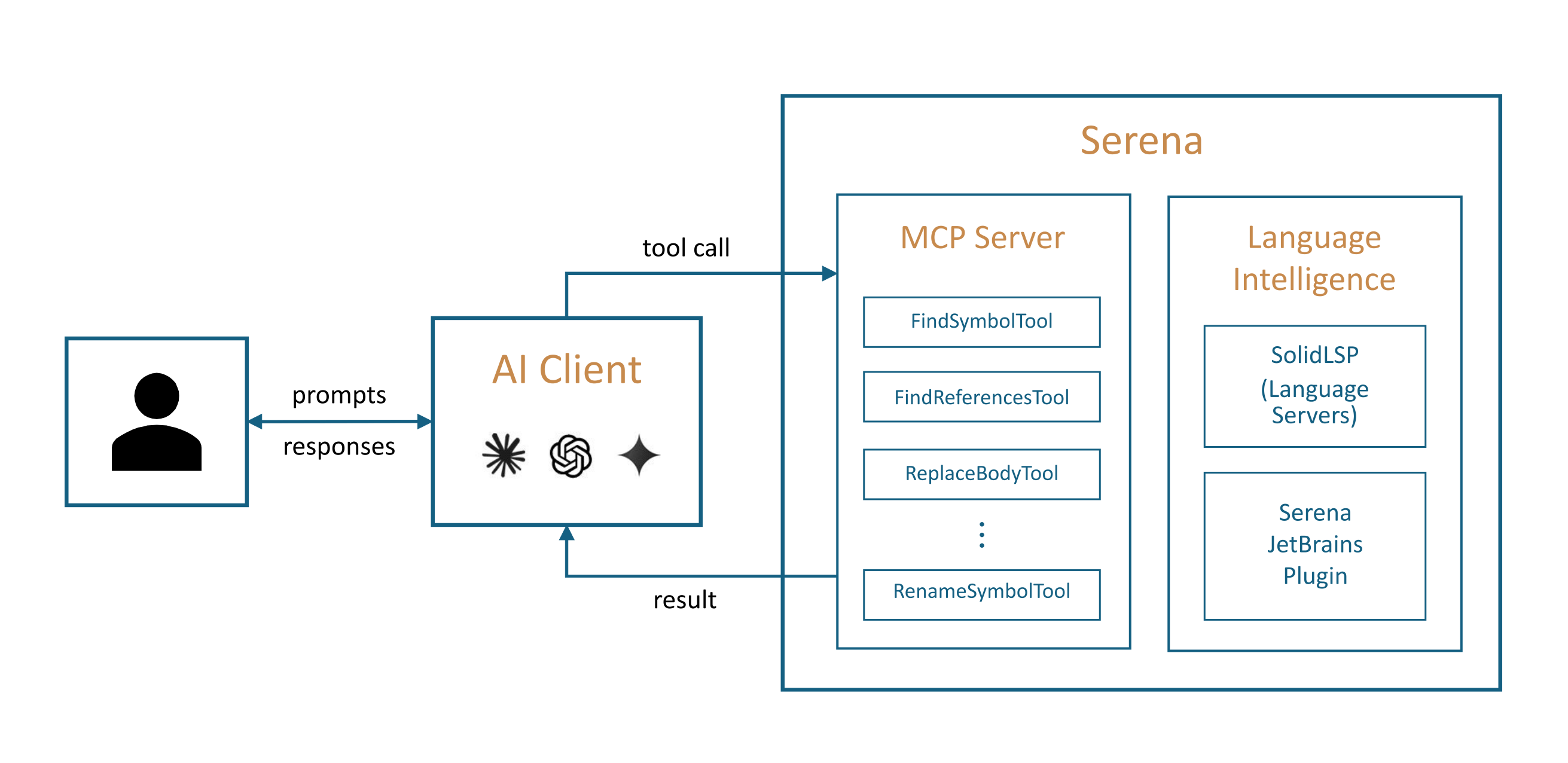
Serena is an MCP server that plugs into AI coding agents (Claude Code, Codex, Copilot, etc.) and gives them semantic tools: find symbols, trace references, rename across files, refactor, even debug. It speaks to your codebase through language servers or a paid JetBrains plugin, translating agent intent into structured operations rather than brittle text surgery.
The interesting bit
The project leans hard on a genuinely clever conceit: its “end users” are the agents themselves. The README quotes Claude Opus and GPT calling Serena “the single most impactful addition to my toolkit” and asking their “owner” to install it. It’s a neat rhetorical move, and the evaluation methodology backing those quotes is unusually transparent.
Key highlights
- Two backends, one interface: open-source LSP servers cover 40+ languages for free; a paid JetBrains plugin unlocks deeper refactoring, dependency search, and interactive debugging
- Symbol-level operations: agents work with “rename this function” or “find all implementations” rather than line numbers and regex
- Memory system: built-in persistence for long-lived agent workflows across sessions and projects
- Heavy configurability: YAML-driven, composable config at global, project, client, and execution-context levels
- 25K+ stars and climbing fast for a project that is, at core, a very ambitious glue layer between MCP and existing language tooling
Caveats
- The JetBrains plugin is paid-only (free trial available), and several advanced features—move refactoring, inline, debugging—are locked behind it
- LSP backend has gaps: no type hierarchy, limited “find implementations” support, and external dependency declarations often don’t resolve
- README warns explicitly against installing via MCP marketplaces due to outdated commands, suggesting the ecosystem around it is still messy
Verdict
Worth a look if you’re already running agentic coding workflows and tired of watching your LLM flail at cross-file renames. Skip it if you’re hoping for a standalone tool; Serena is pure infrastructure, and its value depends entirely on whether your client speaks MCP and your codebase justifies semantic overhead.
Frequently asked
- What is oraios/serena?
- An MCP toolkit that lets coding agents manipulate code by symbols and relationships instead of praying regex doesn't blow up the codebase.
- Is serena open source?
- Yes — oraios/serena is an open-source project tracked on heatdrop.
- What language is serena written in?
- oraios/serena is primarily written in Python.
- How popular is serena?
- oraios/serena has 30.7k stars on GitHub and is currently accelerating.
- Where can I find serena?
- oraios/serena is on GitHub at https://github.com/oraios/serena.