opensumi/core
Alibaba's IDE framework bets on AI-native and MCP
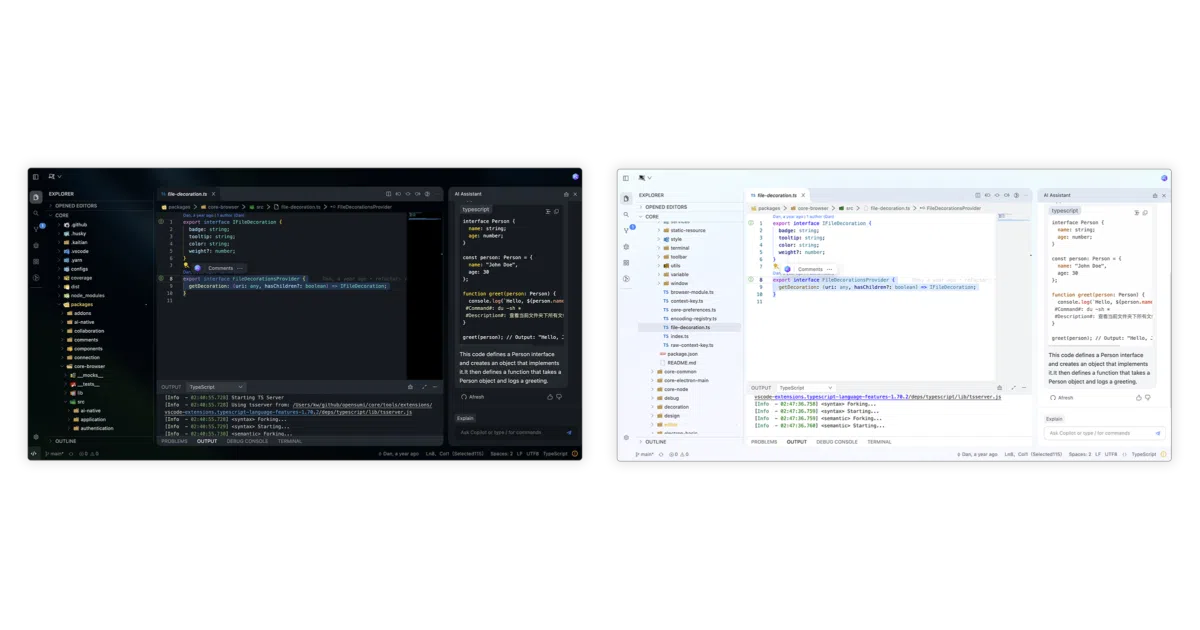
OpenSumi is a TypeScript framework for building IDEs that now treats AI integration as a first-class citizen, not an afterthought.
Not currently ranked — collecting fresh signals.
star history
What it does OpenSumi is a TypeScript framework for building IDE products—cloud, desktop (Electron), or browser-based. It ships with scaffolding for several flavors: full cloud IDE, lite web IDE, desktop Electron app, and even a “mini-app liked IDE.” The project is maintained by Alibaba/Ant Group and has accumulated 3,600+ stars.
The interesting bit The README leads with MCP (Model Context Protocol) badges before CI or test coverage. That ordering says something: OpenSumi is positioning itself as an MCP client that can consume tools from any MCP server, making AI integration a structural feature rather than a bolt-on. For a framework born in 2019, that’s a notable pivot in emphasis.
Key highlights
- MCP client support with tools integration, per the featured badges
- Multiple deployment targets: Electron desktop, pure web, cloud, and lite browser versions
- Backed by Alibaba/Ant Group; MIT licensed
- Active CI, E2E testing, and coverage tracking via Codecov
- Starter templates provided for each major deployment mode
Caveats
- The README is thin on technical architecture; you’ll need to visit opensumi.com for real documentation
- “AI Native” is claimed but not substantiated with specific AI features in the README itself
- Development setup requires Yarn and may need “system-level environment dependencies”—the README punts to CONTRIBUTING.md for details
Verdict Worth evaluating if you’re building a custom IDE and want MCP/AI integration out of the box, or if you need a VS Code-alike experience in a web or Electron shell. Skip it if you want a mature, batteries-included IDE with deep documentation and a plugin marketplace already built.
Frequently asked
- What is opensumi/core?
- OpenSumi is a TypeScript framework for building IDEs that now treats AI integration as a first-class citizen, not an afterthought.
- Is core open source?
- Yes — opensumi/core is open source, released under the MIT license.
- What language is core written in?
- opensumi/core is primarily written in TypeScript.
- How popular is core?
- opensumi/core has 3.7k stars on GitHub.
- Where can I find core?
- opensumi/core is on GitHub at https://github.com/opensumi/core.