nomic-ai/nomic
A Python SDK that turns your embeddings into explorable maps
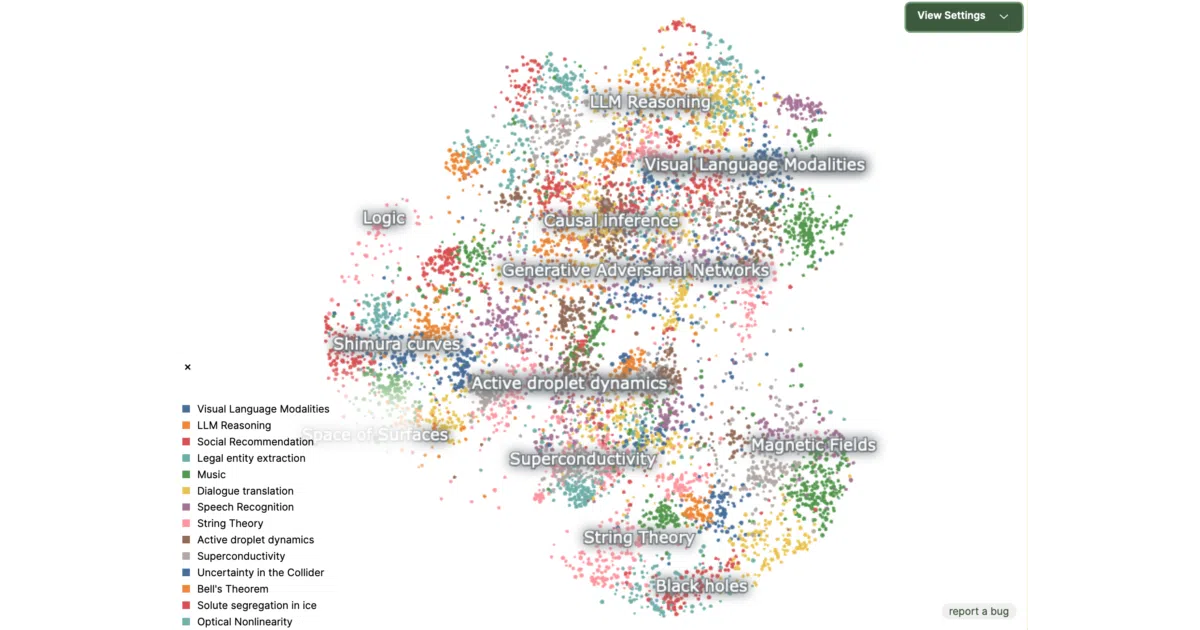
This is the official client for Nomic Atlas, a managed platform that projects high-dimensional data into shareable, browser-based visualizations.
Not currently ranked — collecting fresh signals.
star history
What it does
The nomic Python package is a thin client for Nomic Atlas, a hosted service that ingests embeddings (or raw text/images/audio/video), projects them into 2-D, and renders them as interactive web maps. You upload vectors, Atlas handles storage, search, clustering, and deduplication. The browser becomes your data-exploration interface.
The interesting bit
Atlas auto-generates a hierarchical topic model from your embeddings’ latent structure — not from manual tags — and exposes it as a pandas DataFrame. The README’s example shows news headlines clustered into topics like “Oil Prices → mergers and acquisitions” without any supervised labeling. It’s a neat trick: semantic organization derived purely from vector geometry.
Key highlights
- Supports text, image, audio, and video modalities
- Built-in semantic search with nearest-neighbor retrieval
- Automatic topic clustering at multiple depth levels
- Deduplication across all supported data types
- Embeddable, shareable maps accessible without coding
- Same team behind GPT4All
Caveats
- Requires a Nomic account and API token; not self-hostable
- The README is vague on pricing, rate limits, and whether embeddings are generated locally or remotely
- Heavy reliance on the hosted platform means this SDK is essentially glue code with limited standalone utility
Verdict
Worth a look if you need to present or explore large unstructured datasets to non-technical stakeholders. Skip it if you want full control over your vector pipeline or need to keep everything on-premise.
Frequently asked
- What is nomic-ai/nomic?
- This is the official client for Nomic Atlas, a managed platform that projects high-dimensional data into shareable, browser-based visualizations.
- Is nomic open source?
- Yes — nomic-ai/nomic is an open-source project tracked on heatdrop.
- What language is nomic written in?
- nomic-ai/nomic is primarily written in Python.
- How popular is nomic?
- nomic-ai/nomic has 1.9k stars on GitHub.
- Where can I find nomic?
- nomic-ai/nomic is on GitHub at https://github.com/nomic-ai/nomic.