mims-harvard/ToolUniverse
One protocol to plug LLMs into a thousand science tools
ToolUniverse standardizes how any LLM discovers and executes over 1,000 scientific tools, from literature search to molecular simulation, so AI agents can perform actual research rather than just summarizing it.
Not currently ranked — collecting fresh signals.
star history
What it does
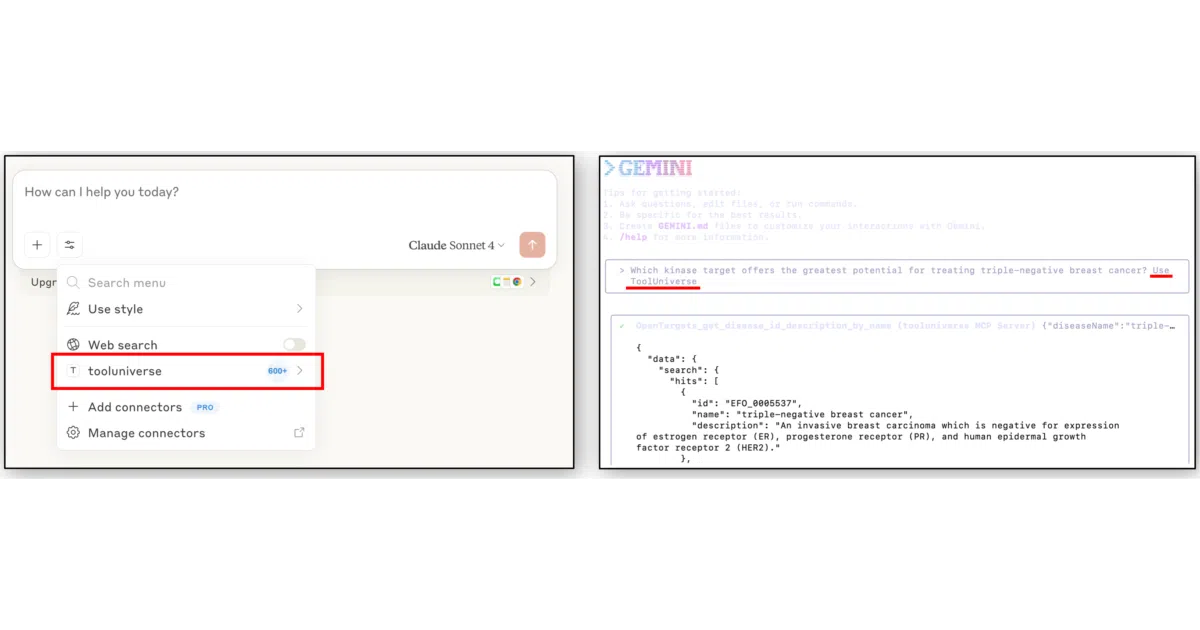
ToolUniverse acts as an integration layer between LLMs and scientific computing infrastructure. It defines an AI-Tool Interaction Protocol that standardizes how models discover, request, and receive results from over 1,000 tools—spanning literature search across PubMed and ArXiv to molecular simulations and protein docking. The project ships as an MCP-native server with a Python SDK and a terminal CLI (tu), wrapping heavy-duty bioinformatics and ML packages into a format LLMs can invoke.
The interesting bit
The quietly clever part is “Compact Mode”: instead of flooding the context window with 1,000+ tool descriptions, it surfaces four or five core discovery tools, cutting context usage by roughly 99% while keeping the full library reachable. A two-tier caching system—LRU memory plus SQLite persistence with per-tool fingerprinting—targets a 10× speedup and enables offline replay once results are cached.
Key highlights
- Over 1,000 integrated tools: ML models, datasets, APIs, and scientific packages for domains like drug discovery and precision oncology.
- 68 pre-built “Agent Skills”: research workflows covering pharmacovigilance, rare disease diagnosis, multi-omics analysis, and therapeutic reasoning.
- Universal model support: works with Claude, GPT, Gemini, Qwen, DeepSeek, and open models via a standardized protocol.
- Async execution with progress tracking: handles long-running jobs like protein docking and molecular simulations in parallel.
- Native MCP server: configurable transport and tool selection for integration with existing agent stacks.
Verdict
Researchers building autonomous scientific agents—especially in biomedicine, drug discovery, and omics—should look here. Generalist agent builders may find the pre-built skills and showcased integrations are heavily weighted toward therapeutic discovery and life sciences.
Frequently asked
- What is mims-harvard/ToolUniverse?
- ToolUniverse standardizes how any LLM discovers and executes over 1,000 scientific tools, from literature search to molecular simulation, so AI agents can perform actual research rather than just summarizing it.
- Is ToolUniverse open source?
- Yes — mims-harvard/ToolUniverse is open source, released under the Apache-2.0 license.
- What language is ToolUniverse written in?
- mims-harvard/ToolUniverse is primarily written in Python.
- How popular is ToolUniverse?
- mims-harvard/ToolUniverse has 1.8k stars on GitHub.
- Where can I find ToolUniverse?
- mims-harvard/ToolUniverse is on GitHub at https://github.com/mims-harvard/ToolUniverse.