milind-soni/OpenMausBot
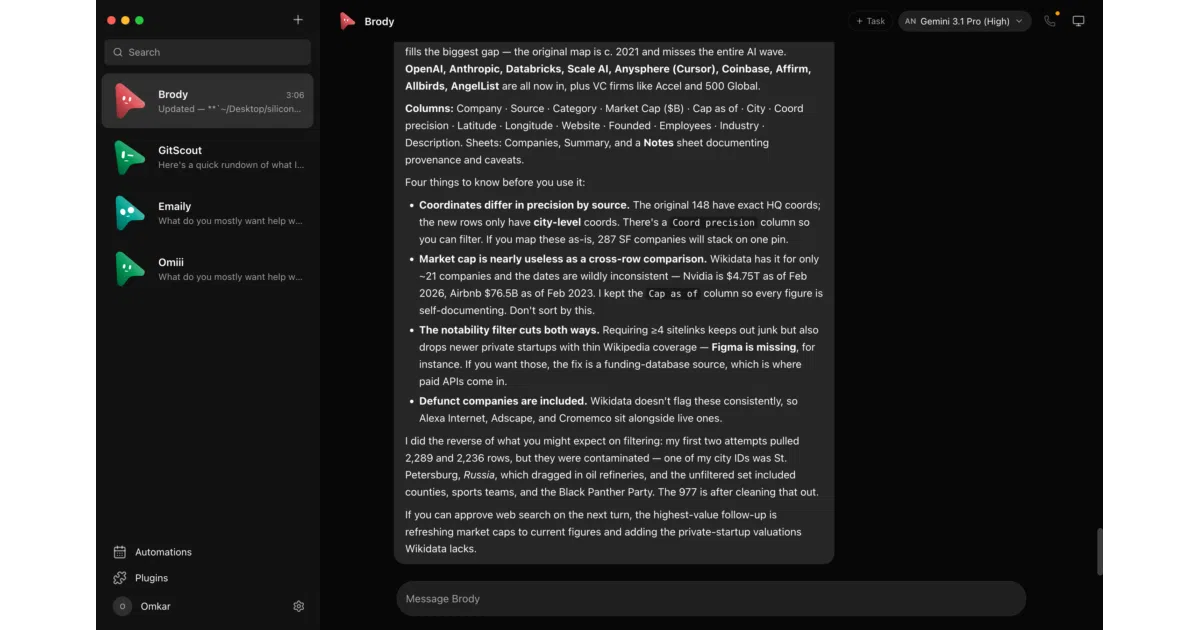
A chat app where every contact is an agent with its own computer
It takes Grok Bot's idea — AI as a messaging app with a roster of bots — and rebuilds it open-source and local-first, on the Claude, Codex, and Grok CLIs you already have.
Collecting fresh signals — velocity needs a few days of history.
collecting data…
star history
What it does
OpenMausBot is an Electron chat app — TypeScript, React 19 — where every contact in the sidebar is a real agent: a claude, codex, or grok CLI process running on your machine. Each bot gets its own personality, model, and computer (a cloud Linux desktop, an isolated local VM, or, with explicit opt-in, your own machine), plus 500+ connected apps through Composio. The messaging-app metaphor is fully committed — right-click a bot to pin, mark unread, or duplicate it, like any other contact.
The interesting bit
The README’s framing: four closed personal-agent products shipped in seven weeks of 2026, each keeping the model, the computer, and your data on the maker’s side — this is the Apache 2.0 counter. At heart it’s well-organized glue (your existing CLI logins are the backend — no new accounts, no proxy), and the glue is the point. The standout piece is the permission broker, which turns every shell command, file edit, and question into an inline Allow/Deny card in the chat, for cloud and local computers alike.
Key highlights
- Bring your own agents: bots run on the
claude,codex, andgrokCLIs installed on your machine, with your existing logins and subscriptions - Local-first: one small harness server on
127.0.0.1owns every agent process; transcripts, keys, and events live in~/.openmausbot, not a cloud - Channels keep Work, Personal, and each project separate — own transcript, shared instructions, working folder, and editable bot roster per channel
- Teams import and export as portable Markdown files with YAML frontmatter; credentials, history, and permissions never travel, and routines arrive paused
- Optional Jev decision model routes un-mentioned messages to the fitting bot in a few hundred milliseconds, falling back to the room’s lead bot
Caveats
- Host control (a bot driving your actual computer) is opt-in only, and certified on macOS and Ubuntu Xorg; Ubuntu Wayland stays disabled while issue #345 is resolved
- The app is the harness, not the models — you need the CLIs and their subscriptions first
- Jev auto-routing requires a separate TypeSafe key; without it, rooms just fall back to the lead bot
Verdict
If you already pay for Claude or Codex and want a roster of agents with hands instead of one terminal, this is the open-source version of that shape. If you wanted a hosted assistant with zero setup, keep walking — here, you are the infrastructure.
Frequently asked
- What is milind-soni/OpenMausBot?
- It takes Grok Bot's idea — AI as a messaging app with a roster of bots — and rebuilds it open-source and local-first, on the Claude, Codex, and Grok CLIs you already have.
- Is OpenMausBot open source?
- Yes — milind-soni/OpenMausBot is open source, released under the Apache-2.0 license.
- What language is OpenMausBot written in?
- milind-soni/OpenMausBot is primarily written in TypeScript.
- How popular is OpenMausBot?
- milind-soni/OpenMausBot has 4k stars on GitHub.
- Where can I find OpenMausBot?
- milind-soni/OpenMausBot is on GitHub at https://github.com/milind-soni/OpenMausBot.