melandlabs/openloomi
An open-source AI coworker that refuses to forget (or leak)
It exists because builders wanted a Claude Cowork-style agent that keeps work context local, encrypted, and auditable instead of shipping memory to someone else’s server.
Not currently ranked — collecting fresh signals.
star history
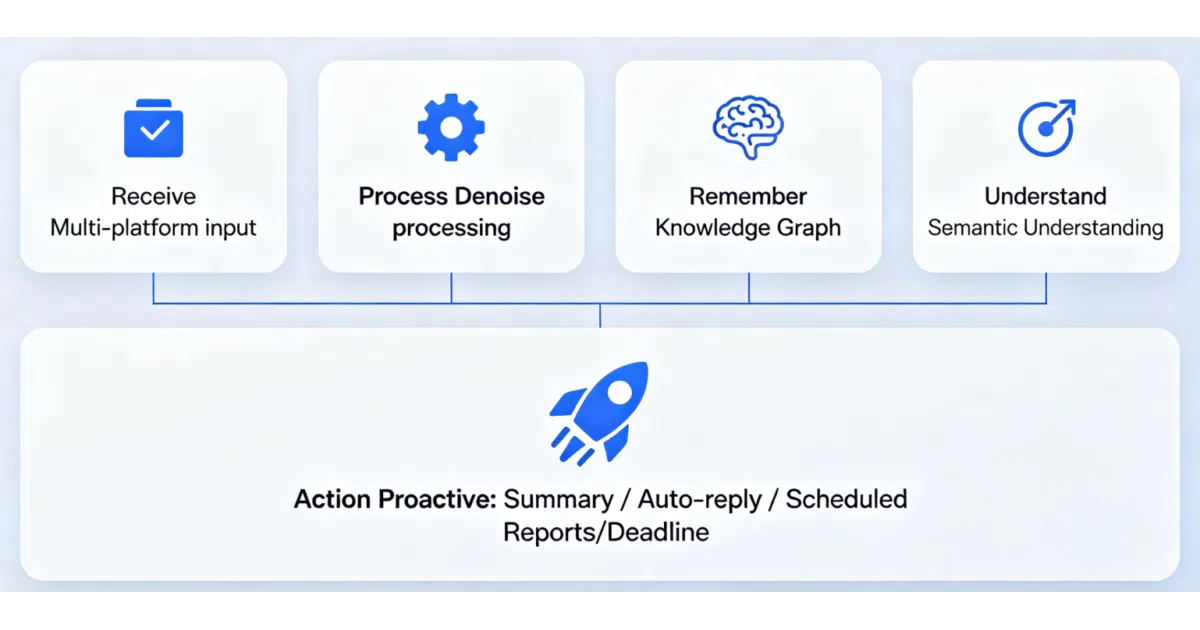
What it does OpenLoomi is a desktop-native AI coworker that pulls commits, issues, emails, and chat history from dozens of connectors into a persistent, auditable memory graph. It uses that accumulated context to propose actions proactively, but waits for human approval before executing them. All storage is local-first—IndexedDB and SQLite with AES-256 encryption—and the project claims no data leaves your machine.
The interesting bit Instead of treating an LLM like a stateless query engine, OpenLoomi frames memory as a “holistic context” problem: it maintains short-, mid-, and long-term work state so the agent knows not just what documents exist, but what changed, what is still true, and what should affect the next move. The README explicitly positions this against RAG and standard agent frameworks by emphasizing state over retrieval.
Key highlights
- Local-first native app for Windows, macOS, and Linux; works offline with hardware-isolated processing.
- Auto-sync loop pulls work artifacts into a context graph that the README describes as visible and auditable.
- Proactive, context-aware task suggestions that require human approval before execution.
- Open-source “Skills” designed to integrate with other agents like Claude Code, Codex, and Hermes.
- AES-256 encryption and auditable access logs for stored data.
Caveats
- The README labels this as early-stage software and explicitly asks users to “tell us what’s broken.”
Verdict Builders who want a local, auditable memory layer around their AI workflows should try it; developers looking for a polished, zero-friction SaaS replacement for Claude Cowork should probably wait a few releases.
Frequently asked
- What is melandlabs/openloomi?
- It exists because builders wanted a Claude Cowork-style agent that keeps work context local, encrypted, and auditable instead of shipping memory to someone else’s server.
- Is openloomi open source?
- Yes — melandlabs/openloomi is open source, released under the Apache-2.0 license.
- What language is openloomi written in?
- melandlabs/openloomi is primarily written in TypeScript.
- How popular is openloomi?
- melandlabs/openloomi has 1k stars on GitHub.
- Where can I find openloomi?
- melandlabs/openloomi is on GitHub at https://github.com/melandlabs/openloomi.