maxpumperla/deep_learning_and_the_game_of_go
From random moves to AlphaGo Zero, one pip install away
A Python library that teaches deep reinforcement learning by building Go bots you can actually play against.
Not currently ranked — collecting fresh signals.
star history
What it does
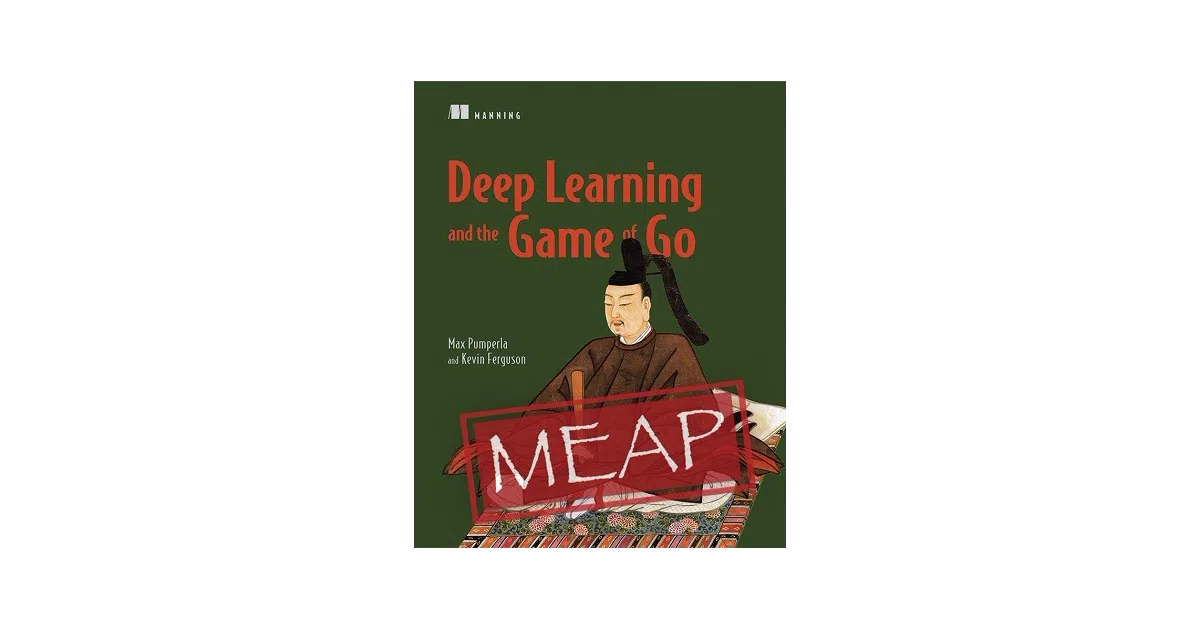
dlgo is a pip-installable Python framework that walks you from a barely-functional Go bot to implementations of AlphaGo and AlphaGo Zero. It ships with the code samples for the Manning book Deep Learning and the Game of Go, with per-chapter Git branches so you can follow along without copy-pasting. The library covers classical tree search, neural networks for move prediction, policy gradients, actor-critic methods, and the full DeepMind pipeline.
The interesting bit
The authors aren’t pretending you’ll beat Lee Sedol. They started this as an open-source side project called BetaGo, accepting they’d never match DeepMind’s compute budget. That honesty makes the pedagogy work: each chapter adds one technique, and you can play your bot at every stage via deployed demos (5×5 MCTS, 19×19 neural net, 9×9 policy gradient).
Key highlights
- Installable via
pip install dlgo; examples live in thecodefolder - 14 chapters progressing from game rules to AlphaGo Zero
- Live playable demos at badukai.com for chapters 4, 7, and 9
- Per-chapter Git branches matching the book’s code samples
- Appendices cover backprop math, AWS deployment, and submitting to the Online Go Server
Caveats
- The README has a typo (“bit by biy”) and hasn’t been cleaned up, which hints at maintenance velocity
- Travis CI badge is present; no word on whether it’s still green or migrated to another CI
- The framework is explicitly educational, not competitive: “we didn’t have the resources… to compete with DeepMind”
Verdict
Grab this if you want to understand AlphaGo by building it piecemeal, or if you learn best when code is tied to a narrative arc. Skip it if you need a production-strength Go engine or if you’re already comfortable implementing MCTS and policy gradients from scratch.
Frequently asked
- What is maxpumperla/deep_learning_and_the_game_of_go?
- A Python library that teaches deep reinforcement learning by building Go bots you can actually play against.
- Is deep_learning_and_the_game_of_go open source?
- Yes — maxpumperla/deep_learning_and_the_game_of_go is an open-source project tracked on heatdrop.
- What language is deep_learning_and_the_game_of_go written in?
- maxpumperla/deep_learning_and_the_game_of_go is primarily written in Python.
- How popular is deep_learning_and_the_game_of_go?
- maxpumperla/deep_learning_and_the_game_of_go has 1.1k stars on GitHub.
- Where can I find deep_learning_and_the_game_of_go?
- maxpumperla/deep_learning_and_the_game_of_go is on GitHub at https://github.com/maxpumperla/deep_learning_and_the_game_of_go.