leoxiaobin/deep-high-resolution-net.pytorch
Keep it high-res: a pose estimator that refuses to downsample
Most pose networks downsample early and upsample later; this CVPR 2019 implementation keeps high-resolution representations alive throughout.
Not currently ranked — collecting fresh signals.
star history
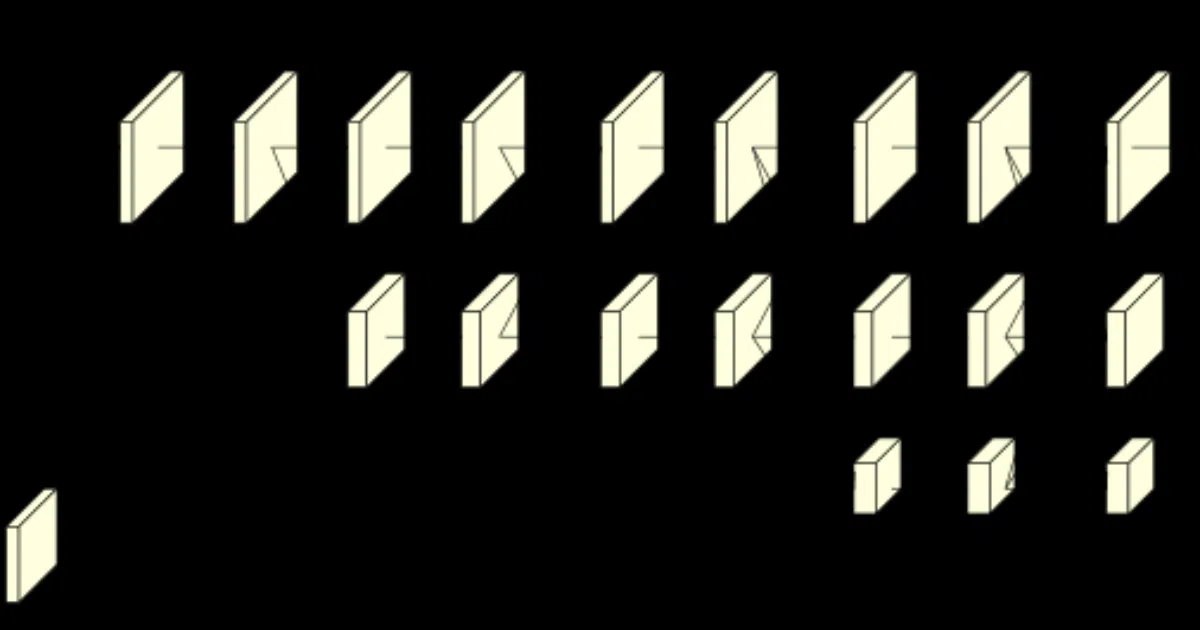
What it does HRNet is the official PyTorch release of a CVPR 2019 paper on human pose estimation. It predicts keypoint heatmaps by keeping a high-resolution subnetwork alive from the first stage, gradually adding lower-resolution parallel streams, and fusing them repeatedly. The repo ships with pretrained models and benchmark results on COCO and MPII.
The interesting bit The architecture is stubborn about pixels: instead of the usual downsample-then-deconvolve routine, HRNet runs multiple resolutions in parallel and continuously refreshes the high-res stream with information from its coarser cousins. The README tables suggest this yields better COCO and MPII scores than their prior ResNet baselines, occasionally with fewer parameters and FLOPs.
Key highlights
- Official PyTorch code and pretrained
pose_hrnet_w32/pose_hrnet_w48weights for COCO and MPII. - Parallel multi-resolution design with repeated cross-scale fusion rather than a single high-to-low-to-high pipeline.
- Benchmark tables report higher AP on COCO val2017 and MPII val than ResNet-50/101/152 counterparts, sometimes at lower parameter counts and GFLOPs.
- Includes demo and visualization scripts for inspecting outputs.
- The HRNet brand has since expanded to segmentation, detection, and facial landmarks, though those live in separate repositories.
Caveats
- Developed and tested on 4 NVIDIA P100 GPUs running Ubuntu 16.04; the README explicitly warns that other platforms or GPUs are “not fully tested.”
- Requires external dataset setup and a person detector for multi-person evaluation; it is a research artifact, not a turnkey API.
Verdict A solid stop if you are reproducing pose-estimation baselines or studying how resolution flow affects landmark accuracy. Look elsewhere if you need a polished, plug-and-play production tool.
Frequently asked
- What is leoxiaobin/deep-high-resolution-net.pytorch?
- Most pose networks downsample early and upsample later; this CVPR 2019 implementation keeps high-resolution representations alive throughout.
- Is deep-high-resolution-net.pytorch open source?
- Yes — leoxiaobin/deep-high-resolution-net.pytorch is open source, released under the MIT license.
- What language is deep-high-resolution-net.pytorch written in?
- leoxiaobin/deep-high-resolution-net.pytorch is primarily written in Cuda.
- How popular is deep-high-resolution-net.pytorch?
- leoxiaobin/deep-high-resolution-net.pytorch has 4.5k stars on GitHub.
- Where can I find deep-high-resolution-net.pytorch?
- leoxiaobin/deep-high-resolution-net.pytorch is on GitHub at https://github.com/leoxiaobin/deep-high-resolution-net.pytorch.