khanhnamle1994/computer-vision
Stanford's famous CNN course, unbundled and solved
Complete lecture notes and working assignment solutions for CS 231n, the course that launched a thousand computer vision careers.
Not currently ranked — collecting fresh signals.
star history
What it does
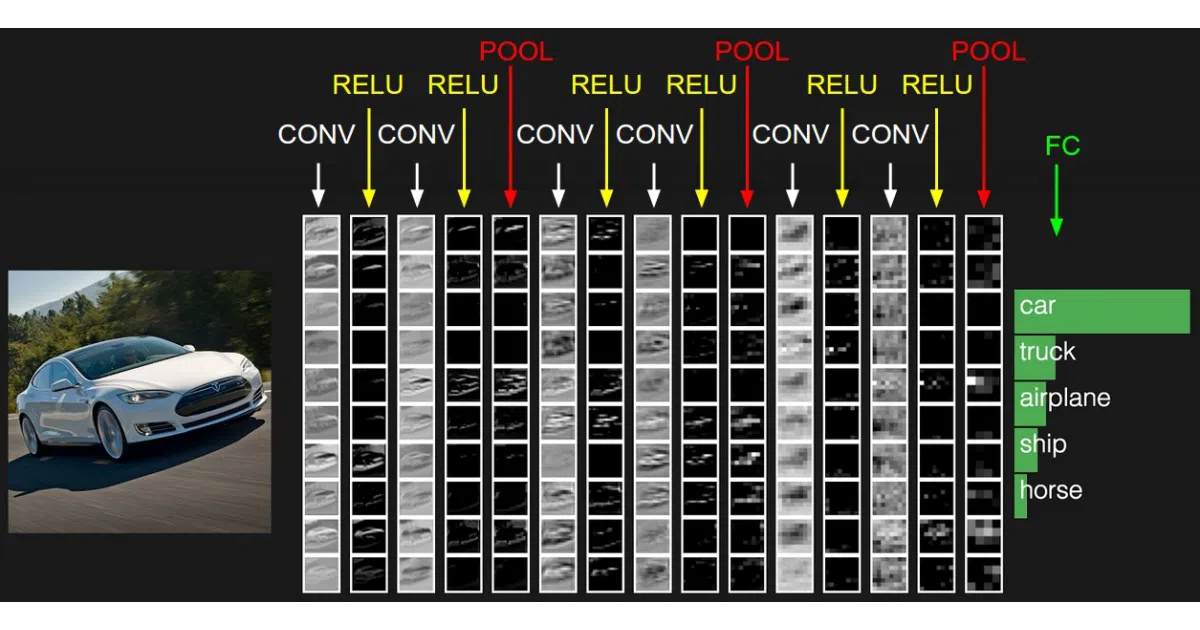
This repo collects all 16 lectures and three programming assignments from Stanford’s CS 231n: Convolutional Neural Networks for Visual Recognition. Each lecture links to YouTube videos, slides, and supplementary readings; the assignments include both problem statements and worked Jupyter Notebook solutions. The progression runs from image classification basics through backpropagation, CNN architectures, and ends at adversarial training and efficient hardware.
The interesting bit
The value isn’t novelty—it’s curation. The original course materials are scattered across years and sites; this repo centralizes them with a single, navigable structure. For self-learners who missed the actual class, it’s a complete syllabus with answers.
Key highlights
- 16 lectures with direct video links, slides, and curated readings
- Three full assignments with both problem descriptions and notebook solutions
- Covers 2016-era deep learning stack: raw numpy/CNNs up to ImageNet-scale training
- Final assignment targets multi-million parameter networks on ImageNet
- Includes less-common topics: RNNs for vision, generative models, deep reinforcement learning, adversarial examples
Caveats
- Materials appear to be from the 2016–2017 iteration; no updates for modern frameworks (PyTorch, JAX) or architectures (Vision Transformers, etc.)
- 508 stars suggests modest community engagement—verify solutions against current best practices rather than treating as gospel
Verdict
Self-taught developers and students in non-CS programs should bookmark this. Working practitioners already comfortable with modern frameworks can skip; the pedagogy is solid but the tooling is a museum piece.
Frequently asked
- What is khanhnamle1994/computer-vision?
- Complete lecture notes and working assignment solutions for CS 231n, the course that launched a thousand computer vision careers.
- Is computer-vision open source?
- Yes — khanhnamle1994/computer-vision is an open-source project tracked on heatdrop.
- What language is computer-vision written in?
- khanhnamle1994/computer-vision is primarily written in Jupyter Notebook.
- How popular is computer-vision?
- khanhnamle1994/computer-vision has 510 stars on GitHub.
- Where can I find computer-vision?
- khanhnamle1994/computer-vision is on GitHub at https://github.com/khanhnamle1994/computer-vision.