keon/deep-q-learning
DQN in 100 lines: the tutorial code that won't bit-rot
A minimal Keras implementation of DQN and Double DQN, recently dragged into 2026 with gymnasium and Keras 3 support.
Not currently ranked — collecting fresh signals.
star history
What it does
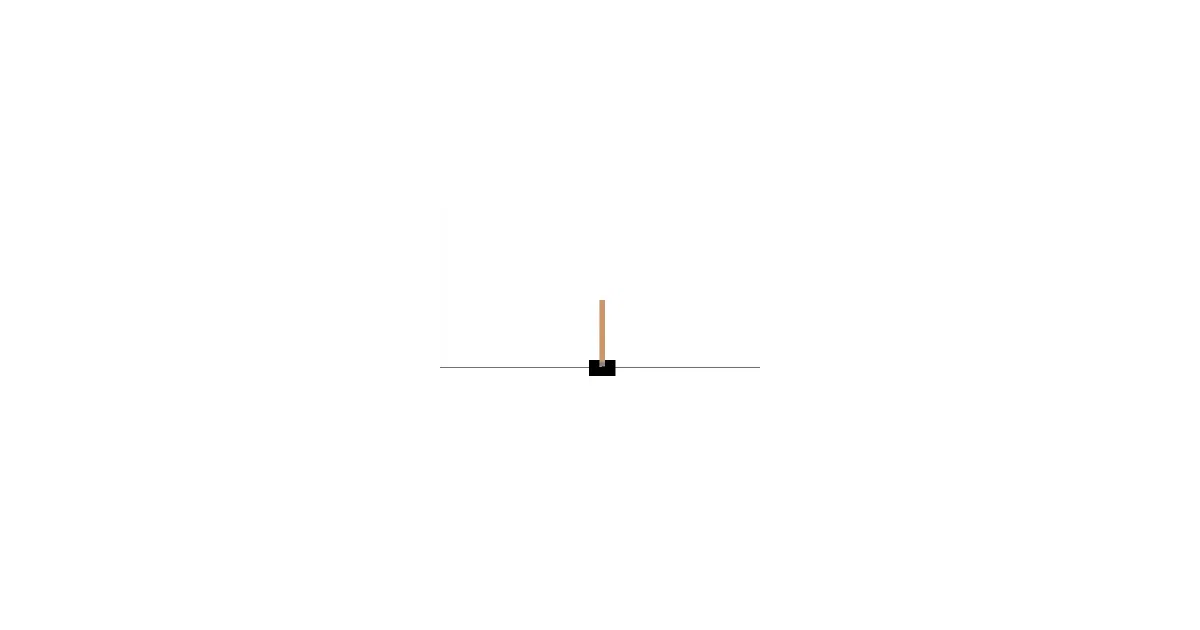
This repo contains stripped-down implementations of Deep Q-Network (DQN) and Double DQN (DDQN) agents using Keras, targeting the classic CartPole-v1 environment. The core dqn.py fits in under 100 lines. There’s also a batched-update variant (dqn_batch.py) and the more stable ddqn.py with actual Double DQN separation (online network picks actions, target network evaluates them).
The interesting bit
Most tutorial repos from 2017 are archaeological sites by now. This one got a 2026 overhaul: migrated from the dead gym package to gymnasium, updated for Keras 3’s API changes (Input layers, keras.losses.Huber, learning_rate instead of lr), and made ddqn.py environment-agnostic by stripping out CartPole-specific reward shaping. The save()/load() helpers even persist epsilon now, so you don’t resume training with a fully greedy agent by accident.
Key highlights
- Three variants: basic DQN, batched-update DQN, and Double DQN with Huber loss
- Experience replay memory capped via
deque(no unbounded list growth) - Modern API: gymnasium’s
reset/stepreturn format, Keras 3 compatible - Companion blog post walks through the
dqn.pyline-by-line ddqn.pyimplements proper decoupled action selection and evaluation
Caveats
- The basic
dqn.pyis explicitly noted as potentially unstable; useddqn.pyfor reliable training - CartPole-only demonstrations; you’ll need to wire up your own environment wrappers for anything else
Verdict
Good for someone who wants to read a complete DQN implementation in one screenful and actually run it without dependency archaeology. Not for production RL pipelines — the value is pedagogical density, not scalability.
Frequently asked
- What is keon/deep-q-learning?
- A minimal Keras implementation of DQN and Double DQN, recently dragged into 2026 with gymnasium and Keras 3 support.
- Is deep-q-learning open source?
- Yes — keon/deep-q-learning is open source, released under the MIT license.
- What language is deep-q-learning written in?
- keon/deep-q-learning is primarily written in Python.
- How popular is deep-q-learning?
- keon/deep-q-learning has 1.3k stars on GitHub.
- Where can I find deep-q-learning?
- keon/deep-q-learning is on GitHub at https://github.com/keon/deep-q-learning.