isl-org/Open3D-ML
Open3D-ML wraps point cloud datasets, models, and training in one layer
It exists so you can jump from a downloaded dataset to a trained RandLANet or PointPillars model without writing your own loaders and loops.
Not currently ranked — collecting fresh signals.
star history
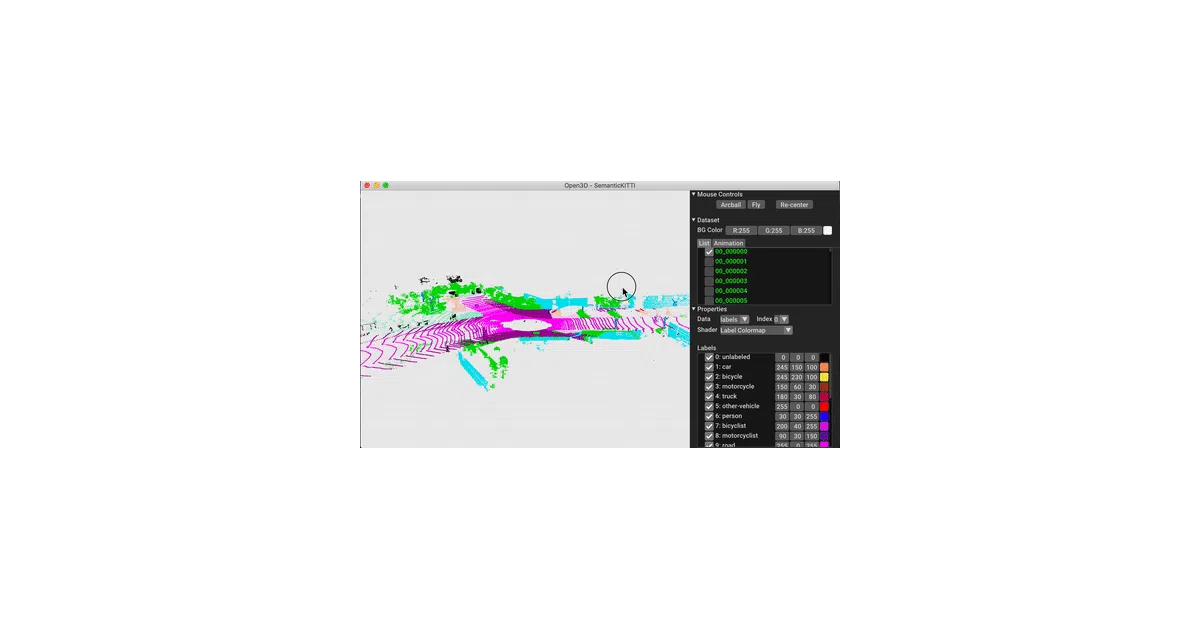
What it does Open3D-ML extends the Open3D library with machine learning tooling for point cloud processing. It bundles dataset readers for benchmarks like SemanticKITTI and KITTI, pretrained models for semantic segmentation and 3D object detection, and training pipelines that are driven by YAML configuration files. A built-in visualizer lets you inspect point clouds and bounding boxes without exporting to another tool.
The interesting bit The code examples show nearly identical paths for PyTorch and TensorFlow—swap the import and the rest of the pipeline stays the same. That convenience hits a wall on Linux from v0.18 onward, where PyPI wheels dropped TensorFlow support because the two frameworks can no longer be built into the same binary without a fight.
Key highlights
- Pretrained weights available for RandLANet and PointPillars via the model zoo
- Bundles dataset readers, training pipelines, and a native 3D visualizer
- Config-driven setup: assemble models, datasets, and pipelines from YAML files
- Supports semantic segmentation and 3D object detection on standard benchmarks
Caveats
- Linux PyPI wheels from v0.18 onward lack TensorFlow support due to build incompatibilities with PyTorch; building from source for TensorFlow requires disabling PyTorch
- Quantitative performance metrics for the pretrained models are not listed in the README
Verdict A solid shortcut for Open3D users who want to move quickly from dataset to trained model on standard point cloud tasks. Look elsewhere if you need both frameworks on Linux or prefer minimal, research-grade model code without the surrounding pipeline.
Frequently asked
- What is isl-org/Open3D-ML?
- It exists so you can jump from a downloaded dataset to a trained RandLANet or PointPillars model without writing your own loaders and loops.
- Is Open3D-ML open source?
- Yes — isl-org/Open3D-ML is an open-source project tracked on heatdrop.
- What language is Open3D-ML written in?
- isl-org/Open3D-ML is primarily written in Python.
- How popular is Open3D-ML?
- isl-org/Open3D-ML has 2.4k stars on GitHub.
- Where can I find Open3D-ML?
- isl-org/Open3D-ML is on GitHub at https://github.com/isl-org/Open3D-ML.