ignacio-rocco/detectorch
Facebook's Detectron, but make it PyTorch
A portability layer that lets you run Detectron's pre-trained object detection models in PyTorch without the Caffe2 dependency.
Not currently ranked — collecting fresh signals.
star history
What it does
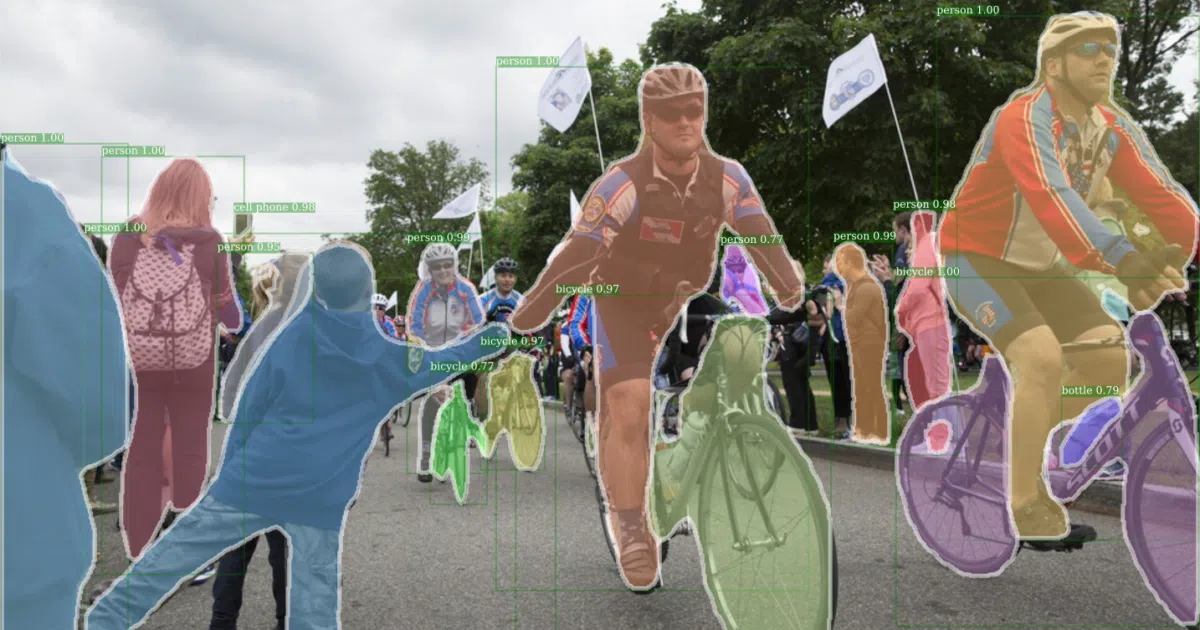
Detectorch imports pre-trained Detectron models (Fast R-CNN, Faster R-CNN, Mask R-CNN) from Caffe2 format and runs them in PyTorch. It handles the model weights, the RoIAlign layer, and evaluation pipelines so you get the same box and mask AP numbers as the original.
The interesting bit
The real work is in the glue: a custom RoIAlign implementation with two different compilation paths depending on whether you’re on PyTorch 0.3.1 or 0.4, plus JIT compilation for the newer version. The author also reimplemented enough of Detectron’s data pipeline to verify that evaluation metrics match exactly — a tedious but necessary validation step that many ports skip.
Key highlights
- Supports ResNet-50/101 with or without FPN
- Evaluation numbers match Detectron’s Caffe2 originals (e.g., Mask R-CNN R-101-FPN hits 40.9 box AP / 36.4 mask AP)
- Includes a demo notebook for quick inference
- Experimental training code exists (
train_fast.py) but is noted as slow - Requires building COCO API and RoIAlign from source
Caveats
- No training support for most models; inference and evaluation only
- Stuck on PyTorch 0.3.1/0.4 era — the README predates PyTorch 1.0
- Training code is explicitly labeled experimental and slow
Verdict
Worth a look if you’re maintaining legacy PyTorch 0.4 code that needs Detectron compatibility, or if you want to study how Caffe2→PyTorch model ports work under the hood. Skip it if you need training or are on modern PyTorch — Detectron2 has superseded this entirely.
Frequently asked
- What is ignacio-rocco/detectorch?
- A portability layer that lets you run Detectron's pre-trained object detection models in PyTorch without the Caffe2 dependency.
- Is detectorch open source?
- Yes — ignacio-rocco/detectorch is an open-source project tracked on heatdrop.
- What language is detectorch written in?
- ignacio-rocco/detectorch is primarily written in Jupyter Notebook.
- How popular is detectorch?
- ignacio-rocco/detectorch has 558 stars on GitHub.
- Where can I find detectorch?
- ignacio-rocco/detectorch is on GitHub at https://github.com/ignacio-rocco/detectorch.