guillaume-chevalier/seq2seq-signal-prediction
Learn seq2seq by breaking toy signals, not production data
A hands-on notebook that teaches encoder-decoder RNNs through four escalating signal-prediction puzzles before letting you loose on Bitcoin prices.
Not currently ranked — collecting fresh signals.
star history
What it does
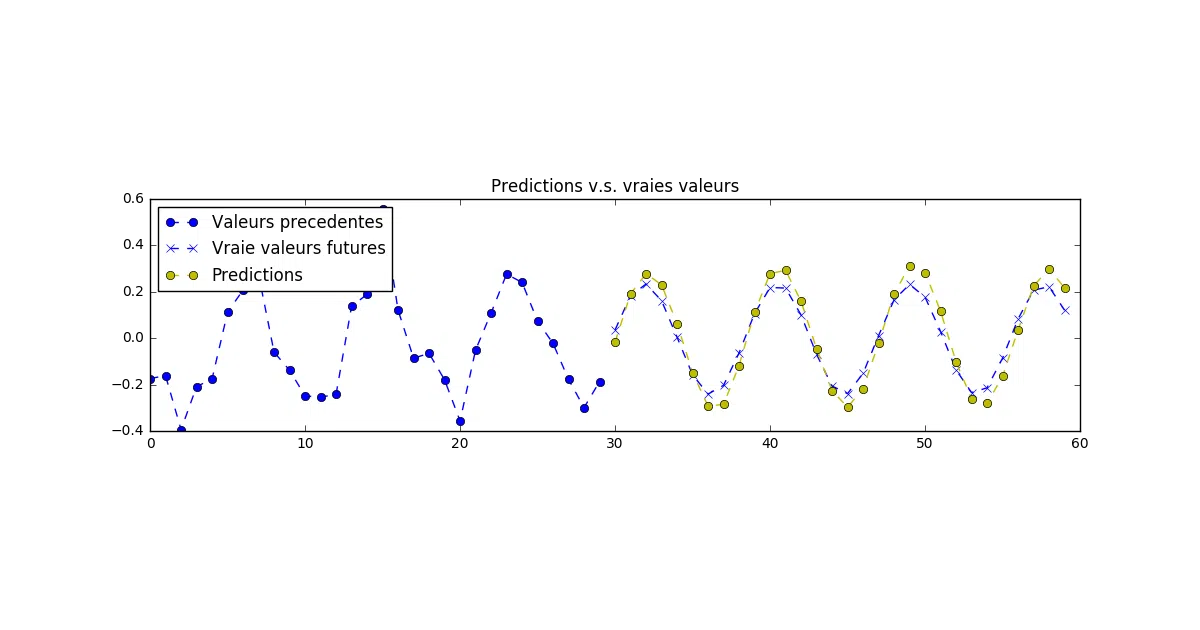
This is a tutorial notebook, not a library. It walks you through building encoder-decoder seq2seq RNNs in TensorFlow by solving four toy forecasting exercises: deterministic paired signals, superposed sine waves, noisy-to-clean denoising, and finally BTC/USD and BTC/EUR price prediction. The author originally built it for a 2017 master class in Quebec, and the pedagogical structure shows.
The interesting bit
The exercises are deliberately constrained so you must tweak hyperparameters first, then architecture, then data sources—forcing you to feel where the model breaks rather than just reading about it. The author is admirably honest that the “good” Bitcoin prediction shown is cherry-picked and that daily data alone is insufficient for real forecasting.
Key highlights
- Four graduated exercises with datasets baked into
datasets.py - Runs in Jupyter, vanilla Python, or Google Colab with GPU toggle
- Multidimensional input/output from the start (two time series predicted jointly)
- Explicit suggestions for extending Exercise 4: add S&P 500, moon cycles, social sentiment, weather data
- Accompanying Google Drive slides and Colab file linked in the README
Caveats
- Some chart images still have French labels; the author notes he never regenerated them in English
- Pins to older TensorFlow 2.1 and Neuraxle 0.3.1; dependency versions are showing age
- The Bitcoin exercise is framed as an “open-ended suggestion,” not a working predictor
Verdict
Worth a Saturday afternoon if you’re past RNN basics but find NLP seq2seq tutorials too abstract. Skip it if you want production time-series code or modern Transformer-based approaches.
Frequently asked
- What is guillaume-chevalier/seq2seq-signal-prediction?
- A hands-on notebook that teaches encoder-decoder RNNs through four escalating signal-prediction puzzles before letting you loose on Bitcoin prices.
- Is seq2seq-signal-prediction open source?
- Yes — guillaume-chevalier/seq2seq-signal-prediction is open source, released under the Apache-2.0 license.
- What language is seq2seq-signal-prediction written in?
- guillaume-chevalier/seq2seq-signal-prediction is primarily written in Jupyter Notebook.
- How popular is seq2seq-signal-prediction?
- guillaume-chevalier/seq2seq-signal-prediction has 1.1k stars on GitHub.
- Where can I find seq2seq-signal-prediction?
- guillaume-chevalier/seq2seq-signal-prediction is on GitHub at https://github.com/guillaume-chevalier/seq2seq-signal-prediction.