fraunhoferportugal/tsfel
65 features, one config file: TSFEL does the boring part of time series ML
A Fraunhofer-maintained Python library that turns raw sensor signals into a reproducible feature table so your classifier has something to eat.
Collecting fresh signals — velocity needs a few days of history.
collecting data…
star history
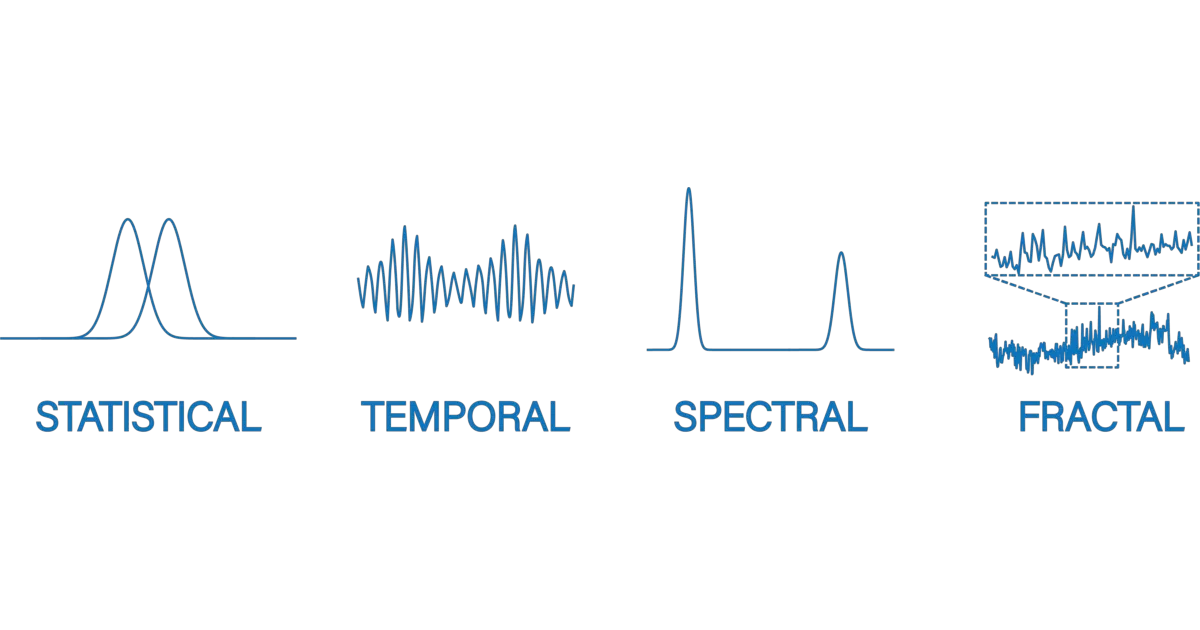
What it does TSFEL extracts 65+ features from time series across four domains: statistical, temporal, spectral, and fractal. You describe what you want in a configuration dict, point it at a signal (an ECG, an accelerometer stream, whatever), and get back a feature matrix ready for scikit-learn-style pipelines. The config file is storable, so the same feature set can be reproduced later — a small thing that saves real arguments.
The interesting bit Each feature ships with a computational cost rating, so you can estimate extraction time before running it on your 40-hour EEG recording. The fractal features (Hurst exponent, DFA, Higuchi dimension) are the unusual part — most feature libraries stop at mean and kurtosis.
Key highlights
- 65+ features across statistical, temporal, spectral, and fractal domains, including MFCCs and wavelet features
- Config-file-driven extraction for reproducibility
- Computational cost estimates per feature, rated 1–3
- Every feature is unit tested and documented individually
- Custom features are straightforward to add and contribute back
Caveats
- Fractal features are disabled by default — they need longer signals to be meaningful
- Lempel-Ziv complexity is also off by default due to slow execution
Verdict If you’re doing HAR, biosignal, or audio classification and don’t want to hand-roll your twentieth spectral feature, this is the library. If you need forecasting models rather than features, look elsewhere — TSFEL stops at the feature matrix.
Frequently asked
- What is fraunhoferportugal/tsfel?
- A Fraunhofer-maintained Python library that turns raw sensor signals into a reproducible feature table so your classifier has something to eat.
- Is tsfel open source?
- Yes — fraunhoferportugal/tsfel is open source, released under the BSD-3-Clause license.
- What language is tsfel written in?
- fraunhoferportugal/tsfel is primarily written in Python.
- How popular is tsfel?
- fraunhoferportugal/tsfel has 1.1k stars on GitHub.
- Where can I find tsfel?
- fraunhoferportugal/tsfel is on GitHub at https://github.com/fraunhoferportugal/tsfel.