facebookresearch/multipathnet
Facebook's 2016 object detector, still stuck in Lua
A faithful Torch-7 reimplementation of the MultiPath Network paper, complete with manual data wrangling and the ROIPooling bugs they actually fixed.
Not currently ranked — collecting fresh signals.
star history
What it does
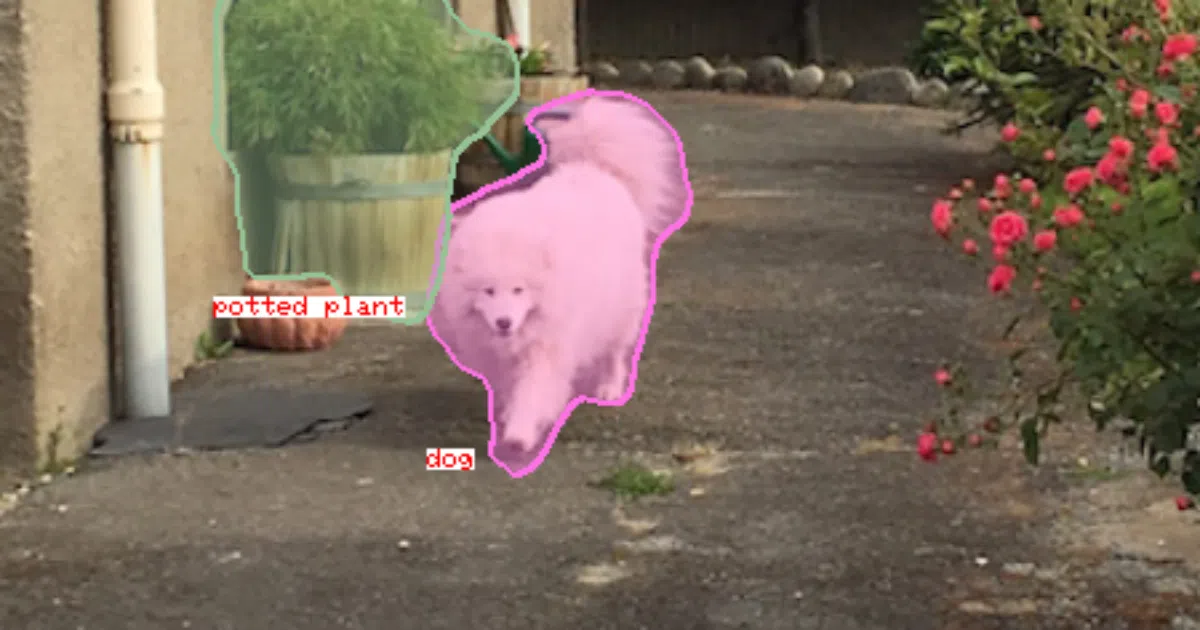
This is Facebook AI Research’s training and evaluation code for MultiPathNet, an object detection architecture that extends Fast R-CNN with multiple detection paths. It handles the full pipeline: training on PASCAL VOC or MS COCO, evaluating with standard metrics, and even a demo script that wires in SharpMask proposals to draw bounding boxes on your own images.
The interesting bit
The authors quietly improved on the original Fast R-CNN by fixing ROIPooling bugs, which bumps mAP up about 2 points. The repo also serves as a Rosetta Stone of sorts—pretrained backbones ported from Caffe, TensorFlow, and Torch all coexist here, including a ResNet-18 variant that hits 24.4 mAP on COCO while staying under 90MB.
Key highlights
- Supports AlexNet, VGG, ResNets, Inception-v3, and Network-In-Network backbones
- Multi-GPU training with both data and model parallelism
- Bundles converted proposal files (Selective Search, SharpMask) to sidestep COCO API’s Lua limitations
- Includes pretrained Fast-RCNN models from the original paper, converted to Torch format
- One-command demo pipeline from raw image to annotated output via DeepMask/SharpMask
Caveats
- Requires Linux, NVIDIA GPU compute capability 3.5+, and explicitly conflicts with Anaconda
- Evaluation leans on Python COCO API because the Lua interface can’t handle large proposal files
- Torch-7 itself is effectively archived; this is historical infrastructure, not a modern starting point
Verdict
Worth a look if you’re studying the evolution of two-stage detectors or need to reproduce BMVC 2016 numbers exactly. Skip it if you want something that runs in PyTorch without coaxing a decade-old Lua stack back to life.
Frequently asked
- What is facebookresearch/multipathnet?
- A faithful Torch-7 reimplementation of the MultiPath Network paper, complete with manual data wrangling and the ROIPooling bugs they actually fixed.
- Is multipathnet open source?
- Yes — facebookresearch/multipathnet is an open-source project tracked on heatdrop.
- What language is multipathnet written in?
- facebookresearch/multipathnet is primarily written in Lua.
- How popular is multipathnet?
- facebookresearch/multipathnet has 1.3k stars on GitHub.
- Where can I find multipathnet?
- facebookresearch/multipathnet is on GitHub at https://github.com/facebookresearch/multipathnet.