espressif/esp-claw
Chat-to-flash: an AI agent that lives on a $2 ESP32
Espressif's C framework turns cheap microcontrollers into edge AI agents you program through IM chat.
Not currently ranked — collecting fresh signals.
star history
What it does
ESP-Claw is a C framework that runs an AI agent loop directly on ESP32-series chips. You chat with the device over Telegram, WeChat, or other IM platforms, and it interprets your intent, loads Lua scripts dynamically, and controls hardware without a cloud round-trip for every action. The full sense-decide-act loop stays on the chip.
The interesting bit
The “Chat as Creation” pitch is the unusual angle: non-programmers supposedly define device behavior by talking to it, while the heavy LLM work happens remotely but the agent runtime, memory, and execution stay local. It’s a bet that the ESP32 is finally cheap and capable enough to host a meaningful agent loop rather than just relaying sensor data upstream.
Key highlights
- Supports ESP32-S3, ESP32-P4, ESP32-C5, and ESP32-S31; browser-based flashing for common dev boards, no local toolchain required
- Plugs into OpenAI, Anthropic, DeepSeek, Qwen, and custom LLM endpoints via API
- Structured local memory with privacy claims; MCP server/client support for talking to other devices
- Event-driven architecture with millisecond-level response times (per README claims)
- Modular design: trim or extend components as needed
Caveats
- Self-programming capability depends on “strong tool use and instruction-following” models; the README recommends specific model versions that appear slightly garbled (
gpt-5.4,qwen3.6-plus,claude4.6-sonnet,deepseek-v4-pro) — unclear if these are typos or placeholder names - Active development with TODO list and feature voting in Chinese; rough edges expected
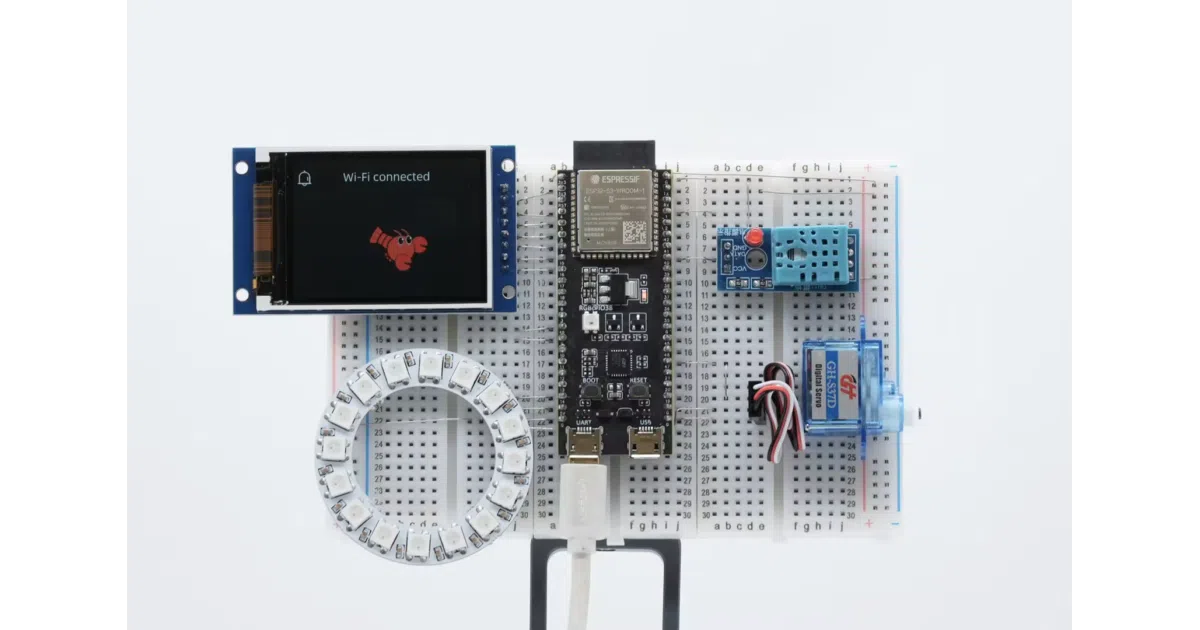
- Breadboard photo and demo videos suggest early-stage hardware, not production deployments
Verdict
Worth a look if you’re building ESP32-based hardware and want to experiment with voice/chat-driven control without shipping everything to the cloud. Skip it if you need mature, well-documented edge ML or can’t tolerate API-dependent LLM calls.
Frequently asked
- What is espressif/esp-claw?
- Espressif's C framework turns cheap microcontrollers into edge AI agents you program through IM chat.
- Is esp-claw open source?
- Yes — espressif/esp-claw is open source, released under the Apache-2.0 license.
- What language is esp-claw written in?
- espressif/esp-claw is primarily written in C.
- How popular is esp-claw?
- espressif/esp-claw has 2.3k stars on GitHub.
- Where can I find esp-claw?
- espressif/esp-claw is on GitHub at https://github.com/espressif/esp-claw.